
History
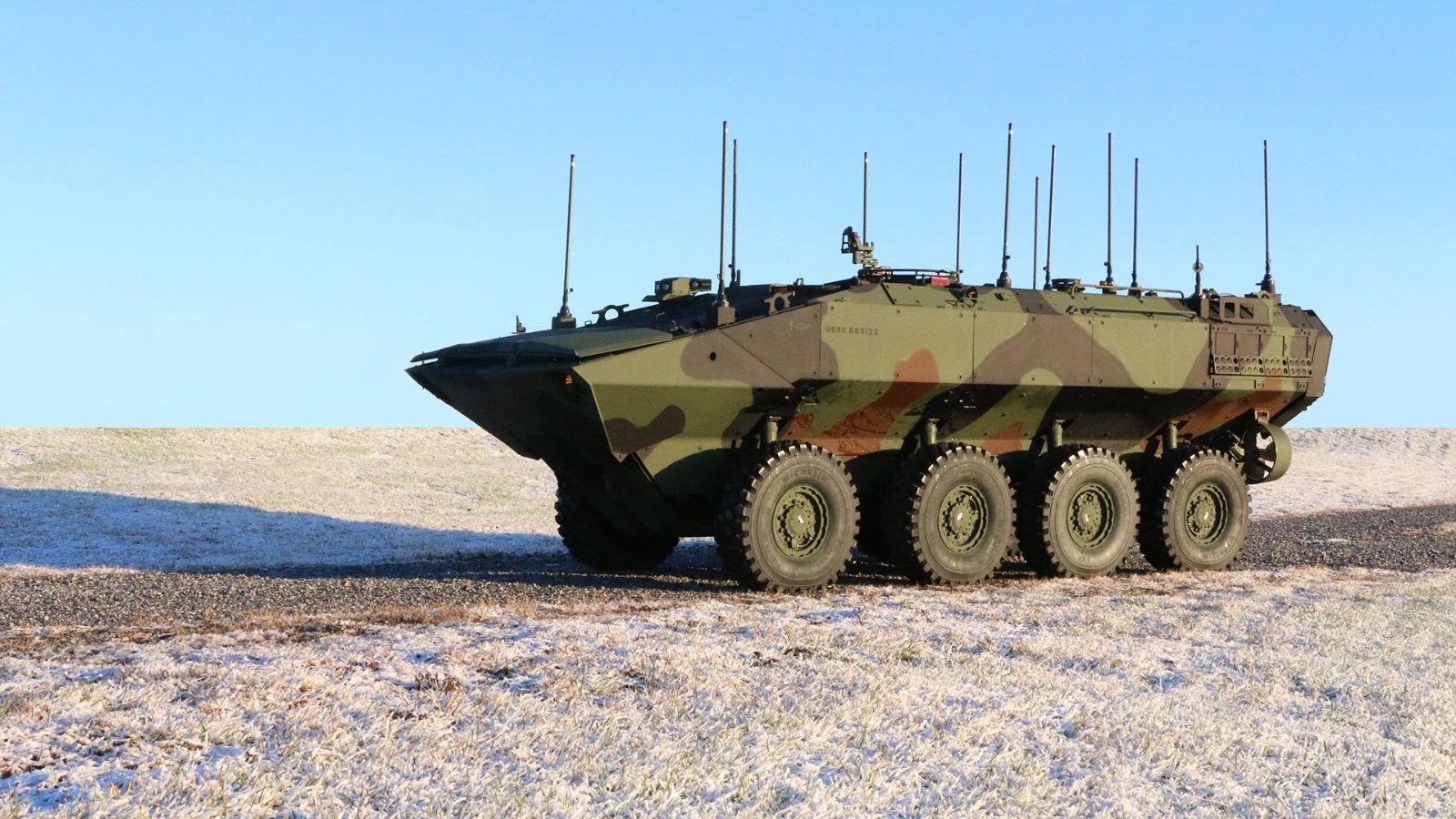
The Amphibious Combat Vehicle Recovery variant (ACV-R) is the fourth mission-role variant in the U.S. Marine Corps' ACV family, alongside the Personnel (ACV-P), 30 mm Gun (ACV-30), and Command-and-Control (ACV-C) variants. The ACV-R provides vehicle recovery, forward maintenance, field repair, and mobile workshop capabilities to support ACV-equipped assault amphibian companies and battalions.
On 30 September 2026, a contract notice awarded BAE Systems Land & Armaments LP of Sterling Heights, Michigan, a $230.1 million firm-fixed-price modification to contract M67854-16-C-0006. The modification exercises options for 32 full-rate production ACV-R variants along with associated production, fielding, support, and spares, funded entirely by Fiscal Year 2026 procurement appropriations. Marine Corps Systems Command in Quantico, Virginia, is the contracting activity; if all options on the underlying contract are exercised, its total value reaches $4,096,198,614.
Production work is distributed across York, Pennsylvania (60 percent); Aiken, South Carolina (15 percent); San Jose, California (15 percent); Sterling Heights, Michigan (5 percent); and Stafford, Virginia (5 percent), with an expected completion date of November 2028. The production contract is stated to run through 2029. A Congressional Research Service report published in October 2026 noted that plans called for delivery of ACV recovery variants in Fiscal Year 2026.
Specifications
The ACV-R is built on the same 8x8 wheeled amphibious platform as the other ACV variants and is designed to transition from ship to shore while operating with Marine ACV units.
- Crew of four
- Maximum land speed: 105 km/h (65 mph)
- Water speed: six knots
- Open-ocean capability: Sea State 3
- Surf navigation: 2.75 m (9 ft) plunging surf
- Drive: modular H-drive for on- and off-road mobility
- Water propulsion: dual water jets for propulsion and steering
Recovery equipment includes a heavy-duty hydraulic winch with a pulling capacity exceeding 30 tons, sufficient to retrieve disabled 35-ton vehicles from mud or trenches including in the surf zone. An extending, rotating Palfinger crane supports lifting tasks such as hoisting engine packs from other ACVs. The vehicle also carries rigid tow bars and a range of onboard repair tools including cutting and welding equipment for field maintenance.
 Argentina
 Armenia
 Australia
 Austria
 Austria-Hungary
 Belgium
 Brazil
 United Kingdom
 Brunei
 Bulgaria
 Canada
 Chile
 China
 Colonial America
 Colombia
 Confederate States
 Croatia
 Czech
 Denmark
 Egypt
 Finland
 France
 Georgia
 Germany
 German Imperial
 Greece
 Holland
 Hungary
 India
 Indonesia
 Iran
 Iraq
 Ireland
 Israel
 Italy
 Japan
 Japan (1940)
 Jordan
 Kingdom of Italy
 Malaysia
 Mexico
 Myanmar
 Nazi Germany
 Netherlands
 New Zealand
 North Korea
 Norway
 Pakistan
 Peru
 Philippines
 Poland
 Portugal
 Prussia
 Romania

 Russia
 Saudi Arabia
 Serbia
 Singapore
 Slovakia
 Slovenia
 South Africa
 South Korea
 Soviet Union
 Spain
 Sweden
 Switzerland
 Syria
 Taiwan
 Thailand
 Turkey
 UAE
 Ukraine
 Vietnam
 Yugoslavia