
History
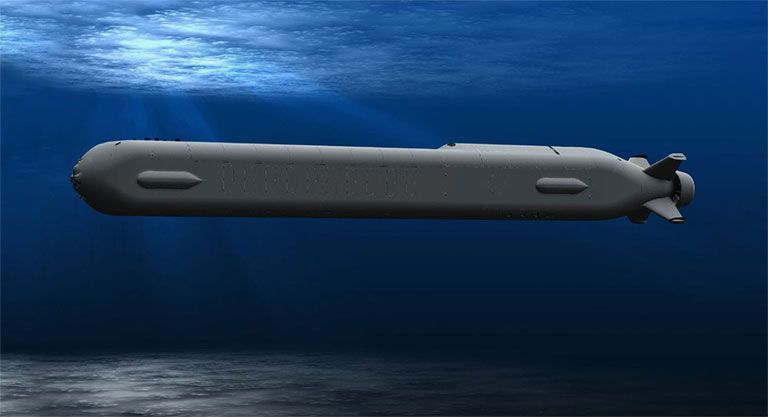
The Boeing Orca is an extra-large uncrewed undersea vehicle developed for the United States Navy. It is designed to conduct autonomous, long-duration missions and carry interchangeable payloads.
Orca combines diesel-electric propulsion, lithium-ion batteries, autonomous navigation and a modular payload section. Supported and proposed missions include surveillance, seabed operations, mine warfare, expeditionary support and other naval tasks.
In July 2026, an Orca completed a transit of more than 1,000 nautical miles (1,852 km) across the eastern Pacific. This was described as the longest known voyage in the program.
Development
The Navy selected Boeing to develop the XLUUV in 2017. Huntington Ingalls Industries later joined the project. Boeing based parts of the design on experience gained with the Echo Voyager technology demonstrator, although Echo Voyager and Orca are separate vehicles. The relationship between the designs is documented by the NavSource submarine archive.
The initial program covered four prototypes and was later expanded with a fifth Orca ordered in March 2019. Published accounts describe initial funding of $43 million for four vehicles and a subsequent contract value of $274 million for five XLUUVs.
The Orca test asset was christened on 28 April 2022 and entered the water for testing that year. This was the earliest documented physical milestone for the vehicle. Boeing completed acceptance testing and delivered the XLE0 test asset to the Navy in December 2023. Risk-reduction trials off Southern California began in March 2024, according to the Orca program profile.
Testing was intended to examine the control system, propulsion, autonomous navigation and mission execution. A published program overview described 16 planned test periods before wider operational use; details are available in the 2024 Orca overview.
Pacific transit
In July 2026, the Navy completed its first reported long-range Orca mission in the eastern Pacific. The vehicle traveled more than 1,000 nautical miles. The Navy did not disclose its mission profile or whether it carried an operational payload. The voyage and the commissioning of the XLE2 vehicle earlier in 2026 were reported by Naval News.
A May 2026 report stated that Navy planning included funding for two XLUUVs in fiscal year 2027 and a planned total of 16 vehicles through fiscal year 2031. These figures describe planned procurement rather than vehicles already delivered. The reported funding profile is summarized by Marine Insight.
Design
Hull and modular layout
Orca has a modular hull that can be configured for different missions. The basic vehicle is reported to be 15.54 m long. Installation of the approximately 10 m payload section increases overall length to about 26 m. Published displacement figures vary between approximately 80 and 85 tons.
The payload section can carry as much as 8 tons of mission equipment. Large openings in the module are consistent with the deployment of undersea payloads, including naval mines. The removable section allows the Navy to change mission equipment without developing a separate vehicle for every role.
Propulsion and endurance
The vehicle uses a hybrid diesel-electric propulsion system with lithium-ion batteries. The diesel system can recharge the batteries during an extended deployment. Published performance figures indicate a range of up to 6,500 nautical miles (12,038 km), an economical speed of about 3 knots (5.6 km/h) and the ability to remain at sea for months.
Orca is intended to leave and return to a distant base without personnel aboard. Reported navigation equipment includes inertial navigation, Doppler velocity measurement and depth sensors. These systems allow the vehicle to follow a planned underwater route when satellite navigation signals are unavailable.
Mission systems
Confirmed program roles include intelligence, surveillance and reconnaissance, mine warfare, seabed warfare and expeditionary support. Other potential configurations have been described for mine countermeasures, anti-submarine warfare, anti-surface warfare, electronic warfare and strike missions. These capabilities depend on the payload fitted and should not be interpreted as evidence that every Orca carries all of these systems.
The planned Hunter payload is intended to give Orca an expeditionary mining capability in contested or denied waters. Its acquisition strategy was expected to be formalized in late 2027 or early 2028. The Navy has also examined a standoff heavyweight torpedo deployment system associated with Hunter. Neither system was identified as an operational Orca payload in the supplied evidence.
Other proposed payloads include a synthetic-aperture sonar for high-resolution seabed mapping, mine-countermeasure equipment, electronic-warfare systems and underwater surveillance sensors. Torpedoes, cruise missiles and deployable aerial vehicles have also been discussed as possible future weapons or payloads, but their operational integration has not been confirmed.
Program status
Orca remained in development, testing and early fleet introduction in 2026. XLE0 served as the acceptance-test asset, while XLE2 had been commissioned by the Navy. The July 2026 Pacific transit demonstrated long-range autonomous operation, but published information did not confirm a deployed combat mission.
Variants
- XLE0: Test asset delivered to the United States Navy in December 2023 after acceptance testing.
- XLE2: Orca vehicle reported as commissioned in 2026.
- Orca with payload module: Extended configuration measuring approximately 26 m and able to carry up to 8 tons of mission equipment.
Operators
- United States Navy: Development, test and commissioning operator of the Orca XLUUV.
Specifications (Orca XLUUV with payload module)
General characteristics
- Type: Extra-large uncrewed undersea vehicle
- Manufacturer: Boeing, with Huntington Ingalls Industries participating in the program
- Length: Approximately 26 m with payload module
- Base-vehicle length: 15.54 m without payload module
- Reported displacement: Approximately 80–85 tons
- Payload-section length: Approximately 10 m
- Maximum payload: Up to 8 tons
- Propulsion: Hybrid diesel-electric system with lithium-ion batteries
Performance
- Range: Up to 6,500 nautical miles (12,038 km)
- Economical speed: Approximately 3 knots (5.6 km/h)
- Endurance: Designed for missions lasting several months
Mission equipment
- Payload arrangement: Interchangeable modular section
- Supported roles: Surveillance, mine warfare, seabed warfare and expeditionary support
- Planned or proposed equipment: Hunter mining payload, synthetic-aperture sonar, mine-countermeasure systems and electronic-warfare equipment
 Argentina
 Armenia
 Australia
 Austria
 Austria-Hungary
 Belgium
 Brazil
 United Kingdom
 Brunei
 Bulgaria
 Canada
 Chile
Chile China
China Colonial America
 Colombia
 Confederate States
 Croatia
 Czech
Czech Denmark
 Egypt
Egypt Finland
 France
 Georgia
 Germany
 German Imperial
 Greece
 Holland
 Hungary
 India
India Indonesia
 Iran
Iran Iraq
Iraq Ireland
 Israel
 Italy
Italy Japan
Japan Japan (1940)
 Jordan
 Kingdom of Italy
 Malaysia
 Mexico
 Myanmar
 Nazi Germany
 Netherlands
 New Zealand
 North Korea
 Norway
 Pakistan
 Peru
Peru Philippines
 Poland
 Portugal
 Prussia
 Romania
 Russia
 Saudi Arabia
 Serbia
 Singapore
 Slovakia
 Slovenia
 South Africa
 South Korea
 Soviet Union
 Spain
Spain Sweden
 Switzerland
 Syria
Syria Taiwan
 Thailand
 Turkey
 UAE
UAE Ukraine
 Vietnam
 Yugoslavia