
History
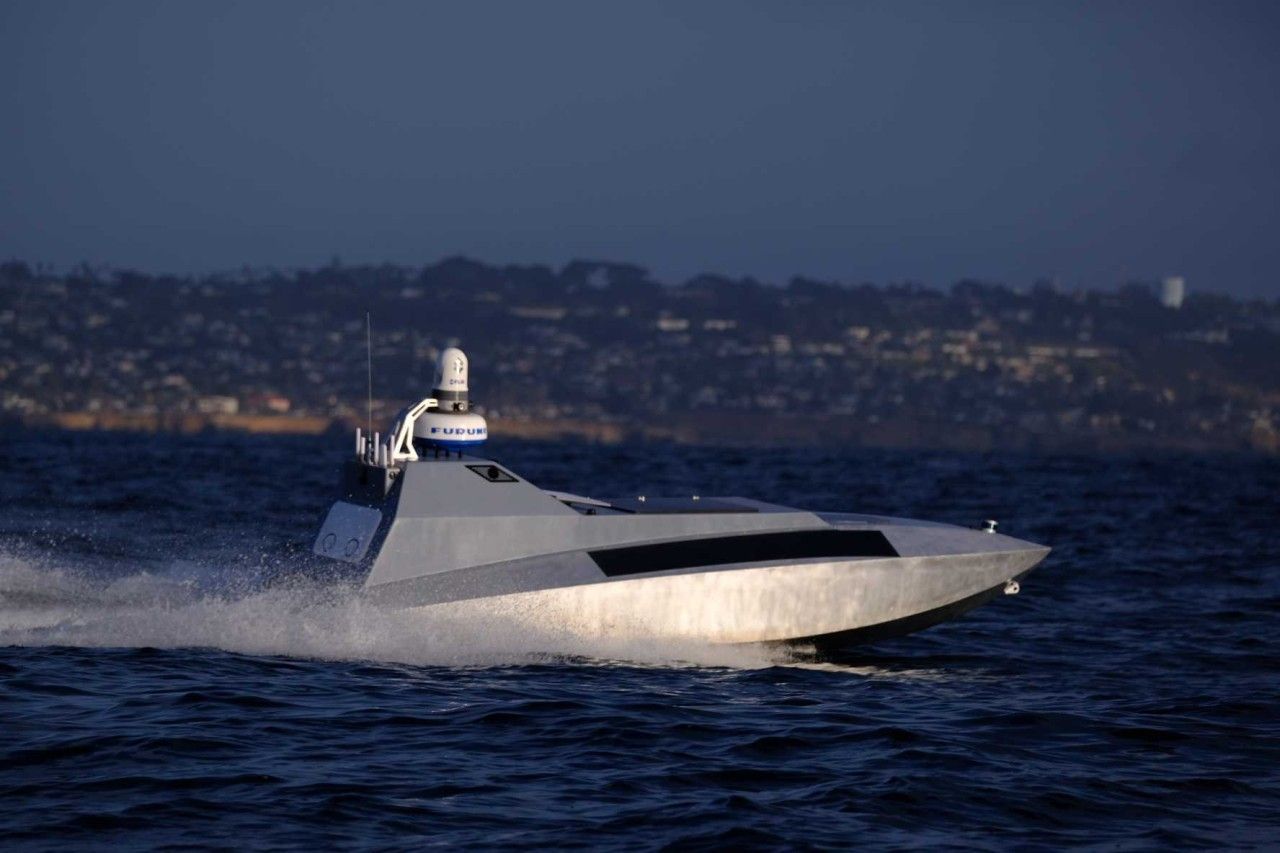
Seasats Quickfish is a high-speed interceptor-class unmanned surface vessel developed by San Diego-based Seasats. The vessel was designed for rapid response to maritime contacts while retaining multi-week endurance and carrying substantially larger payloads than the company's smaller Lightfish platform.
Quickfish was publicly unveiled in October 2025 after several months of testing and participation in a multi-day U.S. Navy exercise off the California coast. Seasats described the design as an extension of the Lightfish mission, intended to provide a faster platform for interception, identification, interdiction, deterrence, and other maritime missions.
By September 2026, Seasats said Quickfish had entered production and was available at scale. The company also stated that the production vessel could exceed 40 knots while remaining at sea for weeks at a time.
Development and testing
Seasats developed Quickfish as a larger and faster complement to Lightfish. In October 2025, company chief executive Mike Flanigan described the vessel as a response to concerns about reliability and endurance among existing interceptor unmanned surface vessels. According to Tectonic Defense, Quickfish was introduced as a 17 ft vessel weighing about 1,600 lb, compared with the smaller 11 ft Lightfish.
The vessel had already spent several months in the water before its public unveiling. During a multi-day U.S. Navy exercise off the California coast, Quickfish demonstrated maritime security functions and operated as part of a broader unmanned vessel activity. USNI News reported that the exercise helped demonstrate the vessel's use in blue-water operations.
Early public specifications in October 2025 described a speed of more than 35 knots. Breaking Defense also reported that Seasats described Quickfish as capable of operating in sea state 6. By September 2026, Seasats was stating that the production version could exceed 40 knots, indicating a higher published performance figure than during the initial unveiling.
Production
In October 2025, Seasats said an undisclosed U.S. defense prime had purchased a Quickfish. The company also reported agreements with partners in Australia, the Philippines, and Japan for local manufacturing and distribution. These agreements did not by themselves establish those countries as operators.
At the time of the unveiling, Seasats said it could produce up to 250 Quickfish vessels per year and expected production capacity to increase with demand. Initial units were reported at around $500,000. In September 2026, the company announced that Quickfish had entered production and was available at scale.
Design
Quickfish is a low-profile autonomous surface vessel approximately 5.18 m (17 ft) long. Its design emphasizes high speed, multi-week endurance, modular payload capacity, and simplified manufacturing. Unlike the composite Lightfish, Quickfish uses an aluminum hull built from flat-packed components intended to simplify welding and assembly.
Propulsion and endurance
Quickfish uses a hybrid propulsion arrangement combining electric and combustion power. Public information released in 2025 described a maximum speed above 35 knots, while Seasats stated in September 2026 that production vessels could exceed 40 knots (74 km/h). The vessel is intended to remain at sea for several weeks at a time rather than provide the longer-range endurance of the smaller Lightfish.
Payloads
Quickfish has a payload capacity of about 272 kg (600 lb). Seasats designed the platform around modular payload integration and said that electronics and software developed for Lightfish can be transferred to Quickfish with fewer weight and volume restrictions. During development, the company evaluated more than 50 payload and mission configurations across its unmanned vessel technology stack.
The hull incorporates an enclosed aerial vehicle launch bay intended to protect carried unmanned aircraft from weather and observation. Seasats has described potential payloads for intelligence, surveillance, reconnaissance, electronic warfare, signals intelligence, automatic target recognition, and kinetic missions. These capabilities depend on the installed payload rather than forming a fixed standard armament.
Autonomy and control
Quickfish uses the centralized electronics and software architecture developed by Seasats for its autonomous surface vessels. The vessel has autonomous navigation and collision-avoidance functions. Seasats has stated that an operator normally remains in the control loop in congested areas such as harbors and channels, while blue-water missions can rely more heavily on pre-programmed instructions.
Transport and construction
The aluminum hull uses a flat-pack construction approach intended to reduce tooling requirements and simplify local assembly. Quickfish is larger and heavier than Lightfish and is not intended to be moved as easily by small expeditionary teams. Transport can require a truck and trailer or lifting equipment such as a crane.
Program status
Quickfish remained a newly introduced platform during 2025, with Seasats conducting testing, naval demonstrations, and initial sales activity. The company's October 2025 announcement described the vessel as proven during a U.S. Navy exercise, while independent reporting confirmed that the vessel had been tested for several months before its public unveiling. Seasats' original announcement is available through PR Newswire.
By September 2026, Seasats stated that Quickfish had entered production and was available at scale. No confirmed military service entry, fleet quantity, or operational deployment was provided in the available material.
Specifications (Quickfish)
General characteristics
- Type: Interceptor-class unmanned surface vessel
- Length: approximately 5.18 m (17 ft)
- Weight: approximately 726 kg (1,600 lb)
- Payload capacity: approximately 272 kg (600 lb)
- Hull construction: Aluminum flat-pack design
- Propulsion: Hybrid electric and combustion propulsion
Performance
- Maximum speed: more than 40 knots (74 km/h), according to Seasats' September 2026 production announcement; earlier 2025 material stated more than 35 knots
- Endurance: Multi-week at-sea endurance
- Sea conditions: Seasats stated that the vessel can operate in sea state 6
Mission equipment
- Payload configuration: Modular mission payloads
- Aerial vehicle integration: Enclosed launch bay for unmanned aircraft
- Autonomy: Autonomous navigation with collision avoidance and operator supervision where required
Related equipment
- Seasats Lightfish: Smaller Seasats autonomous surface vessel whose electronics, software, and mission systems form the technological basis for Quickfish.
 Argentina
 Armenia
 Australia
 Austria
 Austria-Hungary
 Belgium
 Brazil
 United Kingdom
 Brunei
 Bulgaria
 Canada
 Chile
Chile China
China Colonial America
 Colombia
 Confederate States
 Croatia
 Czech
Czech Denmark
 Egypt
Egypt Finland
 France
 Georgia
 Germany
 German Imperial
 Greece
 Holland
 Hungary
 India
India Indonesia
 Iran
Iran Iraq
Iraq Ireland
 Israel
 Italy
Italy Japan
Japan Japan (1940)
 Jordan
 Kingdom of Italy
 Malaysia
 Mexico
 Myanmar
 Nazi Germany
 Netherlands
 New Zealand
 North Korea
 Norway
 Pakistan
 Peru
Peru Philippines
 Poland
 Portugal
 Prussia
 Romania
 Russia
 Saudi Arabia
 Serbia
 Singapore
 Slovakia
 Slovenia
 South Africa
 South Korea
 Soviet Union
 Spain
Spain Sweden
 Switzerland
 Syria
Syria Taiwan
 Thailand
 Turkey
 UAE
UAE Ukraine
 Vietnam
 Yugoslavia