
History
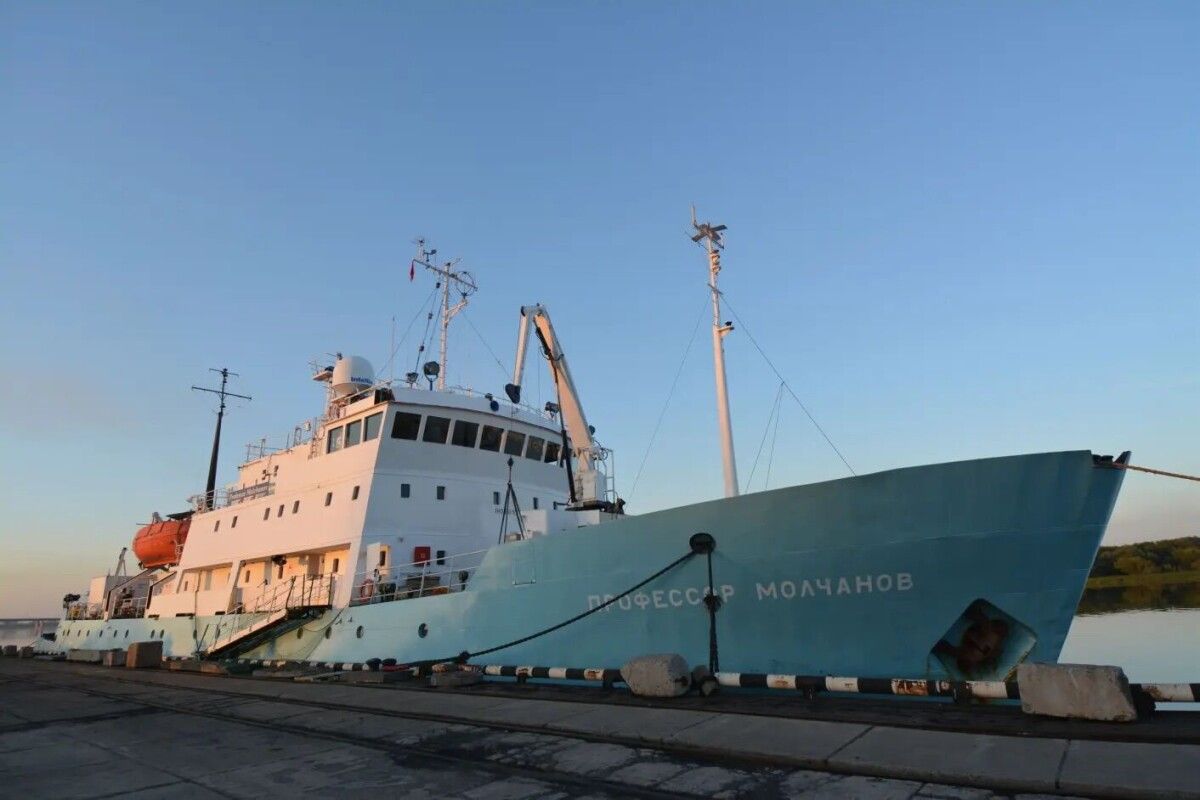
Professor Molchanov is an ice-strengthened research and expedition vessel built for the Soviet Union at the Oy Laivateollisuus Ab shipyard in Turku, Finland. The vessel was completed and launched in 1982 and was originally intended for hydrographic, oceanographic, and polar research.
After its scientific service, Professor Molchanov was rebuilt for passenger operations while retaining its ice-strengthened hull. It has subsequently combined research work with expedition cruising and transport missions in Arctic waters.
On 31 August 2026, Norwegian authorities arrested the vessel in Barentsburg, Svalbard, following an application by the Ukrainian company Naftogaz. The court order prohibited the ship from leaving its berth while enforcement proceedings connected with compensation claims against Russia continued.
Research service
Professor Molchanov was launched on 28 December 1982 and entered scientific service in 1983. It was named after meteorologist and radiosonde pioneer Pavel Molchanov. From January 1983 until September 1991, the vessel conducted polar and oceanographic research and completed 34 scientific cruises.
Its documented research program included global hydrology expeditions organized by the Murmansk Hydrometeorological Administration. One expedition operated from 28 April to 10 June 1984 through the North Sea, Norwegian Sea, northeastern Atlantic, and Barents Sea. A second voyage ran from 19 September to 30 November 1989 through the Greenland Sea, North Atlantic, Norwegian Sea, and Barents Sea. Another expedition from 12 December 1989 to 22 February 1990 operated through the Norwegian Sea, South Atlantic, Barents Sea, North Sea, and North Atlantic.
Sources use different class terminology for the vessel. The supplied technical report identifies Professor Molchanov as a Project 450 vessel of the Dmitriy Ovtsyn type, while Wikipedia describes it as an Akademik Shuleykin-class research vessel.
Passenger conversion
During the 1990s, Professor Molchanov was converted for passenger operations. The supplied report states that the modernization provided accommodation for up to 54 passengers in rebuilt cabins while preserving the reinforced hull required for navigation in polar waters. CruiseMapper dates a major reconstruction and refurbishment to 1996.
Passenger accommodation has included twin and triple cabins, a suite, dining and lecture spaces, a lounge, library, infirmary, sauna, and open observation areas. Expedition operations have also used inflatable boats for coastal cruising and shore landings.
From 2012, the vessel was used for expeditions associated with the Arctic Floating University project. It also continued commercial and research-oriented voyages in Arctic regions.
Design
Professor Molchanov was designed as a specialized hydrographic and oceanographic vessel with an ice-strengthened hull. The original Soviet-era class notation included UL ice reinforcement. The supplied report describes the modern equivalent as Ice Arc4, while a Korabel technical profile lists the Russian Register notation KM(*) UL[1] AUT2 special purpose ship.
The vessel has an overall length of about 71 m, a beam of 12.8 m, and a draft of 4.5 m. Korabel lists a displacement of 2,140 tonnes, gross tonnage of 1,753, net tonnage of 526, and deadweight of 620 tonnes.
Propulsion is provided by diesel machinery driving a single controllable-pitch propeller. Published figures for installed power differ. The supplied report gives 1,560 kW, Korabel lists two main engines rated at 1,150 bhp each, and CruiseMapper reports approximately 2.3 MW combined. Because these figures conflict, no single installed-power value is treated here as definitive.
Most supplied technical records give a maximum speed of 14 knots. Wikipedia lists 10 knots, while the supplied report, Korabel, and CruiseMapper give 14 knots.
The vessel's navigation and communications equipment has included magnetic and gyro compasses, radar, an echo sounder, automatic steering, radar plotting equipment, VHF and MF/HF radio systems, GMDSS equipment, emergency beacons, NAVTEX, and AIS equipment.
Operational history
After its early scientific career and later passenger conversion, Professor Molchanov continued to operate in high-latitude waters as both a research platform and expedition vessel. Its ice-strengthened hull allowed continued use on Arctic routes where seasonal ice and severe weather affected navigation.
In 2025, direct sea connections between Russia and Svalbard resumed after the interruption of direct transport links during the COVID-19 pandemic. On 4 March 2026, Professor Molchanov departed Murmansk on what was described as the first passenger-carrying voyage to Svalbard that early in the season. According to TASS, the voyage carried technical cargo, food, scientists, miners, and family members to Russian settlements on the archipelago. Ten round trips between Murmansk and Barentsburg were planned for 2026.
On 31 August 2026, the Nord-Troms and Senja District Court ordered the arrest of Professor Molchanov at Barentsburg following an application by Naftogaz. The measure formed part of efforts to enforce an international arbitration award concerning assets seized in Crimea. The supplied report stated that Russia's outstanding obligations to the Naftogaz Group were about US$4.2 billion, excluding interest and legal costs. The court prohibited the vessel from leaving its berth and instructed the Governor of Svalbard to take measures preventing its movement.
Specifications (Professor Molchanov)
General characteristics
- Type: Ice-strengthened hydrographic and oceanographic research vessel converted for expedition passenger operations
- Project: Project 450, Dmitriy Ovtsyn type according to the supplied technical report
- Builder: Oy Laivateollisuus Ab, Turku, Finland
- Year built: 1982
- Launch date: 28 December 1982
- IMO number: 8010348
- Call sign: UAKA
- MMSI: 273458500
- Gross tonnage: 1,753 GT
- Net tonnage: 526
- Deadweight: 620 tonnes
- Displacement: 2,140 tonnes
- Overall length: 71.06 m
- Beam: 12.8 m
- Draft: 4.5 m
- Side depth: 6.45 m
- Fuel capacity: 408 tonnes
- Water ballast: 258 tonnes
- Propulsion: Diesel machinery driving one controllable-pitch propeller
- Ice classification: UL ice strengthening; the supplied report gives Ice Arc4 as the modern equivalent
Performance
- Maximum speed: 14 knots according to the supplied report, Korabel, and CruiseMapper
Passenger configuration
- Passenger capacity: Up to 54 passengers after the 1990s conversion according to the supplied report; other published sources list 48 or 52 passengers
- Crew: 32 according to published expedition-vessel references
 Argentina
 Armenia
 Australia
 Austria
 Austria-Hungary
 Belgium
 Brazil
 United Kingdom
 United States
 Brunei
 Bulgaria
 Canada
 Chile
Chile China
China Colonial America
 Colombia
 Confederate States
 Croatia
 Czech
Czech Denmark
 Egypt
Egypt Finland
 France
 Georgia
 Germany
 German Imperial
 Greece
 Holland
 Hungary
 India
India Indonesia
 Iran
Iran Iraq
Iraq Ireland
 Israel
 Italy
Italy Japan
Japan Japan (1940)
 Jordan
 Kingdom of Italy
 Malaysia
 Mexico
 Myanmar
 Nazi Germany
 Netherlands
 New Zealand
 North Korea
 Norway
 Pakistan
 Peru
Peru Philippines
 Poland
 Portugal
 Prussia
 Romania
 Russia
 Saudi Arabia
 Serbia
 Singapore
 Slovakia
 Slovenia
 South Africa
 South Korea
 Spain
Spain Sweden
 Switzerland
 Syria
Syria Taiwan
 Thailand
 Turkey
 UAE
UAE Ukraine
 Vietnam
 Yugoslavia