
History
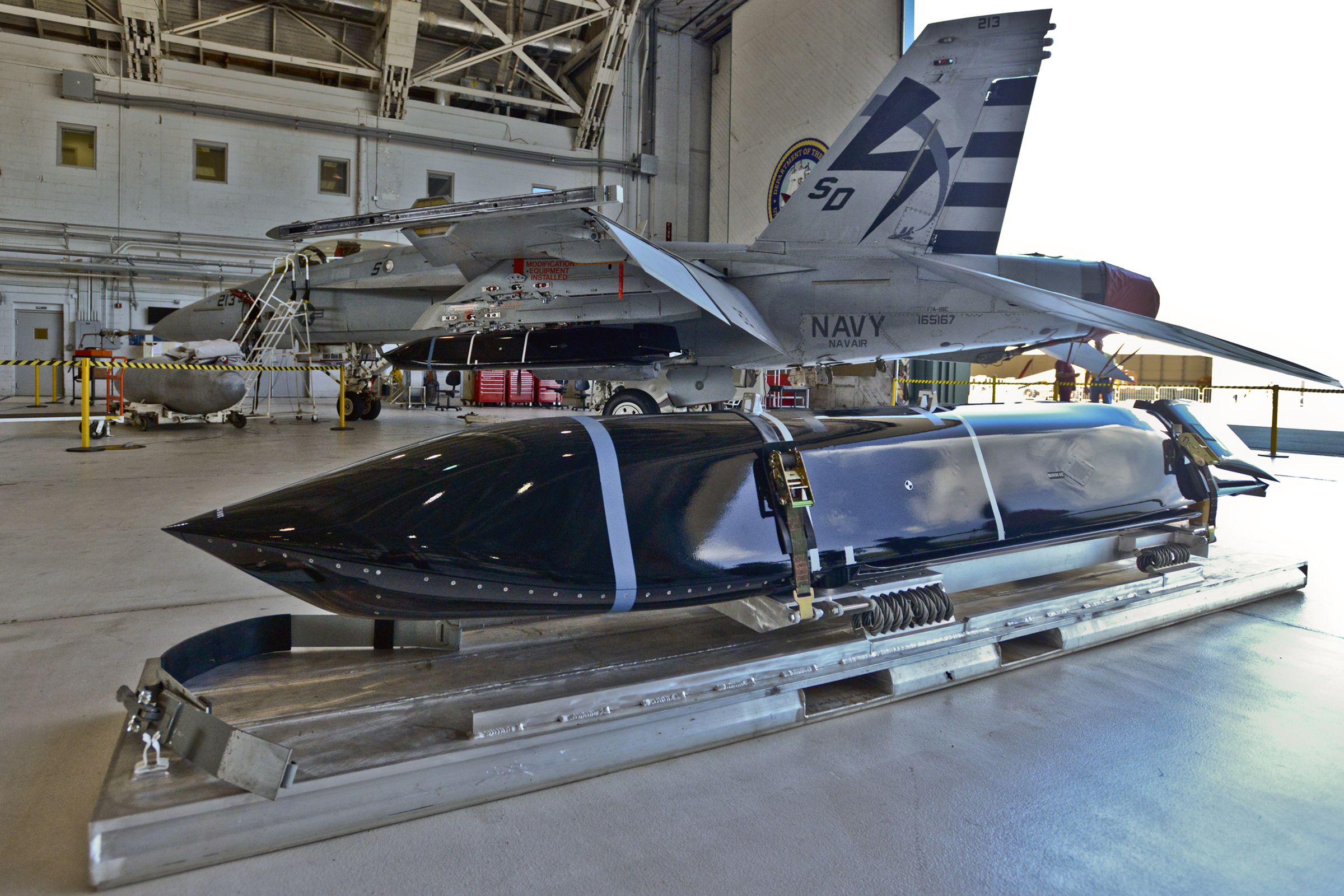
The Lockheed Martin AGM-158C Long Range Anti-Ship Missile, or LRASM, is a long-range anti-ship cruise missile developed in the United States from the AGM-158B JASSM-ER family. The program was created to provide a survivable standoff weapon able to locate and engage moving naval targets in heavily defended environments.
LRASM combines the low-observable JASSM-derived airframe with autonomous target-recognition functions, passive sensing, imaging infrared guidance, navigation systems and a data link. The missile entered operational service first with the United States and later became part of Australia's long-range maritime strike capability.
The program began in 2009 under a DARPA demonstration effort. Two concepts were initially pursued: the subsonic JASSM-ER-derived LRASM-A and the planned supersonic LRASM-B. LRASM-B was cancelled in January 2012, leaving the subsonic design that became the AGM-158C.
Development and testing
Captive-carry testing of LRASM sensors began in May 2012. On 27 August 2013, a prototype launched from a B-1B conducted the first LRASM flight test. During the test, the missile changed from a preplanned route to autonomous guidance, detected a moving unmanned ship among several contacts and struck the assigned target with an inert warhead.
A second flight test on 12 November 2013 again demonstrated autonomous terminal targeting against a moving maritime target. The missile followed programmed waypoints before using its onboard sensors to select and strike the target. On 4 February 2015, another B-1B-launched test evaluated low-altitude flight and obstacle-avoidance algorithms.
Surface-launch work proceeded in parallel. In June 2013, simulated missiles demonstrated their ability to pass through the cover of a Mk 41 Vertical Launching System canister. On 17 September 2013, an LRASM Boosted Test Vehicle equipped with a Mk 114 rocket motor was launched from a Mk 41 canister. Further surface-launch demonstrations were conducted from the U.S. Navy Self Defense Test Ship and from an angled topside canister.
Integration work with the F/A-18E/F Super Hornet included load and fit checks beginning in 2015. Lockheed Martin announced the first successful release of LRASM from a Super Hornet on 4 April 2017. In July 2017, the company received the first production award for 23 low-rate initial production missiles. A production-representative missile completed a tactical configuration flight test from a B-1B in August 2017, and multiple-target testing followed later that year.
The AGM-158C achieved initial operational capability on the U.S. Air Force B-1B in December 2018. The U.S. Navy followed with early operational capability on the F/A-18E/F Super Hornet in November 2019. In 2020, the Navy began work to integrate LRASM with the P-8 Poseidon maritime patrol aircraft. Initial carriage flight testing was also conducted with the F-35C in 2024 and the F-35B in 2025.
Australian program
In February 2020, the United States approved a possible foreign military sale of up to 200 LRASMs and associated equipment to Australia. Australia announced plans later that year to acquire the missile for its F/A-18F Super Hornet fleet. A U.S. Navy contract awarded in 2022 supported integration and testing of LRASM on Royal Australian Air Force F/A-18Fs.
In February 2025, RAAF F/A-18F Super Hornets successfully test-fired two LRASMs at the Point Mugu Sea Range in the United States. The activity represented the first Australian firing of the weapon and involved support from RAAF E/A-18G Growler and E-7A Wedgetail aircraft and a U.S. Navy P-8A.
During the Rim of the Pacific 2026 exercise, an Australian P-8A Poseidon struck a target with LRASM. In September 2026, the Royal Australian Air Force announced that LRASM had reached initial operational capability in Australian service following the test program. Australia intends LRASM to contribute to its long-range maritime strike force alongside other weapons, with integration associated with the F/A-18F, P-8A and F-35A fleets.
Design
The AGM-158C is derived from the AGM-158B JASSM-ER and retains its low-observable airframe. It is powered in flight by a turbofan engine and is designed primarily as an air-launched anti-ship cruise missile. Surface-launch trials have also demonstrated the missile with a jettisonable solid-propellant booster for launch from Mk 41 vertical cells and angled deck canisters.
Guidance and targeting
LRASM was developed to reduce dependence on continuous external targeting support. Its guidance system combines inertial navigation and jam-resistant GPS with an imaging infrared seeker, passive radio-frequency sensing, electronic-support functions and a weapon data link. A BAE Systems-designed sensor package allows the missile to detect and classify contacts and to select the intended ship within a group of vessels.
The missile can receive targeting information from the launch platform and updates through its data link, but its onboard sensors are intended to support autonomous target acquisition during the later stages of flight. Flight tests demonstrated transitions from programmed waypoints to autonomous guidance against moving maritime targets.
LRASM can approach the target at low altitude during the terminal phase. Its passive sensors and low-observable airframe are intended to reduce the opportunity for defending forces to detect and engage the missile. Public descriptions also indicate that onboard processing is used to combine information from different sensors for target recognition and route selection.
Range
Published range figures differ considerably. Lockheed Martin has been cited as describing LRASM's range as greater than 200 nautical miles, or about 370 km, while some secondary sources publish substantially higher figures approaching the range of JASSM-ER. Because these figures are inconsistent, the manufacturer-attributed figure of more than 370 km is the more conservative publicly supported value.
Warhead and propulsion
Published technical descriptions identify a WDU-42/B high-explosive blast-fragmentation penetrator warhead weighing approximately 454 kg. The air-launched missile uses a Williams F107-WR-105 turbofan. Surface-launched test configurations have used a modified Mk 114 booster to accelerate the missile after leaving its launcher.
Operational history
The United States Air Force introduced LRASM on the B-1B Lancer in 2018, followed by the U.S. Navy on the F/A-18E/F Super Hornet in 2019. Continued production contracts have supported both services, while additional integration work has expanded the range of potential launch aircraft.
Australia became the first confirmed foreign customer. After its 2025 Super Hornet firings and a 2026 P-8A firing during RIMPAC, the Royal Australian Air Force declared initial operational capability for LRASM in September 2026.
Variants
- LRASM-A: Original subsonic program designation for the JASSM-ER-derived design. The designation was later dropped as this configuration evolved into the AGM-158C.
- LRASM-B: Planned high-altitude supersonic concept pursued during the early program. It was cancelled in January 2012.
- AGM-158C: Air-launched production LRASM developed for long-range anti-ship missions and fielded by the United States and Australia.
- Surface-launched LRASM demonstrators: Test configurations fitted with a rocket booster for launch from Mk 41 vertical cells or angled topside canisters. The supplied sources describe these as development and demonstration configurations rather than a separately confirmed operational production variant.
Operators
- United States: Operational with the U.S. Air Force on the B-1B Lancer and with the U.S. Navy on the F/A-18E/F Super Hornet. Integration has also been pursued for additional aircraft including the P-8 Poseidon and F-35 variants.
- Australia: The Royal Australian Air Force declared initial operational capability in September 2026. Australian F/A-18F Super Hornets conducted their first live firings in February 2025, and an RAAF P-8A Poseidon struck a target with LRASM during RIMPAC 2026.
Specifications (AGM-158C LRASM)
General characteristics
- Type: Long-range anti-ship cruise missile
- Manufacturer: Lockheed Martin
- Length: approximately 4.26 m
- Launch mass: approximately 1,250 kg, estimated for the air-launched missile
- Wingspan: approximately 2.7 m
- Warhead: approximately 454 kg WDU-42/B high-explosive blast-fragmentation penetrator
- Engine: Williams F107-WR-105 turbofan
Performance
- Publicly stated range: greater than 370 km based on the conservative Lockheed Martin-attributed figure reported in available sources
Guidance
- Navigation: inertial navigation and jam-resistant GPS
- Terminal sensing: imaging infrared and passive radio-frequency sensing
- Data link: weapon data link for external updates
- Targeting: onboard autonomous target detection, classification and terminal selection functions
Launch platforms
- Operationally fielded aircraft: B-1B Lancer and F/A-18E/F Super Hornet
- Australian integration and testing: F/A-18F Super Hornet and P-8A Poseidon
- Other integration activity: P-8 Poseidon, F-35C and F-35B have been associated with U.S. testing or integration programs
- Surface-launch demonstrations: Mk 41 Vertical Launching System and angled topside canister using a rocket booster
Related equipment
- AGM-158B JASSM-ER: Extended-range land-attack cruise missile from which the LRASM airframe and several major systems were derived.
- AGM-84 Harpoon: Earlier anti-ship missile that LRASM supplements or replaces in portions of the U.S. and Australian maritime strike role.
 Argentina
 Armenia
 Australia
 Austria
 Austria-Hungary
 Belgium
 Brazil
 United Kingdom
 Brunei
 Bulgaria
 Canada
 Chile
Chile China
China Colonial America
 Colombia
 Confederate States
 Croatia
 Czech
Czech Denmark
 Egypt
Egypt Finland
 France
 Georgia
 Germany
 German Imperial
 Greece
 Holland
 Hungary
 India
India Indonesia
 Iran
Iran Iraq
Iraq Ireland
 Israel
 Italy
Italy Japan
Japan Japan (1940)
 Jordan
 Kingdom of Italy
 Malaysia
 Mexico
 Myanmar
 Nazi Germany
 Netherlands
 New Zealand
 North Korea
 Norway
 Pakistan
 Peru
Peru Philippines
 Poland
 Portugal
 Prussia
 Romania
 Russia
 Saudi Arabia
 Serbia
 Singapore
 Slovakia
 Slovenia
 South Africa
 South Korea
 Soviet Union
 Spain
Spain Sweden
 Switzerland
 Syria
Syria Taiwan
 Thailand
 Turkey
 UAE
UAE Ukraine
 Vietnam
 Yugoslavia