
History
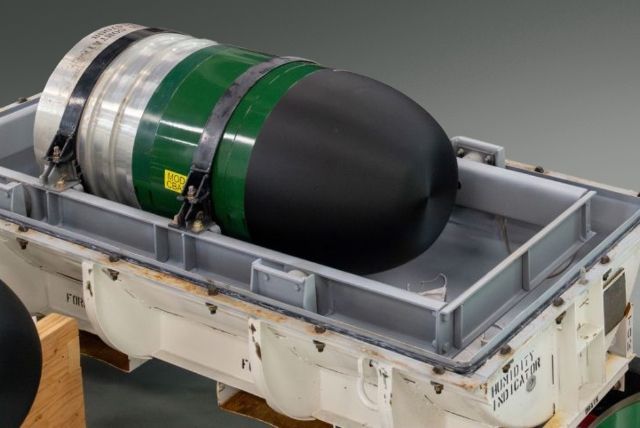
The Lockheed Martin Mk 48 Mod 7, also known as the Mk 48 Mod 7 Common Broadband Advanced Sonar System or CBASS, is a 533 mm submarine-launched heavyweight torpedo intended for anti-submarine warfare and anti-surface warfare. It combines wire guidance with active and passive acoustic homing and is designed for engagements in both deep and shallow water.
The Mod 7 was developed through a joint program involving the United States Navy and Royal Australian Navy. According to the U.S. Navy, the Mk 48 Mod 7 reached Initial Operational Capability in 2006 and remains the latest version of the Mk 48 family described in its published fact file.
The principal Mod 7 change was the introduction of CBASS hardware and associated software improvements. The system expanded the acoustic bandwidth available to the torpedo and improved its ability to search for, acquire, classify, track, and attack targets in difficult acoustic environments.
Development and testing
The Mk 48 Mod 7 evolved from the Mk 48 Advanced Capability torpedo family. Development was conducted as a cooperative U.S.-Australian armaments program. Development testing of the CBASS configuration was completed in November 2004, followed by operational testing in November 2005. Initial Operational Capability was achieved in 2006 after the required hardware and software upgrades.
The broadband seeker was intended to improve performance against several demanding target sets, including low-Doppler submarines operating in shallow water, fast deep-diving submarines, and high-performance surface ships. The wider frequency coverage provides the processor with additional acoustic information for separating targets from reverberation, background noise, and countermeasures.
On July 25, 2008, the Royal Australian Navy submarine HMAS Waller fired an Australian-assembled Mk 48 Mod 7 CBASS during the RIMPAC 2008 exercise. The torpedo sank a decommissioned U.S. warship used as a test target.
Modernization and production
In 2011, the U.S. Navy awarded Lockheed Martin a five-year fleet-wide CBASS modernization program covering 1,263 Mk 48 torpedoes. The upgrade kits included a broadband analog sonar receiver, guidance and control equipment, a pre-amplifier, associated materials, and cable assemblies. The modular approach allowed significant electronics and sonar improvements to be introduced without replacing the complete torpedo body.
The U.S. Navy had stopped new Mk 48 production after delivery of the final Mod 6 production torpedo in 1996. Production was later restarted in fiscal year 2016. Re-establishing the manufacturing base required redesign and supplier work because many components from the earlier production period had become obsolete.
A series of contracts has supported continued production and sustainment. A December 2022 action valued at $302.243 million covered proof of manufacture, production, spares, and engineering, with U.S. Navy and Australian funding. On September 30, 2024, the Naval Sea Systems Command exercised a further option valued at $245.414 million.
On September 3, 2026, the U.S. Navy awarded Lockheed Martin a $257.278 million contract modification for Mk 48 Mod 7 production, spares, production-support material, engineering, and hardware repair. Work was scheduled to continue through September 2029. The contract supported the U.S. Navy, Royal Australian Navy, and Foreign Military Sales customers, but it did not state a quantity of complete torpedoes because the funding also covered components, repairs, engineering, spares, and production support.
The 2026 work was distributed among facilities in Liverpool, New York; Clearwater, Florida; and Braintree, Massachusetts. The production network supports guidance and control electronics, acoustic assemblies, propulsion-related equipment, fuel-system work, testing, and engineering.
Australian program
Australia's participation in the Mk 48 program predates AUKUS. Under the cooperative development effort, Australia funded CBASS development, test equipment, submarine integration, and conversion work. Australian Collins-class submarines use the Mk 48 family in conjunction with 533 mm torpedo tubes and the AN/BYG-1 combat-system lineage.
On March 21, 2025, Australia announced a $200 million agreement with the United States to acquire additional Mk 48 heavyweight torpedoes. The Australian Department of Defence stated that the weapons would support Collins-class submarines and Australia's future nuclear-powered submarines. Australian Mk 48 torpedoes are procured as sections and assembled and tested at the Torpedo Maintenance Facility in Western Australia, which is also certified to assemble, maintain, and test the weapon for U.S. Navy platforms.
Design
The Mk 48 Mod 7 is a heavyweight acoustic-homing torpedo with a cylindrical 533 mm body. Published data for the Mod 7 gives a length of approximately 5.8 m. The weapon is launched from submarine torpedo tubes and combines onboard autonomous guidance with a wire connection to the launching submarine.
Guidance and sonar
The defining feature of the Mod 7 is the Common Broadband Advanced Sonar System. CBASS supports active and passive acoustic homing and operates across a wider frequency band than earlier configurations. Broadband signal processing improves search, target acquisition, tracking, and terminal attack performance, particularly in acoustically complex environments.
After launch, the submarine can use the guidance wire to transmit target-position or course updates. This is useful when a submarine target changes depth, speed, or heading. If the wire connection is lost, the torpedo's onboard guidance and control electronics can continue the engagement autonomously.
Propulsion
The Mk 48 family uses a liquid-propellant propulsion system based on Otto Fuel II. The fuel drives a piston engine connected to a pump-jet propulsor. This arrangement provides underwater propulsion without requiring atmospheric oxygen.
Warhead
Published Mod 7 data identifies a high-explosive warhead of approximately 292.5 kg. The U.S. Navy's family-level Mk 48 fact file gives the closely related figure of 650 lb, approximately 295 kg. The difference reflects differing published specifications, so the Mod 7-specific value is used in the specification section below.
Program status
The Mk 48 Mod 7 is an operational torpedo used by the U.S. Navy and Royal Australian Navy. Production, modernization, component manufacture, repair, and engineering support continue under multi-year contracts. The September 2026 U.S. Navy contract modification extends associated work through September 2029.
Australia continues to acquire additional Mk 48 weapons while sustaining domestic assembly, maintenance, and testing capability. The Australian government has also stated that the Mk 48 will arm its future nuclear-powered submarines, maintaining weapon commonality between Australian and U.S. submarine forces.
Operators
- United States Navy – Uses the Mk 48 Mod 7 as a heavyweight submarine-launched weapon for anti-submarine and anti-surface warfare.
- Royal Australian Navy – Operates the jointly developed Mk 48 Mod 7 CBASS on Collins-class submarines and plans to use Mk 48 weapons on future nuclear-powered submarines.
Specifications (Mk 48 Mod 7 CBASS)
General characteristics
- Type: submarine-launched heavyweight torpedo
- Length: approximately 5.8 m
- Diameter: approximately 533 mm
- Weight: approximately 1,676 kg
- Warhead: approximately 292.5 kg high explosive
- Propulsion: Otto Fuel II liquid-propellant piston engine driving a pump-jet propulsor
Performance
- Speed: more than 28 knots
- Published range: approximately 8 km
- Published maximum depth: approximately 366 m
Guidance
- Primary guidance: Common Broadband Advanced Sonar System with active and passive acoustic homing
- Post-launch control: wire guidance from the launching submarine
- Autonomous capability: onboard search, classification, localization, tracking, and terminal homing after loss or release of the guidance wire
Related equipment
- Mk 48 Mod 6 ADCAP – Earlier Advanced Capability configuration from which the Mod 7 CBASS version was developed.
 Argentina
 Armenia
 Australia
 Austria
 Austria-Hungary
 Belgium
 Brazil
 United Kingdom
 Brunei
 Bulgaria
 Canada
 Chile
Chile China
China Colonial America
 Colombia
 Confederate States
 Croatia
 Czech
Czech Denmark
 Egypt
Egypt Finland
 France
 Georgia
 Germany
 German Imperial
 Greece
 Holland
 Hungary
 India
India Indonesia
 Iran
Iran Iraq
Iraq Ireland
 Israel
 Italy
Italy Japan
Japan Japan (1940)
 Jordan
 Kingdom of Italy
 Malaysia
 Mexico
 Myanmar
 Nazi Germany
 Netherlands
 New Zealand
 North Korea
 Norway
 Pakistan
 Peru
Peru Philippines
 Poland
 Portugal
 Prussia
 Romania
 Russia
 Saudi Arabia
 Serbia
 Singapore
 Slovakia
 Slovenia
 South Africa
 South Korea
 Soviet Union
 Spain
Spain Sweden
 Switzerland
 Syria
Syria Taiwan
 Thailand
 Turkey
 UAE
UAE Ukraine
 Vietnam
 Yugoslavia