
History
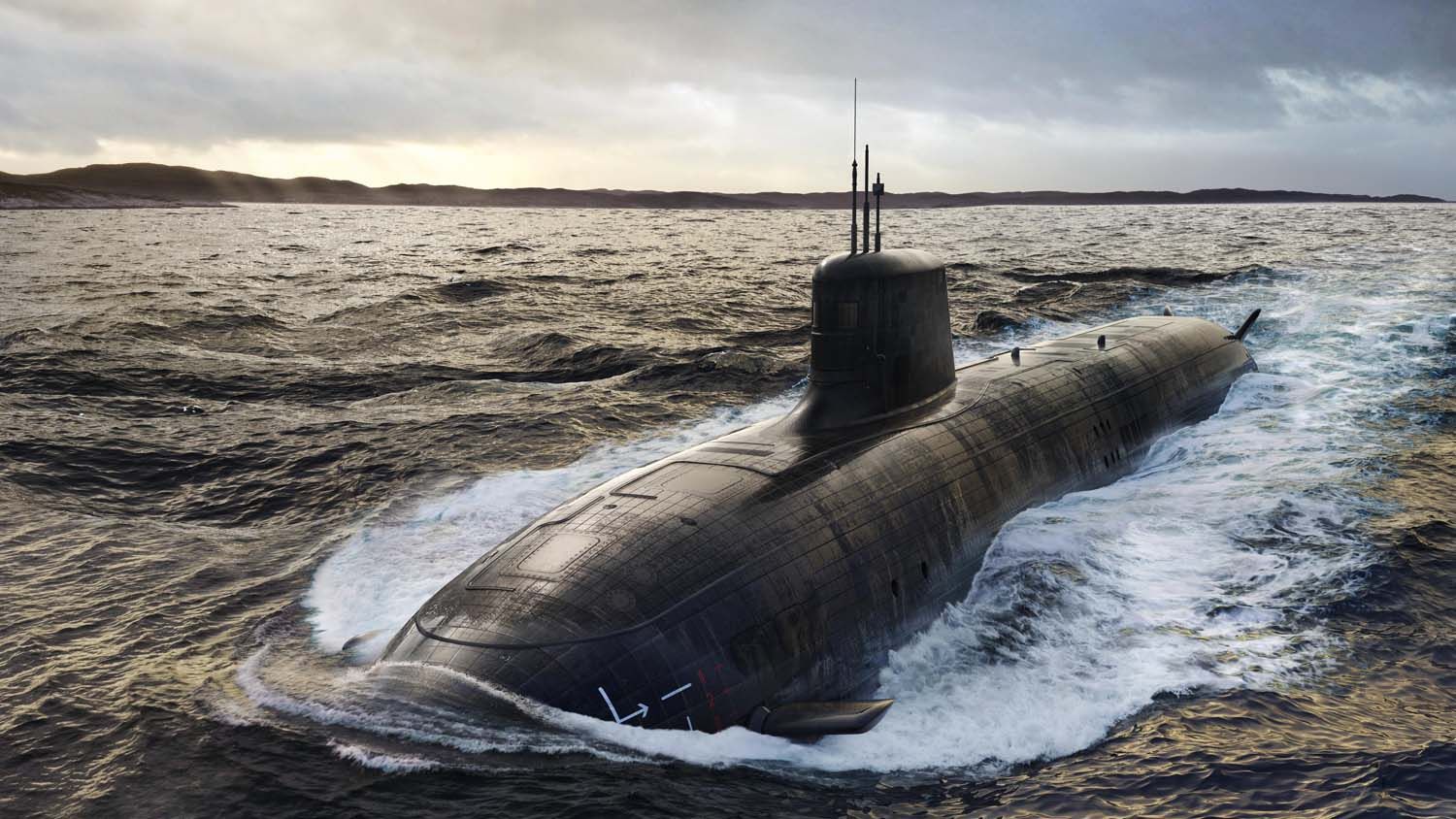
SSN-AUKUS is a planned class of conventionally armed, nuclear-powered attack submarines being developed for the United Kingdom and Australia under the AUKUS partnership. The design is British-led and incorporates technology and systems from the United Kingdom, United States and Australia.
The class is intended to replace the Royal Navy's Astute-class attack submarines and provide the Royal Australian Navy with an Australian-built nuclear-powered attack submarine. Construction of the first British SSN-AUKUS is planned to begin with steel cutting in 2027, with entry into Royal Navy service targeted for the late 2030s.
The program is also intended to create a common submarine design and supporting industrial structure for the two operating navies while increasing interoperability with the United States.
Development
British work on a successor to the Astute class began before the formation of the SSN-AUKUS program. Development of the future attack-submarine design was underway by 2018, and dedicated design work for an Astute successor received further support in 2021.
In March 2023, the British-led next-generation submarine design became the basis of SSN-AUKUS under the trilateral AUKUS submarine pathway. Australia joined the program and the design was planned to incorporate technology from all three AUKUS countries, including United States submarine technologies.
The program subsequently entered the Detailed Design and Long Lead phase. This work covers maturation of the submarine design, ordering of long-lead equipment and expansion of the industrial facilities needed for construction. By September 2026, contracts worth approximately £4 billion had been placed for SSN-AUKUS development and associated production infrastructure.
The United Kingdom plans to cut steel for the first British SSN-AUKUS in 2027, marking the planned start of physical construction. The final number of British submarines had not been fixed by September 2026 and was expected to be decided before completion of the Detailed Design and Long Lead phase in 2028.
The first Royal Navy SSN-AUKUS is planned to enter service in the late 2030s. Australia plans to begin construction of its first SSN-AUKUS in South Australia by the end of the 2020s and aims to deliver the first Australian-built submarine to the Royal Australian Navy in the early 2040s.
Industrial program
BAE Systems will build British SSN-AUKUS submarines at Barrow-in-Furness. Australia will construct its submarines at the Osborne submarine construction facilities in South Australia.
Rolls-Royce Submarines will manufacture nuclear reactors for both the British and Australian SSN-AUKUS fleets at Raynesway near Derby. Australia is contributing £2.4 billion over ten years toward expansion of Rolls-Royce infrastructure and shared SSN-AUKUS design costs.
The United Kingdom is investing approximately £6 billion during its Spending Review period in the Barrow shipyard, the Raynesway reactor facilities and the supporting submarine supply chain. The planned industrial expansion is intended to support a continuous production cadence of one SSN-AUKUS submarine every 18 months while allowing attack submarines and Dreadnought-class ballistic missile submarines to be constructed in parallel.
Infrastructure expansion includes increased reactor-production capacity at Raynesway and new or upgraded facilities at Barrow. BAE Systems completed the concept design for the SMITE2 submarine propulsion testing facility in early 2026, while preparation of Ramsden Dock was progressing for future manufacturing infrastructure.
Design
SSN-AUKUS is a nuclear-powered attack submarine based on the United Kingdom's next-generation submarine design. It is being developed as a common platform for the Royal Navy and Royal Australian Navy, with technology contributions from all three AUKUS nations.
Propulsion
The submarines will use British-manufactured nuclear propulsion plants produced by Rolls-Royce Submarines. Nuclear propulsion is intended to support sustained submerged operations and long-range deployments without the need to surface or snorkel for propulsion power.
The same British reactor-production infrastructure is intended to support both national fleets, although Australian submarines will be assembled in South Australia.
Combat systems and weapons
The Australian SSN-AUKUS program is planned to incorporate United States technology, including propulsion-plant systems and components, a common vertical launch system and weapons. The AUKUS partners also plan to develop a joint combat system building on the existing United States-Australia combat-system relationship.
SSN-AUKUS submarines are intended to remain conventionally armed despite using nuclear propulsion. Planned mission areas include intelligence and surveillance, undersea warfare and strike operations.
Interoperability
The class is being developed to maximize interoperability among the United Kingdom, Australia and the United States. Common systems, shared technology, training and sustainment arrangements are intended to allow the three navies to cooperate more closely in submarine operations.
Operational preparation was already underway before construction of SSN-AUKUS. During a 2026 maintenance period for the Astute-class submarine HMS Anson at HMAS Stirling in Western Australia, Australian personnel and companies participated directly in nuclear-submarine maintenance activity. More than 2,500 person-hours of Australian industry work were completed, 17 Australian companies supported the activity and 34 required components were manufactured locally.
Program status
SSN-AUKUS remained under development in 2026 and no submarine of the class had yet been completed. The British program was progressing through detailed design and long-lead procurement, with the first steel cut scheduled for 2027.
The United Kingdom is preparing industrial capacity for a Royal Navy attack-submarine fleet that could be larger than the seven-boat Astute program. The final British SSN-AUKUS fleet size remained undecided in September 2026, with a decision expected before the end of the Detailed Design and Long Lead phase in 2028.
Australia is simultaneously developing domestic construction, maintenance and workforce capacity. Its first locally built SSN-AUKUS is planned for delivery in the early 2040s, following the earlier acquisition of Virginia-class submarines from the United States to establish a nuclear-powered submarine capability before Australian SSN-AUKUS boats enter service.
Planned operators
- Royal Navy: Planned British operator. The first British SSN-AUKUS is targeted to enter service in the late 2030s as the successor to the Astute class.
- Royal Australian Navy: Planned Australian operator. Australia intends to construct SSN-AUKUS submarines in South Australia, with the first Australian-built boat planned for delivery in the early 2040s.
Specifications (planned SSN-AUKUS)
General characteristics
- Type: Nuclear-powered attack submarine.
- Armament concept: Conventionally armed.
- Development basis: British next-generation attack-submarine design incorporating technology from the United Kingdom, United States and Australia.
- British builder: BAE Systems at Barrow-in-Furness.
- Australian construction site: Osborne, South Australia.
- Nuclear reactor manufacturer: Rolls-Royce Submarines.
Mission systems
- Combat-system development: Planned joint combat system expanding the United States-Australia combat-system architecture.
- Weapons integration: Planned use of United States technology including a common vertical launch system and weapons.
- Primary planned missions: Intelligence, surveillance, undersea warfare and strike.
Related equipment
- Astute class: Current Royal Navy nuclear-powered attack-submarine class that SSN-AUKUS is intended to succeed.
- Virginia class: United States nuclear-powered attack submarine that Australia plans to acquire before Australian-built SSN-AUKUS submarines enter service.
- Dreadnought class: British ballistic missile submarine program being constructed alongside the expansion of the industrial base required for SSN-AUKUS.
 Argentina
 Armenia
 Australia
 Austria
 Austria-Hungary
 Belgium
 Brazil
 United States
 Brunei
 Bulgaria
 Canada
 Chile
Chile China
China Colonial America
 Colombia
 Confederate States
 Croatia
 Czech
Czech Denmark
 Egypt
Egypt Finland
 France
 Georgia
 Germany
 German Imperial
 Greece
 Holland
 Hungary
 India
India Indonesia
 Iran
Iran Iraq
Iraq Ireland
 Israel
 Italy
Italy Japan
Japan Japan (1940)
 Jordan
 Kingdom of Italy
 Malaysia
 Mexico
 Myanmar
 Nazi Germany
 Netherlands
 New Zealand
 North Korea
 Norway
 Pakistan
 Peru
Peru Philippines
 Poland
 Portugal
 Prussia
 Romania
 Russia
 Saudi Arabia
 Serbia
 Singapore
 Slovakia
 Slovenia
 South Africa
 South Korea
 Soviet Union
 Spain
Spain Sweden
 Switzerland
 Syria
Syria Taiwan
 Thailand
 Turkey
 UAE
UAE Ukraine
 Vietnam
 Yugoslavia