
History
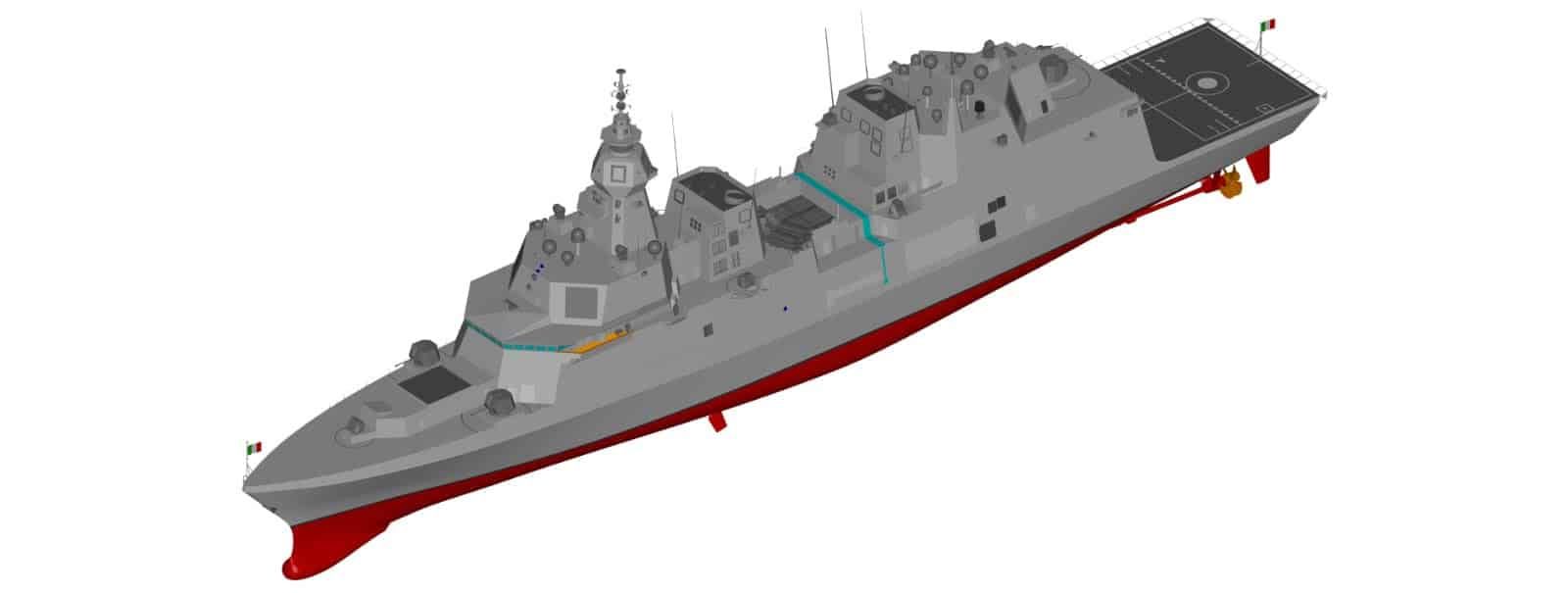
The DDX is a next-generation Italian Navy destroyer project developed around integrated air and missile defence, highly networked combat operations, extensive digitalisation, and control of unmanned maritime systems. The ships are being developed through Orizzonte Sistemi Navali, the joint venture owned by Fincantieri and Leonardo.
The planned DDX design is substantially larger than Italy's existing Horizon-class destroyers. Each ship is planned to be about 180 m long, displace about 13,500 tonnes, carry a crew of 251, and have a range of approximately 7,400 km (4,000 nautical miles).
Two ships are covered by the initial programme. Delivery of the first DDX is scheduled for 2033, followed by the second in 2035. Public programme descriptions identify the class as an evolution and replacement of the Horizon-class destroyers, although earlier Italian fleet planning associated the new destroyer requirement with replacement of the older Durand de la Penne class while retaining modernised Horizon ships.
Program launch
On 24 September 2026, Orizzonte Sistemi Navali signed a contract with OCCAR for development, production, logistics studies, and Initial In-Service Support for two DDX destroyers. The agreement has a total value of approximately €3.7 billion, including about €1.3 billion in options.
Orizzonte Sistemi Navali is owned 51 percent by Fincantieri and 49 percent by Leonardo. Fincantieri is responsible for development of the naval platform and its integration, while Leonardo is responsible for the combat system. Planned subcontracts have values of approximately €1.8 billion for Fincantieri, including about €800 million in options, and approximately €1.7 billion for Leonardo, including about €480 million in options.
The 2026 contract moved DDX from earlier planning into an active development and production programme. The first ship is scheduled for delivery in 2033 and the second in 2035.
Design
DDX is being designed as a highly digital and automated surface combatant able to integrate sensors, weapons, command-and-control functions, and ship-management systems through a common architecture. Its combat system is intended to support interoperability and information exchange within Italian and multinational forces.
Digital architecture
The platform incorporates Fincantieri's Navis Sapiens concept, which is intended to collect and correlate data generated by onboard systems and convert it into information supporting operational decisions, technical management, maintenance, and lifecycle support. The architecture is planned as an open and scalable system so that new functions and technologies can be integrated during the ships' service lives.
Connectivity between the ships and shore infrastructure is intended to form part of a wider digital ecosystem linking the vessel with naval bases. Planned applications include predictive maintenance, digital logistics support, secure mission-data distribution, and improved management of technical and operational information.
Power and platform systems
The DDX design includes a direct-current electrical sub-network with an associated energy-storage system. Other planned platform technologies include a stabilisation system integrated with the steering system, new methods for calculating thermal and electrical balances, and further development of the Ship Management System.
The electrical and digital architecture is intended to support the increasing power and data requirements of modern radar, communications, combat-management, and future weapon systems while allowing more coordinated management of propulsion and electrical consumption.
Combat system and sensors
The core combat-management architecture will use the new-generation SADOC 5 C5I system. The sensor suite is planned to include a high-power, fully digital S-band active electronically scanned array radar. Leonardo is responsible for development of the combat system, while MBDA is providing the associated missile weapon system.
The principal combat role is integrated air and missile defence. The DDX combat system is being developed to counter conventional missile threats as well as ballistic and hypersonic threats, while sharing information across naval, air, and land networks.
Armament
Project material identifies a combination of long-range air-defence missiles, land-attack weapons, anti-ship missiles, naval artillery, close-range guns, and anti-submarine torpedoes. Proposed configurations have included Sylver vertical-launch systems for Aster-family surface-to-air missiles and land-attack missiles, together with Teseo Mk2 EVO anti-ship missiles.
A projected gun armament includes a 127 mm LW naval gun capable of using Vulcano ammunition and 76 mm guns equipped for STRALES and DART guided ammunition. Close-range protection is planned to include 25 mm OTO KBA weapons and machine guns. Anti-submarine equipment is expected to include B515/3 triple torpedo launchers. Exact weapon quantities and launcher arrangements remain subject to the detailed design and have varied between earlier project descriptions.
Aviation and unmanned systems
The stern aviation facilities are planned around a flight deck and hangar capable of supporting two AW101 helicopters or unmanned aircraft. The ship is also being designed to manage unmanned surface and underwater vehicles through its integrated digital network.
While operating at 15 knots, each DDX is planned to coordinate unmanned surface and underwater assets through the ship's digital backbone. This capability is intended to extend detection, surveillance, and protection across the surface and underwater domains while remaining integrated with the ship's air and missile defence functions.
Program status
As of September 2026, DDX is under development following the award of the two-ship contract. The first ship is planned for delivery in 2033 and the second in 2035. The ships are not yet operational, and several elements of their detailed weapons, sensor, and platform configuration may change as engineering progresses.
The formal programme description presents DDX as the technological evolution and replacement of the Horizon-class destroyers. Earlier Italian force-structure planning, however, associated the requirement for new heavy destroyers with replacement of the Durand de la Penne class while the Horizon ships underwent mid-life modernisation. The precise fleet-replacement sequence therefore remains dependent on future Italian Navy planning.
Specifications (DDX planned configuration)
General characteristics
- Type: Guided-missile destroyer
- Developer and platform integrator: Fincantieri through Orizzonte Sistemi Navali
- Combat-system developer: Leonardo
- Planned units: Two
- Length: 180 m
- Displacement: approximately 13,500 tonnes
- Crew: 251
- Range: approximately 7,400 km (4,000 nautical miles)
- First planned delivery: 2033
- Second planned delivery: 2035
Sensors and combat systems
- Combat-management system: SADOC 5 C5I
- Primary radar: high-power fully digital S-band AESA radar
- Primary combat role: integrated air and missile defence
- Weapon-system supplier: MBDA
- Digital architecture: Navis Sapiens concept with an integrated digital backbone
Planned capabilities
- Air and missile defence: designed for defence against missile, ballistic, and hypersonic threats
- Unmanned systems: integrated management of surface and underwater unmanned vehicles
- Electrical system: DC sub-network with energy storage
- Aviation facilities: flight deck and hangar for two AW101 helicopters or unmanned aircraft
Related equipment
- Horizon class: Italian-French air-defence destroyer design formally described in the DDX programme as the class to be technologically succeeded and replaced.
- Durand de la Penne class: Older Italian destroyers associated with the earlier force-structure requirement that preceded the current DDX programme.
 Argentina
 Armenia
 Australia
 Austria
 Austria-Hungary
 Belgium
 Brazil
 United Kingdom
 United States
 Brunei
 Bulgaria
 Canada
 Chile
Chile China
China Colonial America
 Colombia
 Confederate States
 Croatia
 Czech
Czech Denmark
 Egypt
Egypt Finland
 France
 Georgia
 Germany
 German Imperial
 Greece
 Holland
 Hungary
 India
India Indonesia
 Iran
Iran Iraq
Iraq Ireland
 Israel
 Japan
Japan Japan (1940)
 Jordan
 Kingdom of Italy
 Malaysia
 Mexico
 Myanmar
 Nazi Germany
 Netherlands
 New Zealand
 North Korea
 Norway
 Pakistan
 Peru
Peru Philippines
 Poland
 Portugal
 Prussia
 Romania
 Russia
 Saudi Arabia
 Serbia
 Singapore
 Slovakia
 Slovenia
 South Africa
 South Korea
 Soviet Union
 Spain
Spain Sweden
 Switzerland
 Syria
Syria Taiwan
 Thailand
 Turkey
 UAE
UAE Ukraine
 Vietnam
 Yugoslavia