History
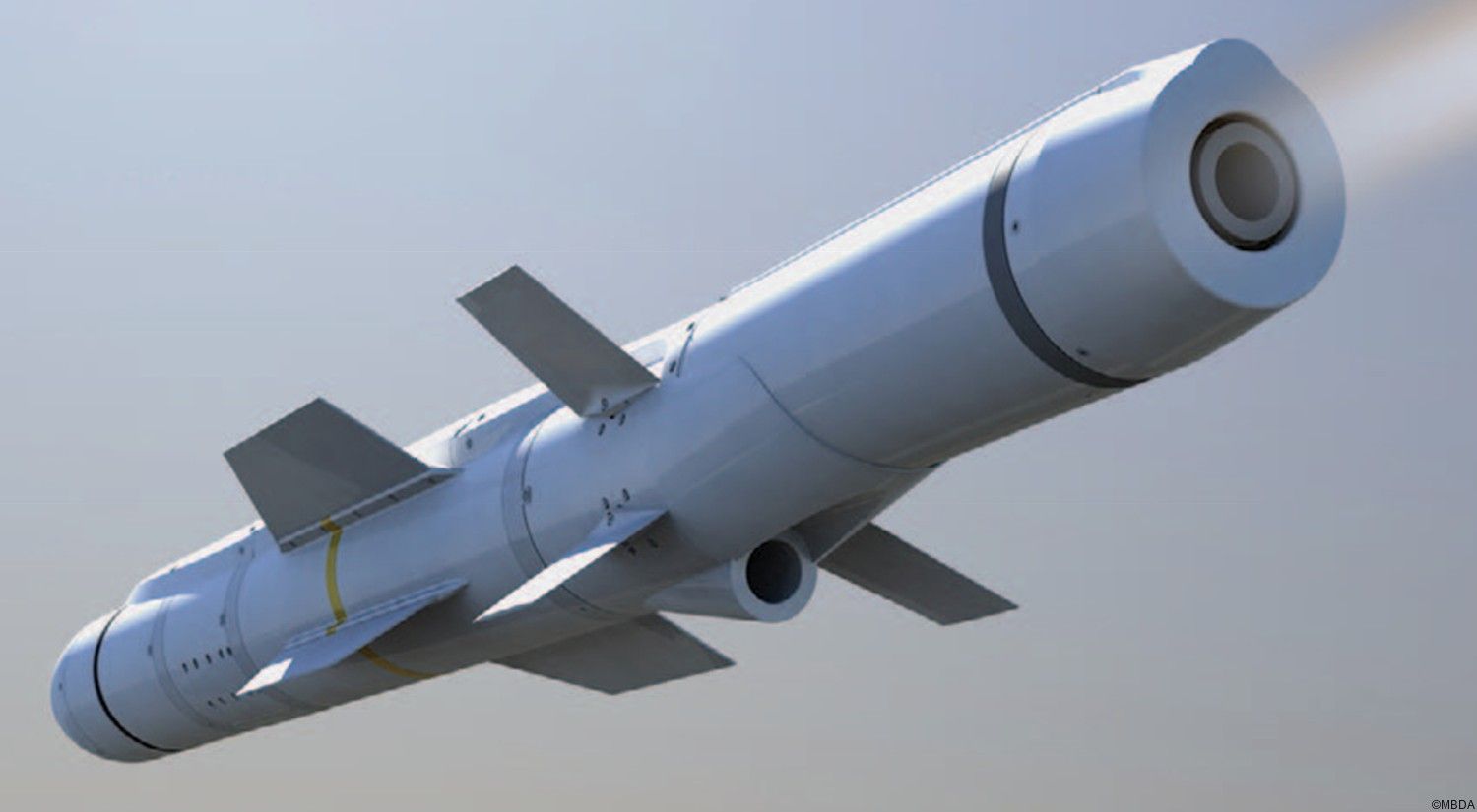
MBDA Sea Venom, also known as Sea Venom/ANL, is a British-French precision anti-ship missile developed for attacks against surface vessels and coastal targets in congested littoral environments. The weapon was created through cooperation between MBDA and the governments of the United Kingdom and France.
Sea Venom combines an imaging-infrared guidance system with a secure two-way datalink that allows an operator to supervise an engagement after launch. The missile can use a sea-skimming flight profile and is intended to defeat targets ranging from small maritime threats to corvette-sized warships equipped with point-defence systems.
The missile entered Royal Navy operational service on Wildcat helicopters and achieved Initial Operating Capability in 2025. MBDA is also developing surface-launch applications, including integration with Stark's Vanta-12 unmanned surface vehicle.
Development
The British requirement originated as Future Air to Surface Guided Weapon Heavy, or FASGW(H), which emerged in 2001 as a replacement for the Sea Skua missile. France developed a corresponding Anti-Navire Léger requirement, and the programmes were subsequently combined into the joint FASGW(H)/ANL effort.
A £35 million assessment-phase contract was awarded in 2008 with the United Kingdom and France sharing the cost. On 27 March 2014, MBDA received a £500 million demonstration and manufacturing contract, with the British share valued at approximately £280 million. A separate £90 million contract covered integration of Sea Venom and the lighter Martlet missile with the Royal Navy's Wildcat helicopter.
Initial flight trials were completed in 2015. In 2016, work included modifications to the Wildcat stores-management system for the new weapons and additional integration activity intended to support Sea Venom carriage and control.
Development firings continued through the late 2010s. A third development firing was completed in 2018, demonstrating the missile against the intended maritime target set. The qualification firing programme concluded on 17 November 2020 with a final trial that tested target discrimination in a complex naval scenario.
Further operational and integration trials continued after qualification. Sea Venom was carried during the Royal Navy's 2021 carrier deployment before the complete weapon system had reached its final operational milestone. Additional trials in 2022 examined the employment of Sea Venom and Martlet from Wildcat helicopters under different weather, sea-state, aircraft-loading, and ship-operating conditions.
In October 2025, Sea Venom achieved Initial Operating Capability with the Royal Navy during Operation Highmast. Four Wildcats from 815 Naval Air Squadron were armed with the missile across the deployed carrier strike group. Each Wildcat can carry up to four Sea Venoms, allowing several targets to be engaged during one sortie or multiple weapons to be concentrated against a single target.
Surface-launch development
Work on a surface-launched Sea Venom configuration was under way by 2022. By September 2026, MBDA and Stark were developing integration of the missile with the 12 m Vanta-12 unmanned surface vehicle. The proposed installation uses an aft box launcher able to accommodate up to four Sea Venom missiles.
During Exercise REPMUS 2026 in Portugal, Stark demonstrated Vanta-12 while developing the missile integration concept with MBDA. The vessel carried an emulation model rather than an operational Sea Venom installation. Initial software integration had begun, but the complete surface-launch system had not yet been demonstrated as an operational missile capability. The work therefore represented an integration programme rather than an in-service Vanta-12 weapon configuration.
Design
Sea Venom is a compact tactical strike missile weighing 120 kg. It is 2.5 m long and 200 mm in diameter. The missile uses solid-propellant propulsion and flies at high-subsonic speed. Its maximum stated range is up to 30 km, depending on environmental conditions.
Guidance and control
The missile uses an imaging-infrared seeker for terminal targeting. A secure two-way datalink provides operator-in-the-loop control throughout the engagement. Seeker imagery can be transmitted back to the operator, who can select an alternative target, refine the desired impact point, or abort the attack. These functions are intended to support engagements in crowded coastal areas where positive target discrimination and restrictive rules of engagement are important.
Sea Venom can also operate with a high degree of autonomy. Its guidance system is designed to perform target selection and attack while retaining the option for human intervention. The missile employs a sea-skimming flight profile to reduce exposure to defensive systems during an anti-ship engagement.
Warhead and target set
Sea Venom carries a 30 kg high-explosive semi-armour-piercing blast-fragmentation warhead. The weapon is intended for surface-warfare missions against a broad range of naval targets, including corvette-sized vessels equipped with point-defence systems. Its precision guidance and warhead also allow it to attack coastal installations and other land targets.
Platform integration
The original operational configuration is helicopter launched, with the Royal Navy's Wildcat serving as a principal launch platform. The missile was developed to remain compatible with established logistics associated with weapons such as Sea Skua and AS15TT.
MBDA has also designed Sea Venom for integration with additional platform types. Supported or planned applications include naval patrol vessels, uncrewed aircraft, uncrewed surface vessels, and fixed or relocatable coastal launch systems. These applications require platform-specific integration and should not be considered operational merely because the missile is physically compatible with them.
Operational history
The Royal Navy introduced Sea Venom as the heavier element of its Future Anti-Surface Guided Weapon capability, complementing the much lighter Martlet missile. Sea Venom is intended for larger and more heavily protected targets, while Martlet covers smaller craft and other lighter threats.
Initial Operating Capability was achieved in 2025 during Operation Highmast. Sea Venom-equipped Wildcats were distributed across the deployed carrier strike group, providing an air-launched precision anti-surface capability against maritime, coastal, and selected land targets.
By 2026, Sea Venom remained operational in its helicopter-launched role while MBDA continued work on surface-launch integration. The Vanta-12 programme demonstrated one possible unmanned naval application, but the REPMUS 2026 activity used an emulated missile fit and did not establish an operational surface-launched Sea Venom capability.
Variants
- Sea Venom/FASGW(H) — British designation for the operational air-launched missile developed as the heavier element of the Future Anti-Surface Guided Weapon programme.
- ANL — French designation associated with the same joint British-French Sea Venom programme.
- Surface-launched Sea Venom — adaptation under development for ship, unmanned surface vessel, and coastal applications. A Vanta-12 integration concept was demonstrated with an emulation model in 2026 while full integration work continued.
Operators
- United Kingdom — Royal Navy Fleet Air Arm; Sea Venom achieved Initial Operating Capability on Wildcat helicopters in 2025.
Specifications (Sea Venom/ANL air-launched missile)
General characteristics
- Type: Anti-ship and tactical strike guided missile
- Weight: 120 kg
- Length: 2.5 m
- Diameter: 200 mm
- Warhead: 30 kg high-explosive semi-armour-piercing blast-fragmentation warhead
- Propulsion: Solid-propellant rocket motor
Performance
- Maximum range: Up to 30 km, depending on environmental conditions
- Speed: High subsonic
- Flight profile: Sea skimming for anti-surface engagements
Guidance
- Seeker: Imaging infrared
- Datalink: Secure two-way link
- Control: Autonomous guidance with operator-in-the-loop supervision
- Operator functions: Alternative target selection, aim-point refinement, and mission abort
Related equipment
- Sea Skua — Royal Navy anti-ship missile that Sea Venom was developed to replace.
- AS15TT — Earlier French anti-ship weapon whose logistics influenced Sea Venom's compatibility requirements.
- Martlet — Lightweight missile used alongside Sea Venom in the Royal Navy's Future Anti-Surface Guided Weapon family.
 Argentina
 Armenia
 Australia
 Austria
 Austria-Hungary
 Belgium
 Brazil
 United Kingdom
 United States
 Brunei
 Bulgaria
 Canada
 Chile
Chile China
China Colonial America
 Colombia
 Confederate States
 Croatia
 Czech
Czech Denmark
 Egypt
Egypt Finland
 France
 Georgia
 Germany
 German Imperial
 Greece
 Holland
 Hungary
 India
India Indonesia
 Iran
Iran Iraq
Iraq Ireland
 Israel
 Italy
Italy Japan
Japan Japan (1940)
 Jordan
 Kingdom of Italy
 Malaysia
 Mexico
 Myanmar
 Nazi Germany
 Netherlands
 New Zealand
 North Korea
 Norway
 Pakistan
 Peru
Peru Philippines
 Poland
 Portugal
 Prussia
 Romania
 Russia
 Saudi Arabia
 Serbia
 Singapore
 Slovakia
 Slovenia
 South Africa
 South Korea
 Soviet Union
 Spain
Spain Sweden
 Switzerland
 Syria
Syria Taiwan
 Thailand
 Turkey
 UAE
UAE Ukraine
 Vietnam
 Yugoslavia