
History
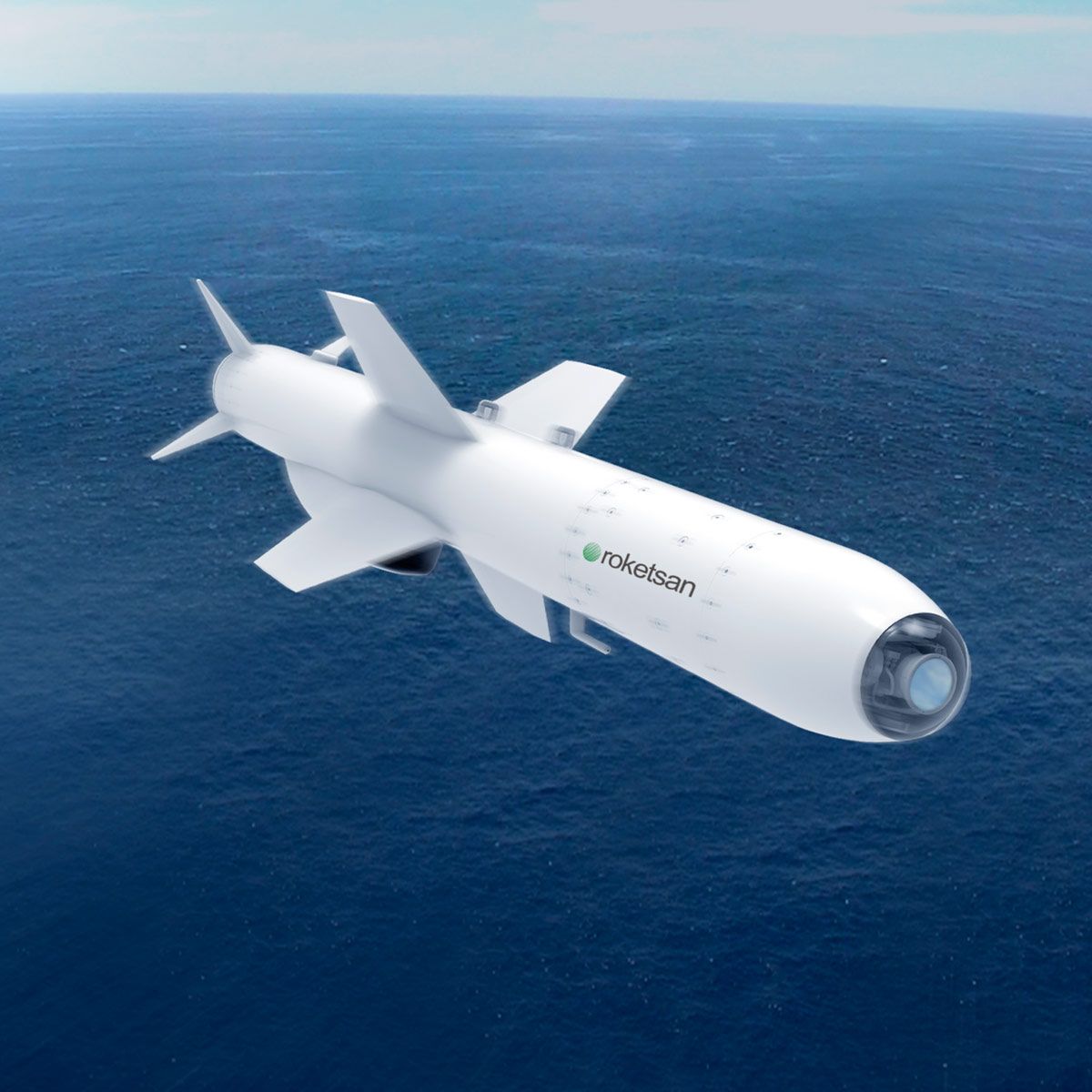
Roketsan ÇAKIR is a Turkish high-subsonic cruise missile designed for launch from air, land and naval platforms. The weapon combines a range of more than 150 km with a 70 kg warhead, network-based datalink and several terminal-guidance options.
ÇAKIR was developed as a multi-platform precision-strike weapon rather than for a single launcher type. Roketsan states that it can be integrated with fixed-wing and rotary-wing aircraft, unmanned combat aircraft, unmanned surface vessels, tactical wheeled vehicles and naval platforms.
Ground-launched testing in August 2026 demonstrated the missile against both land and maritime targets. The firings validated the booster-assisted surface-launch configuration and expanded the demonstrated launch options beyond previously tested air-launched use.
Development
Roketsan unveiled ÇAKIR in March 2022 after developing the missile with company resources. At the time, the company planned initial testing during 2022 and platform integration during 2023. A development and delivery agreement for the indigenous KTJ-1750 turbojet engine was also associated with the missile program. Roketsan describes the engine as ÇAKIR's domestic cruise propulsion system. Technical information published by Roketsan identifies a baseline range exceeding 150 km and a missile mass of up to 275 kg without the surface-launch booster.
In May 2023, a ÇAKIR was fired from a Bayraktar Akıncı unmanned combat aircraft. Reporting on the program describes this event as the first drone-launched test of the missile. A later Akıncı test reported in 2024 involved a surface target at a range of 100 km. These firings established the air-launched configuration before public demonstration of the mobile ground-launch system.
Ground-launched tests
On 27 August 2026, Roketsan announced two separate ground-launched firing tests. One missile engaged a land target and another engaged a maritime target. Both were reported as successful direct engagements. Contemporary reporting from Daily Sabah stated that the tests used a next-generation imaging infrared seeker and also demonstrated an extended-range configuration enabled by a new fuel system. Roketsan did not publicly disclose a revised maximum range.
The ground configuration adds a solid-fuel booster because the missile cannot rely on the altitude and forward velocity provided by an airborne launch platform. The booster accelerates the missile before the KTJ-1750 turbojet sustains cruise flight. The surface-launched configuration weighs up to 330 kg and measures up to 4.1 m in length. Earlier technical reporting by EDR Magazine described the booster as approximately 55 kg and documented the missile's Mach 0.75 to Mach 0.85 flight-speed range.
The 2026 tests were the first publicly disclosed ÇAKIR firings from a mobile ground launcher according to Militarnyi. The launcher chassis, firing distances and detailed target configurations were not officially disclosed.
Design
ÇAKIR uses a compact cruise-missile airframe with a maximum stated diameter of 275 mm. Without its booster, the missile is up to 3.3 m long and weighs no more than 275 kg. The ground-launched configuration increases maximum length to 4.1 m and mass to 330 kg.
Propulsion and flight
Cruise propulsion is provided by the Turkish-developed Kale KTJ-1750 turbojet. Technical reporting attributes approximately 1,750 N of thrust to the engine. Surface-launched missiles use a solid-fuel booster for initial acceleration before transitioning to turbojet-powered flight.
The missile operates at high-subsonic speed, reported at approximately Mach 0.75 to Mach 0.85. Roketsan describes terrain masking and very-low-altitude sea-skimming as methods for reducing exposure to hostile air-defence systems. Radar-absorbing material is also incorporated into the missile structure to reduce radar detectability.
Navigation and guidance
ÇAKIR combines inertial navigation with anti-jam satellite navigation and altitude measurement. Published technical descriptions also identify radar and barometric altimeters and terrain-referenced navigation. Mission planning can use three-dimensional waypoints, allowing the missile to follow a programmed route before entering its terminal attack phase.
Terminal guidance can employ imaging infrared, radio-frequency or combined seeker configurations. The August 2026 ground-launched tests reportedly used a new-generation imaging infrared seeker. This seeker configuration was demonstrated against both land and maritime targets.
Datalink and coordinated engagement
A network-based bidirectional datalink provides man-in-the-loop control after launch. Roketsan states that operators can update target information, redirect the missile toward a target of opportunity, command an attack or re-attack and abort a mission while the missile is in flight.
The datalink architecture also supports communication between missiles. Roketsan describes coordinated multi-missile attacks under a swarm concept in which several weapons can cooperate against one or more targets. This capability is intended to complicate defensive interception rather than limit each missile to an independently programmed flight.
Warhead
ÇAKIR carries a 70 kg warhead. The missile is intended for precision attack against several target categories, including land targets, surface vessels, coastal targets, strategic land objectives, field targets and caves.
Program status
ÇAKIR has progressed through demonstrated air-launched and ground-launched firing configurations. The August 2026 campaign confirmed mobile surface launch against both land and maritime targets, including transition from booster-assisted launch to turbojet cruise flight.
The same campaign reportedly tested a new fuel system that extended the missile's range beyond an earlier configuration. No new maximum distance was publicly provided, so the confirmed published range remains more than 150 km.
ÇAKIR is designed for integration across several platform classes. Public material supports launch from aircraft, unmanned combat aircraft, unmanned surface vessels, tactical wheeled vehicles and naval platforms, but demonstrated integration should not be interpreted as confirmation that every planned configuration is already operational.
Variants
- Air-launched ÇAKIR: configuration without the surface-launch booster, weighing up to 275 kg and intended for integration with fixed-wing aircraft, helicopters and unmanned combat aircraft.
- Ground-launched ÇAKIR: booster-equipped configuration weighing up to 330 kg. Mobile ground firings against land and maritime targets were demonstrated in August 2026.
- Naval and unmanned-surface configurations: planned or supported integration concepts for surface combatants and unmanned surface vessels.
- Mission variants: secondary reporting on Roketsan's program describes planned strike, anti-ship and anti-radiation members of the ÇAKIR family. Publicly demonstrated status varies by configuration.
Specifications (ground-launched ÇAKIR)
General characteristics
- Manufacturer: Roketsan
- Type: High-subsonic cruise missile
- Launch configuration: Mobile ground platform with solid-fuel booster
- Weight: up to 330 kg with booster
- Length: up to 4.1 m with booster
- Diameter: up to 275 mm
- Warhead weight: 70 kg
- Cruise engine: Kale KTJ-1750 turbojet
Performance
- Range: more than 150 km for the published baseline configuration
- Speed: approximately Mach 0.75 to Mach 0.85
- Flight profiles: terrain masking and very-low-altitude sea-skimming
Guidance and control
- Mid-course navigation: inertial navigation with anti-jam GNSS, altimeter support and terrain-referenced navigation
- Terminal guidance: imaging infrared, radio-frequency or hybrid seeker options
- 2026 test seeker: next-generation imaging infrared seeker
- Datalink: bidirectional network-based link supporting target updates, attack or re-attack commands and mission abort
- Cooperative capability: inter-missile communication for coordinated multi-missile attacks
 Argentina
 Armenia
 Australia
 Austria
 Austria-Hungary
 Belgium
 Brazil
 United Kingdom
 United States
 Brunei
 Bulgaria
 Canada
 Chile
Chile China
China Colonial America
 Colombia
 Confederate States
 Croatia
 Czech
Czech Denmark
 Egypt
Egypt Finland
 France
 Georgia
 Germany
 German Imperial
 Greece
 Holland
 Hungary
 India
India Indonesia
 Iran
Iran Iraq
Iraq Ireland
 Israel
 Italy
Italy Japan
Japan Japan (1940)
 Jordan
 Kingdom of Italy
 Malaysia
 Mexico
 Myanmar
 Nazi Germany
 Netherlands
 New Zealand
 North Korea
 Norway
 Pakistan
 Peru
Peru Philippines
 Poland
 Portugal
 Prussia
 Romania
 Russia
 Saudi Arabia
 Serbia
 Singapore
 Slovakia
 Slovenia
 South Africa
 South Korea
 Soviet Union
 Spain
Spain Sweden
 Switzerland
 Syria
Syria Taiwan
 Thailand
 UAE
UAE Ukraine
 Vietnam
 Yugoslavia