
History
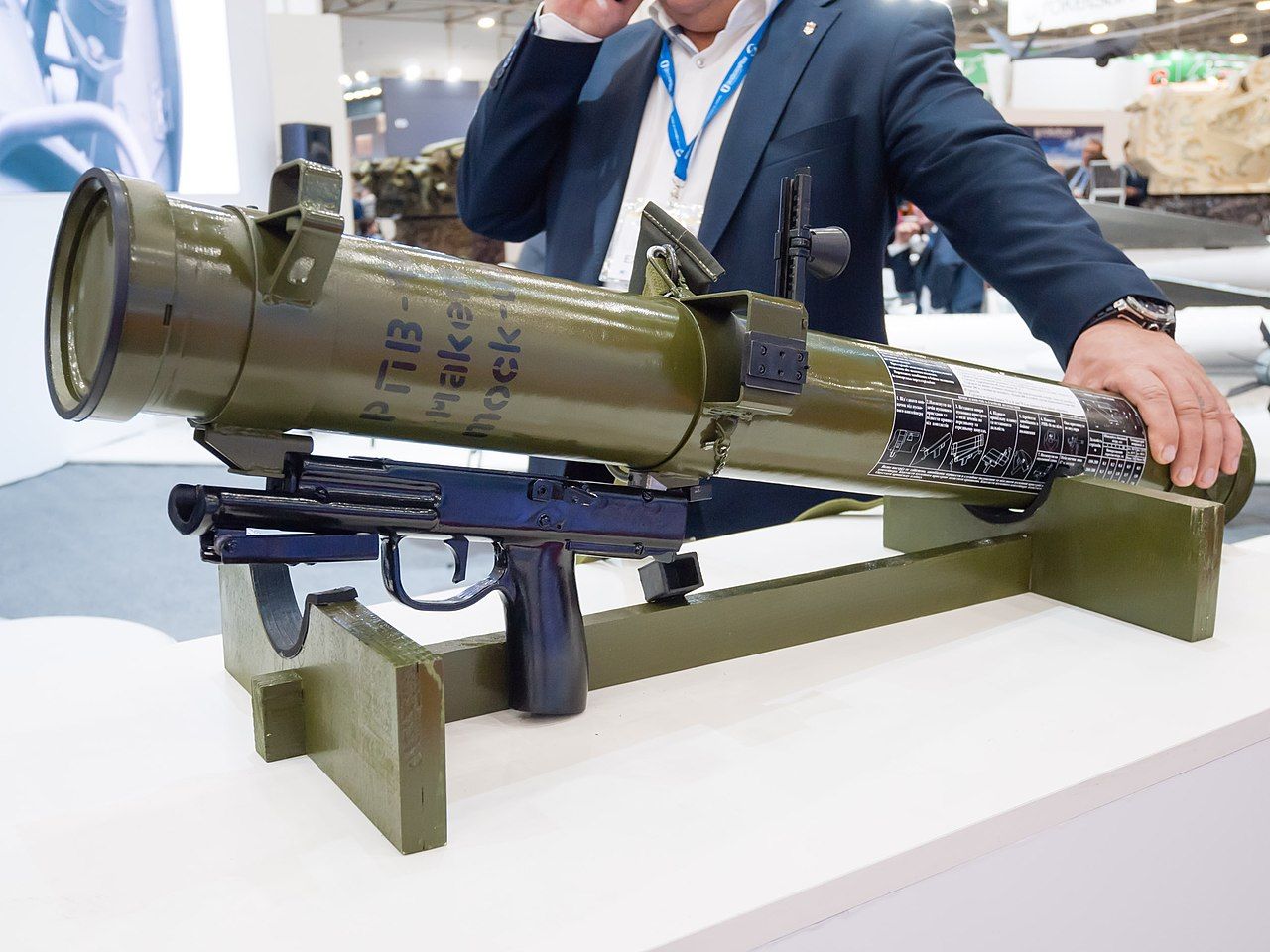
The RPV-16 is a Ukrainian 93 mm thermobaric rocket flamethrower developed by the State Scientific Research Institute of Chemical Products. It is a man-portable rocket weapon intended to engage personnel in open positions and shelters, fortified structures, and lightly armored or soft-skinned vehicles.
The weapon was publicly demonstrated in 2017 and subsequently passed testing before entering production. Although officially designated as an infantry rocket flamethrower, the RPV-16 launches a rocket-propelled thermobaric munition rather than projecting a stream of burning fuel.
The RPV-16 has also been adapted for remotely operated platforms. By 2026, Ukrainian developers were testing a TerMIT 2.0 unmanned ground vehicle combat module carrying eight RPV-16 launchers.
Development and production
A prototype of the RPV-16 was demonstrated at a test range in Ukraine's Chernihiv region in July 2017. The weapon was developed by the State Scientific Research Institute of Chemical Products within the Ukrainian state defense-industrial system.
During late 2017, the institute arranged production of components for the weapon. By July 2018, production of the RPV-16 had been established after successful testing. A contemporary UNIAN report stated that production involved cooperation between the Research Institute of Chemical Products, Shostka State Plant Impulse, and Artem.
Reports differ slightly on the exact date when the RPV-16 formally entered Ukrainian service. Later accounts place its entry into service during the final months of 2018. By 2020, the Ukrainian Army had received additional batches numbering several hundred weapons.
Design
The RPV-16 is built around a 93 mm launch container carrying a rocket-propelled thermobaric munition. The launch tube is a disposable component, while the firing mechanism is designed for repeated use. The weapon can be carried and fired by a single soldier.
The munition combines a rocket motor with a thermobaric warhead. When the warhead functions, its charge disperses a combustible aerosol before ignition. Reports based on Ukroboronprom information describe an aerosol cloud approximately 7 to 8 m in diameter, followed about 0.2 seconds later by ignition. The resulting combustion temperature has been reported at up to approximately 2,500 °C. The warhead also produces a fragmentation effect.
The thermobaric effect is intended to generate high temperature and pressure within the target area, making the weapon particularly suitable for attacking personnel inside bunkers, dugouts, trenches, buildings, and other enclosed or fortified positions. The RPV-16 can also be used against lightly armored and unarmored vehicles. A 2018 Ukrainian Military Pages report described the weapon as intended for personnel, vehicles, and protected structures made from materials including stone, brick, and concrete.
Range
Published range figures distinguish between direct-fire, aimed, and maximum engagement distances. A 2025 demonstration by the 118th Mechanized Brigade described direct fire at up to about 300 m, aimed fire to approximately 600 m, and a maximum range of 1,000 m. Earlier reporting also gave a 1,000 m maximum range, while some sources described 300 m as the effective range. The different figures appear to refer to different firing criteria rather than different RPV-16 variants.
Operational history
The RPV-16 entered service with the Armed Forces of Ukraine by late 2018. The weapon has subsequently been used and demonstrated by Ukrainian formations during the Russia-Ukraine war.
In May 2025, the 118th Mechanized Brigade demonstrated the RPV-16 against targets representing personnel, equipment, and structures. An Oboronka report quoted an instructor describing the weapon as intended primarily for personnel sheltered in bunkers, dugouts, trenches, and similar positions, as well as lightly armored vehicles.
Unmanned platform integration
The RPV-16 has been integrated with Ukrainian unmanned systems as a remotely operated thermobaric weapon. Reported applications include ground and maritime unmanned platforms.
In August 2026, Ukrainian company Tencore was testing a combat module for the tracked TerMIT 2.0 unmanned ground vehicle carrying eight RPV-16 rocket flamethrowers. The prototype module was designed for either individual launches or salvo fire. Its fire-control installation provided an aimed range of up to 600 m and a maximum range of up to 1,000 m. The module had a vertical aiming sector from -8 degrees to +20 degrees and a horizontal sector from -25 degrees to +25 degrees, with a reported rotation speed of up to 50 degrees per second.
The TerMIT 2.0 module used a Full HD daylight camera and was designed to accept a thermal imager. It also incorporated a three-level safety system intended to prevent accidental firing. Tencore planned further integration of its AI KIT for operation under electronic-warfare conditions. As of August 2026, the module remained a prototype and had completed initial range testing of its aiming mechanisms.
Operators
- Ukraine: The RPV-16 is in service with the Armed Forces of Ukraine.
Specifications (RPV-16)
General characteristics
- Type: Man-portable thermobaric rocket flamethrower.
- Caliber: 93 mm.
- Operating principle: Rocket-propelled munition launched from a disposable container with a reusable firing mechanism.
- Crew: One operator.
Performance
- Direct-fire distance: Up to approximately 300 m.
- Aimed range: Approximately 600 m according to later Ukrainian military reporting.
- Maximum range: 1,000 m.
Warhead
- Warhead type: Thermobaric with additional fragmentation effect.
- Thermobaric filler: Approximately 2.1 kg according to published descriptions of the munition.
- Aerosol cloud diameter: Approximately 7 to 8 m.
- Ignition delay: Approximately 0.2 seconds after aerosol formation.
- Reported combustion temperature: Up to approximately 2,500 °C.
 Argentina
 Armenia
 Australia
 Austria
 Austria-Hungary
 Belgium
 Brazil
 United Kingdom
 United States
 Brunei
 Bulgaria
 Canada
 Chile
Chile China
China Colonial America
 Colombia
 Confederate States
 Croatia
 Czech
Czech Denmark
 Egypt
Egypt Finland
 France
 Georgia
 Germany
 German Imperial
 Greece
 Holland
 Hungary
 India
India Indonesia
 Iran
Iran Iraq
Iraq Ireland
 Israel
 Italy
Italy Japan
Japan Japan (1940)
 Jordan
 Kingdom of Italy
 Malaysia
 Mexico
 Myanmar
 Nazi Germany
 Netherlands
 New Zealand
 North Korea
 Norway
 Pakistan
 Peru
Peru Philippines
 Poland
 Portugal
 Prussia
 Romania
 Russia
 Saudi Arabia
 Serbia
 Singapore
 Slovakia
 Slovenia
 South Africa
 South Korea
 Soviet Union
 Spain
Spain Sweden
 Switzerland
 Syria
Syria Taiwan
 Thailand
 Turkey
 UAE
UAE Vietnam
 Yugoslavia