
History
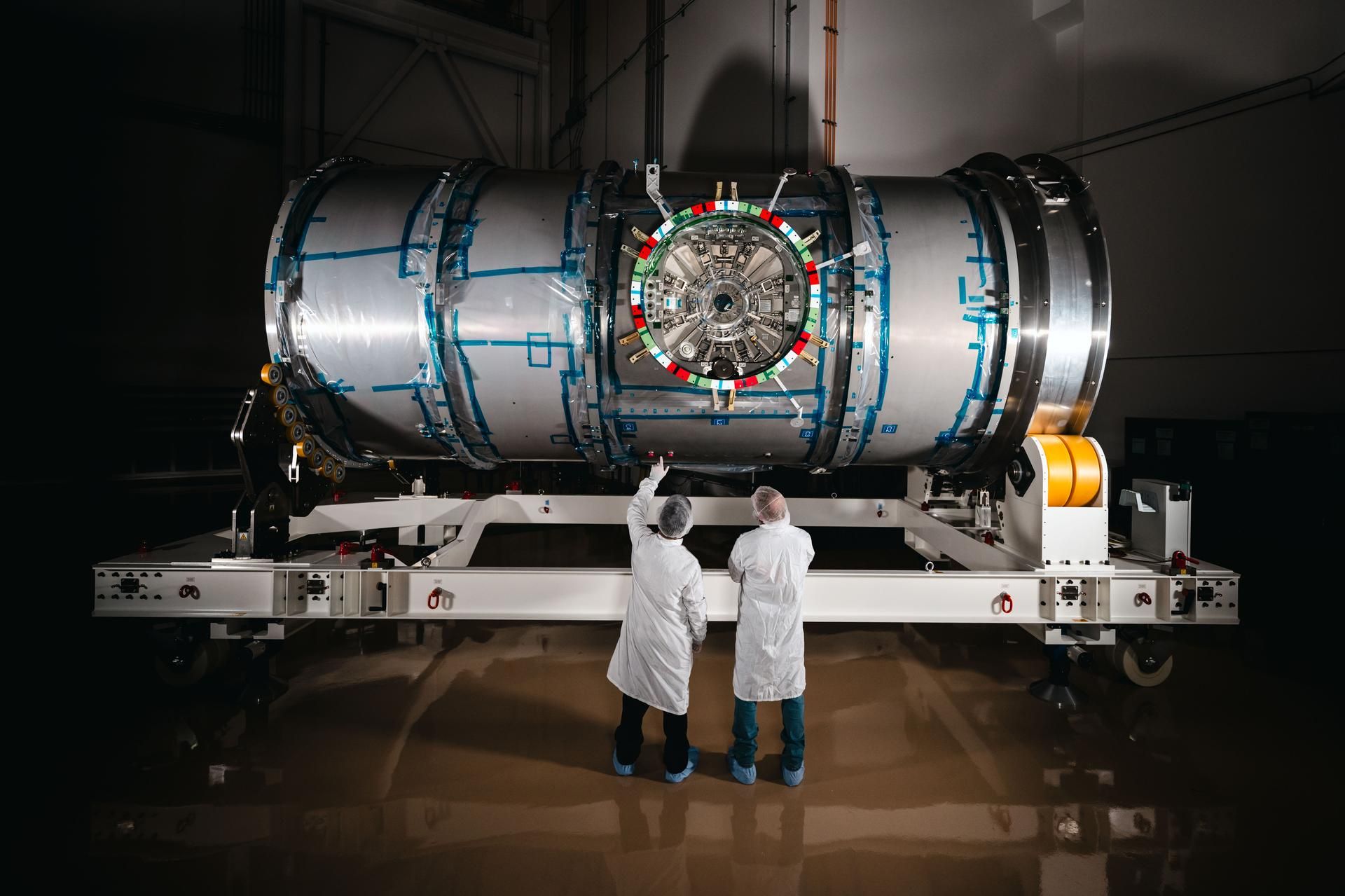
The Northrop Grumman Habitation and Logistics Outpost, commonly known as HALO, was developed as a pressurized habitation and logistics module for NASA's lunar Gateway station. Its design drew on hardware and operational experience from the Cygnus cargo spacecraft.
HALO was intended to support astronauts, visiting spacecraft, scientific instruments, communications equipment, and internal and external payloads in lunar orbit. Northrop Grumman was NASA's contracted manufacturer and also held responsibility for integrating HALO with the Power and Propulsion Element.
Following NASA's 2026 restructuring of the Artemis program and cancellation of the planned Gateway station, Northrop Grumman announced that HALO-derived hardware and interfaces would be repurposed for Lunar Infrastructure Demo missions supporting a future base near the lunar south pole.
Northrop Grumman's relevant human-spaceflight experience includes Cygnus cargo missions to the International Space Station, which began in 2013. HALO's pressure-vessel design was derived from the Cygnus Pressurized Cargo Module and other International Space Station modules designed by Thales Alenia Space Italia.
The planned Gateway configuration paired HALO with the Power and Propulsion Element, logistics modules, lunar landers, and NASA's Orion spacecraft. HALO and the propulsion element were to be integrated before launching together on a Falcon Heavy rocket and traveling to a near-rectilinear halo orbit around the Moon.
A 2024 Northrop Grumman HALO fact sheet identified Thales Alenia Space Italia in Turin as the manufacturer of the primary structure. Northrop Grumman facilities in Virginia and Arizona were assigned simulation, integration, and testing work, while final launch-site activities were planned for Cape Canaveral.
In 2026, NASA reorganized Artemis around a step-by-step program intended to accelerate the development of lunar-surface technology. Northrop Grumman subsequently announced three Lunar Infrastructure Demo missions, designated LID-1, LID-2, and LID-3. The company plans to reuse HALO-derived electrical, data, and mechanical technology rather than discard the unfinished module.
The demonstrations are intended to develop power, thermal control, autonomous operation, communications, and hosted-payload services for the lunar surface. These systems are planned to operate through the extended lunar night and contribute to persistent infrastructure near the Moon's south pole. No launch dates for the three demonstrations were provided.
Design
Structure and accommodation
HALO was designed as a pressurized cylindrical module with a diameter of 3.0 m. It was to provide habitable space for science activities, mission preparation, physical exercise, equipment maintenance, and organized cargo storage. With Orion attached, the module was planned to support as many as four crew members for missions lasting up to 30 days.
Three docking ports were included for Orion, logistics spacecraft, lunar landers, and later Gateway modules. The module was also designed to accommodate internal and external scientific payloads and to support both astronaut and robotic activities outside the pressurized cabin.
Power, avionics, and communications
HALO's internal electrical equipment was designed to monitor, control, and switch the high-power bus supplied by the Power and Propulsion Element. This architecture would distribute electrical power to HALO, other Gateway modules, and visiting vehicles.
A fault-tolerant avionics system was planned to control the module. Time-triggered Ethernet network switches would provide deterministic high-speed communications among modules, payloads, and subsystem components.
The planned payloads included the European Space Agency's HALO Lunar Communication System. This equipment was intended to provide communications between Gateway and assets operating on or around the Moon. The externally mounted Heliophysics Environmental and Radiation Measurement Experiment Suite was planned to observe space weather.
Environmental and thermal systems
HALO's Environmental Control and Life Support System was designed to supply nitrogen and oxygen, regulate cabin humidity, and provide contingency carbon-dioxide removal. An active thermal-control system using conformal radiators would collect and reject heat from the module.
Japan's space agency was assigned responsibility for HALO's lithium-ion batteries. The Canadian Space Agency was associated with external robotic and payload accommodations, while the European Space Agency supplied the lunar communications package.
Program status
The original HALO spacecraft module remained unfinished when NASA restructured Artemis in 2026. It did not enter operational service as part of Gateway. Northrop Grumman instead plans to adapt its available hardware, power and data interfaces, and mechanical technology for the LID-1, LID-2, and LID-3 lunar-surface demonstrations.
The demonstrations are planned to collect performance data under actual lunar conditions. Their focus includes surviving the cold, weeks-long lunar night and supporting infrastructure that could later sustain robotic equipment and astronauts. The program also relates to NASA's interest in using lunar water ice for water, shielding, and propellant, although HALO itself was not an in-situ resource utilization system.
Specifications (HALO Gateway module)
General characteristics
- Type: Pressurized lunar-orbit habitation and logistics module
- Manufacturer and integrator: Northrop Grumman
- Primary structure manufacturer: Thales Alenia Space Italia
- Diameter: 3.0 m
- Crew support: Up to four people with Orion attached
- Planned crewed duration: Up to 30 days
- Docking ports: Three
- Planned orbit: Near-rectilinear halo orbit around the Moon
- Planned launch vehicle: Falcon Heavy, integrated with the Power and Propulsion Element
Systems and payload support
- Network: Time-triggered Ethernet
- Thermal control: Active heat-rejection system with conformal radiators
- Life support: Oxygen and nitrogen supply, humidity control, and contingency carbon-dioxide removal
- Communications payload: ESA HALO Lunar Communication System
- Science payload: Heliophysics Environmental and Radiation Measurement Experiment Suite
- Payload accommodation: Internal and external payload services
 Argentina
 Armenia
 Australia
 Austria
 Austria-Hungary
 Belgium
 Brazil
 United Kingdom
 Brunei
 Bulgaria
 Canada
 Chile
Chile China
China Colonial America
 Colombia
 Confederate States
 Croatia
 Czech
Czech Denmark
 Egypt
Egypt Finland
 France
 Georgia
 Germany
 German Imperial
 Greece
 Holland
 Hungary
 India
India Indonesia
 Iran
Iran Iraq
Iraq Ireland
 Israel
 Italy
Italy Japan
Japan Japan (1940)
 Jordan
 Kingdom of Italy
 Malaysia
 Mexico
 Myanmar
 Nazi Germany
 Netherlands
 New Zealand
 North Korea
 Norway
 Pakistan
 Peru
Peru Philippines
 Poland
 Portugal
 Prussia
 Romania
 Russia
 Saudi Arabia
 Serbia
 Singapore
 Slovakia
 Slovenia
 South Africa
 South Korea
 Soviet Union
 Spain
Spain Sweden
 Switzerland
 Syria
Syria Taiwan
 Thailand
 Turkey
 UAE
UAE Ukraine
 Vietnam
 Yugoslavia