
History
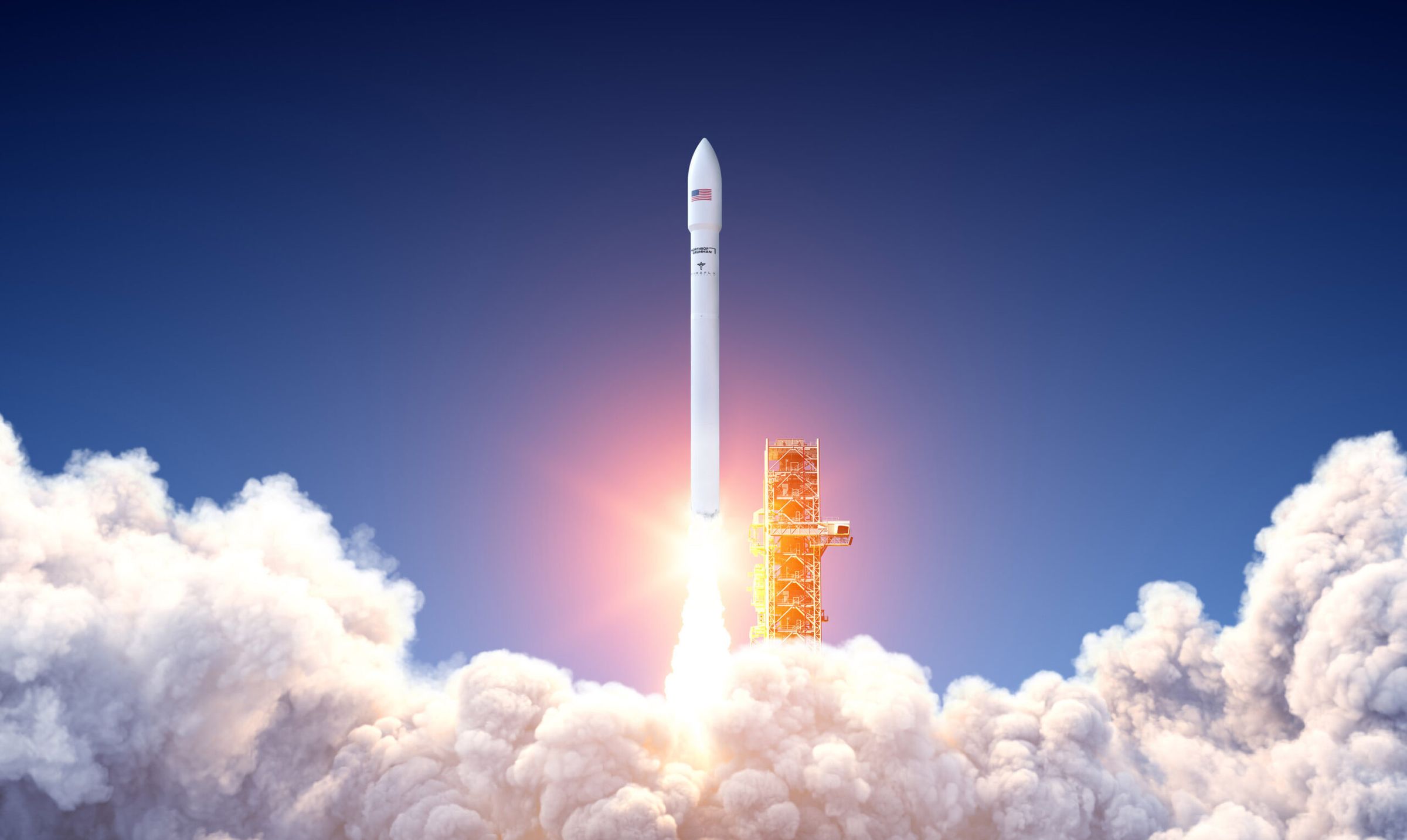
Firefly Aerospace develops orbital launch vehicles in the United States for commercial, civil-government, and national-security missions. Its launch portfolio is centered on the operational Alpha small-lift rocket and the larger Eclipse vehicle being developed with Northrop Grumman.
Alpha became the company's first rocket to attempt an orbital launch in 2021. By 2026 Firefly was increasing production of the upgraded Alpha Block II while its launch cadence remained comparatively low, and it was simultaneously advancing Eclipse toward a planned first flight in 2027.
The program combines dedicated small-satellite launch services with development of a medium-lift system. Firefly has also applied technology from its launch-vehicle work to the first stage of Northrop Grumman's Antares 330 program.
Early Alpha development
The original Alpha concept was developed by Firefly Space Systems during the 2010s. That early design used methane and liquid oxygen and included an aerospike-type first-stage propulsion concept. Following the collapse of Firefly Space Systems in 2017 and the creation of Firefly Aerospace, the rocket was substantially redesigned. The revised vehicle became a larger two-stage rocket using RP-1 kerosene and liquid oxygen, with carbon-composite primary structures. A detailed overview of this development history is available from Firefly Alpha.
Firefly also considered a larger Firefly Beta concept using additional Alpha-derived cores as boosters. According to Gunter's Space Page, that concept was later replaced by a different enlarged launch-vehicle design. The later medium-lift development path ultimately led to Eclipse rather than an operational Beta configuration.
Alpha Block I flight program
Alpha made its first launch attempt from Space Launch Complex 2 West at Vandenberg Space Force Base on 3 September 2021. The mission failed after a first-stage engine shut down during ascent and the vehicle was subsequently destroyed by its flight-termination system.
The second Alpha flight on 1 October 2022 reached orbit and deployed seven satellites, but the payloads entered a lower orbit than planned. The mission was therefore only partially successful. Alpha achieved its first fully successful orbital mission on 15 September 2023 with VICTUS NOX for the U.S. Space Force. The payload was integrated and launched about 27 hours after the launch order, demonstrating a tactically responsive launch capability.
A fourth flight in December 2023 placed its payload into an incorrect orbit after a second-stage relight problem. The fifth mission, launched for NASA on 4 July 2024, was successful. Flight 6 on 29 April 2025 failed after a stage-separation event damaged the second-stage engine and prevented the payload from reaching orbital velocity. The sequence of Alpha launches is documented in the Alpha launch record.
On 29 September 2025 an Alpha first stage intended for a later mission was destroyed during an acceptance test at Firefly's Briggs, Texas, facility. Firefly subsequently incorporated structural and system changes into the Block II configuration. Alpha Flight 7 launched successfully on 12 March 2026 and served as the final Block I mission. It also tested components intended for Block II.
Production expansion and Block II
By August 2026 Firefly was increasing Alpha production even though the launch rate had not yet risen to the same level. Firefly chief executive Jason Kim said vehicles for Flights 10 and 11 were already moving through the production line and that most of the company's 2027 launch manifest had been sold. Firefly also reported increased research and development spending associated in part with the Alpha Block II production ramp.
The Block II debut had been delayed to the fourth quarter of 2026. Firefly planned acceptance testing, shipment to Vandenberg, a static-fire test, payload integration, and launch before the first Block II mission. These schedule and production details were reported by Spaceflight Now.
Eclipse development
Firefly is developing the larger Eclipse launch vehicle with Northrop Grumman. As of August 2026, its first flight was planned for 2027. The rocket's first stage is designed around seven Firefly Miranda engines. Firefly reported that the Miranda development program had exceeded 150 hot-fire tests and that a flight-like mission-duty-cycle test had run for 226 seconds.
The Eclipse engine base structure was in assembly and bonding during 2026, while launch-pad hold-down and release hardware for Virginia was also being built. Eclipse shares its first-stage architecture with the Antares 330 program, for which Firefly is responsible for supplying the first stage to Northrop Grumman.
Design
Alpha
Alpha is a two-stage expendable liquid-fueled orbital launch vehicle. Both stages use RP-1 kerosene and liquid oxygen. The first stage is powered by four Firefly Reaver engines, while the second stage uses a single Lightning engine. The airframe uses carbon-fiber composite structures to reduce structural mass.
Public specifications for Alpha differ slightly between sources. Space Launch Now lists a length of 29.6 m, a diameter of 1.82 m, a launch mass of 54 tonnes, and first-stage thrust of approximately 736 kN. Other published summaries give a length of about 29 m. Payload figures also vary slightly, with commonly cited low-Earth-orbit values around 1,000 to 1,030 kg.
Alpha Block II changes
Block II incorporates changes introduced after problems encountered during the later Block I program. The vehicle is approximately 2.1 m (7 ft) longer to accommodate larger liquid-oxygen tanks. Firefly also increased thermal-protection thickness, adopted stronger carbon-composite structures, and shifted to internally manufactured batteries and avionics. The white exterior of Block II was also described by Firefly as part of its thermal-protection improvements.
Eclipse
Eclipse is a medium-lift launch vehicle under development by Firefly Aerospace and Northrop Grumman. Its first stage is designed around seven Miranda liquid-fueled engines. Firefly has described Miranda as being designed for reusability, although the supplied sources do not establish that the complete Eclipse launch vehicle will operate as a reusable system.
Operational history
Alpha is Firefly Aerospace's operational orbital launch vehicle. Seven Block I missions were flown between September 2021 and March 2026. The record included three successes, two failures, and two partial failures in the launch summaries available after Flight 7. Missions have included commercial payloads, NASA spacecraft, Lockheed Martin technology demonstrations, and U.S. Space Force responsive-launch missions.
Firefly's VICTUS NOX mission in September 2023 was a notable operational demonstration because the launch took place about 27 hours after receipt of the launch order. The March 2026 Flight 7 mission returned Alpha to successful flight after the April 2025 failure and completed the Block I flight series.
Block II had not launched as of the August 2026 production update. Its first flight and at least one additional Alpha mission were planned for the fourth quarter of 2026. Eclipse likewise remained in development, with first flight planned for 2027.
Variants
- Alpha Block I: Initial operational two-stage Alpha configuration. Seven missions were flown from 2021 through March 2026.
- Alpha Block II: Upgraded Alpha configuration with greater vehicle length, larger liquid-oxygen tanks, additional thermal protection, stronger composite structures, and revised batteries and avionics. Its first flight was planned for the fourth quarter of 2026.
- Firefly Beta: Earlier proposed larger concept derived from Alpha and described with additional core stages acting as boosters. It was not developed into an operational launcher and was superseded by later medium-lift concepts.
- Eclipse: Medium-lift launch vehicle under development by Firefly Aerospace and Northrop Grumman, using a seven-Miranda-engine first stage. First flight was planned for 2027.
Operators
- Firefly Aerospace: Manufacturer and launch-service provider operating Alpha and developing Eclipse with Northrop Grumman.
Specifications (Alpha Block I)
General characteristics
- Type: Two-stage expendable small-lift orbital launch vehicle
- Length: Approximately 29 to 29.6 m
- Diameter: 1.82 m
- Launch mass: Approximately 54,000 kg
- Stages: 2
- Propellants: RP-1 kerosene and liquid oxygen
- First-stage engines: 4 Reaver engines
- Second-stage engine: 1 Lightning engine
Performance
- First-stage thrust: Approximately 736 kN
- Second-stage thrust: Approximately 70.1 kN
- Payload to low Earth orbit: Published summaries commonly report approximately 1,000 to 1,030 kg
- Payload to 500 km Sun-synchronous orbit: Approximately 630 kg in multiple summary sources
Related equipment
- Antares 330: Northrop Grumman launch vehicle under development using a Firefly-supplied first stage derived from the same first-stage development effort as Eclipse.
 Argentina
 Armenia
 Australia
 Austria
 Austria-Hungary
 Belgium
 Brazil
 United Kingdom
 Brunei
 Bulgaria
 Canada
 Chile
Chile China
China Colonial America
 Colombia
 Confederate States
 Croatia
 Czech
Czech Denmark
 Egypt
Egypt Finland
 France
 Georgia
 Germany
 German Imperial
 Greece
 Holland
 Hungary
 India
India Indonesia
 Iran
Iran Iraq
Iraq Ireland
 Israel
 Italy
Italy Japan
Japan Japan (1940)
 Jordan
 Kingdom of Italy
 Malaysia
 Mexico
 Myanmar
 Nazi Germany
 Netherlands
 New Zealand
 North Korea
 Norway
 Pakistan
 Peru
Peru Philippines
 Poland
 Portugal
 Prussia
 Romania
 Russia
 Saudi Arabia
 Serbia
 Singapore
 Slovakia
 Slovenia
 South Africa
 South Korea
 Soviet Union
 Spain
Spain Sweden
 Switzerland
 Syria
Syria Taiwan
 Thailand
 Turkey
 UAE
UAE Ukraine
 Vietnam
 Yugoslavia