
History
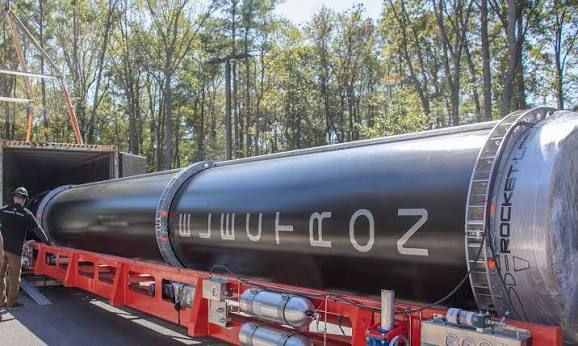
Rocket Lab Electron is a small-lift orbital launch vehicle developed for dedicated launches of small satellites. The two-stage rocket uses liquid oxygen and RP-1 propellants and is powered by Rocket Lab Rutherford engines, which use electric motors and batteries to drive their propellant pumps.
Electron was developed in New Zealand and first flew in 2017. It reached orbit on its second flight in January 2018 and subsequently entered regular commercial and government launch service from New Zealand and the United States.
The vehicle can fly as a conventional two-stage launcher or with additional upper-stage systems such as the Curie-powered Kick Stage and Photon spacecraft platform. Rocket Lab has also tested recovery technology for the first stage, although the standard orbital Electron remains an expendable launch vehicle.
Development and first flights
Rocket Lab began development of the Electron orbital launch vehicle in 2013 after earlier work on sounding rockets. The program was intended to provide dedicated access to low Earth orbit for CubeSats and other small spacecraft. Historical development information compiled by eoPortal records that the Rutherford engine was qualified for flight in March 2016, followed by qualification of the second stage and then the first stage in December 2016.
The first Electron was delivered to Rocket Lab Launch Complex 1 on the Māhia Peninsula in February 2017. The inaugural mission, named “It’s a Test,” launched on 25 May 2017. The vehicle completed first-stage flight, stage separation, second-stage ignition and fairing separation and reached space, but it did not achieve orbit. The supplied sources attribute the loss of the planned orbit to a ground communication or telemetry issue rather than a fundamental failure of the launch vehicle.
The second Electron flight, “Still Testing,” launched on 21 January 2018 and successfully reached orbit, deploying three CubeSats. The third flight, “It’s Business Time,” on 11 November 2018 marked the first commercial Electron mission. Historical launch listings are available from Gunter's Space Page.
Expansion of operations
Electron initially operated from Rocket Lab Launch Complex 1 at Māhia, New Zealand. Pad A was later joined by Pad B at the same complex, increasing the available launch capacity. Rocket Lab also developed Launch Complex 2 at the Mid-Atlantic Regional Spaceport within NASA's Wallops Flight Facility in Virginia. The first Electron mission from the United States launched successfully on 24 January 2023 and deployed three HawkEye 360 satellites.
Electron has been used for commercial, scientific and government spacecraft. Customers and missions represented in the supplied launch records include NASA, the U.S. National Reconnaissance Office, HawkEye 360, BlackSky, Synspective, Kinéis, iQPS and other satellite operators. Current configuration and mission information is also summarized by Next Spaceflight.
Kick Stage and deep-space missions
Rocket Lab developed an optional Kick Stage to provide additional orbital maneuvering after separation from Electron's second stage. The stage uses the company's Curie liquid-propellant engine and can perform multiple burns, allowing payloads to be placed into selected circularized orbits rather than relying only on the trajectory produced by the second stage.
Rocket Lab later developed Photon from the Kick Stage concept. Photon adds spacecraft functions including power generation, attitude determination and control, communications and extended propulsion capability. On 28 June 2022, Electron launched NASA's CAPSTONE spacecraft with a Lunar Photon. Photon subsequently performed the maneuvers needed to place CAPSTONE on a trajectory toward the Moon.
Recovery development
Electron was not originally designed for reuse. In August 2019, Rocket Lab announced a program to recover and eventually re-fly first stages as a way to increase launch frequency. Early missions carried additional instrumentation for studying re-entry, followed by guided atmospheric re-entry tests using flight computers, telemetry equipment and a reaction control system.
In March 2020, Rocket Lab demonstrated helicopter capture of a descending Electron test article after parachute deployment. Flight 16, “Return to Sender,” in November 2020 became the first mission in which an Electron first stage was recovered from the Pacific Ocean after launch. Rocket Lab later attempted helicopter recovery of a flown stage but subsequently moved away from routine mid-air capture in favor of ocean recovery.
The recovery program did not result in routine reflight of complete Electron first stages. However, a recovered Rutherford engine underwent repeated full-duration firing tests, and a refurbished Rutherford engine from an earlier mission was later flown on Electron's 40th mission. Current sources therefore distinguish Electron's recovery work from operational reuse of an entire booster.
iQPS launch contracts
Electron has become one of the launch vehicles used by Japanese Earth-observation companies for dedicated satellite missions. Several QPS-SAR spacecraft operated by iQPS appear in the supplied Electron launch records during 2025 and 2026. On 30 July 2026, Rocket Lab announced another contract from iQPS covering multiple additional Electron launches for the company's radar-imaging satellites. The source confirms the multi-launch agreement but does not state the number of missions in the new contract.
Design
Airframe and configuration
Electron is primarily a two-stage liquid-fueled launch vehicle. The current configuration is approximately 18 m long and 1.2 m in diameter. Both main stages use lightweight carbon-composite structures and carry RP-1 kerosene fuel and liquid oxygen oxidizer. Earlier development documentation listed a height of about 17 m, reflecting the vehicle configuration before later stage and performance changes.
The first stage carries nine Rutherford engines. The second stage uses one vacuum-optimized Rutherford engine with a larger expansion ratio for operation at high altitude. An optional Kick Stage or Photon spacecraft can function as an additional propulsion stage after the second stage has completed its burn.
Rutherford propulsion
Rutherford is a liquid oxygen and RP-1 engine developed specifically for Electron. Instead of using a conventional gas-generator-driven turbopump, Rutherford uses brushless electric motors powered by lithium-polymer batteries to drive its propellant pumps. The design made Rutherford the first electric-pump-fed engine to power an orbital-class launch vehicle.
The engines also make extensive use of additive manufacturing. Rocket Lab used 3D printing for major engine components including the thrust chamber, injector and propellant valves. The combination of electric pumps and additive manufacturing was intended to simplify production and support a relatively high manufacturing rate.
Nine sea-level Rutherford engines power the first stage. Current figures summarized in the Electron technical overview give combined first-stage thrust of approximately 224.3 kN at sea level and 234 kN in vacuum. The vacuum Rutherford on the second stage is listed at approximately 25.8 kN of thrust.
Electrical power system
Rutherford's propellant pumps obtain their energy from lithium-polymer batteries rather than from a turbine driven by combustion gases. The second-stage propulsion system uses multiple batteries. During flight, depleted battery packs can be disconnected and jettisoned, reducing mass while the remaining batteries continue supplying the electric pump motors.
Payload fairing
Electron uses a carbon-composite payload fairing. Earlier Rocket Lab documentation described a fairing about 2.5 m long and 1.2 m in maximum external diameter, with a mass of approximately 44 kg. The split fairing separates after the vehicle has climbed beyond the dense lower atmosphere.
Rocket Lab designed payload integration so spacecraft can be prepared separately from the main launch vehicle. The system supports encapsulation of payloads before final attachment to Electron, reducing the amount of payload processing that must take place directly on the rocket.
Avionics and guidance
Electron uses Rocket Lab-developed avionics, flight computers and guidance, navigation and control software. Development documentation describes a navigation suite using inertial measurement equipment and GPS, while S-band transmitters provide telemetry and video to ground systems. Rocket Lab later incorporated autonomous flight-termination technology into Electron operations.
Kick Stage
The optional Kick Stage is powered by a Curie engine capable of multiple burns. It can separate from the second stage, coast, restart its engine and deploy spacecraft after adjusting the orbit. This allows Electron missions to place payloads more accurately or deploy multiple spacecraft into different orbital conditions.
Photon is a more capable development of the Kick Stage architecture. Depending on configuration, Photon can provide propulsion, power generation, communications, attitude control and navigation functions after launch. Electron and Photon together have supported missions beyond conventional low Earth orbit, including the CAPSTONE lunar mission.
Operational history
Electron has conducted launches from Launch Complex 1 in New Zealand and Launch Complex 2 in Virginia. Its missions include dedicated launches and multi-payload missions for commercial Earth-observation companies, communications operators, scientific organizations and United States government agencies.
Electron's early operational history included failures as well as a growing sequence of successful missions. The supplied current sources list four failures in the broader Electron flight record. By August 2026, sources such as Orbital Radar and Next Spaceflight showed Electron continuing an active launch schedule, while the supplied Wikipedia snapshot listed a launch on 6 August 2026 as the most recent completed mission at that time.
The platform has also supported responsive and specialized missions. Electron launched NASA's two PREFIRE spacecraft in 2024 on separate missions, has carried multiple synthetic-aperture radar satellites for Japanese operators, and has repeatedly launched commercial constellations in dedicated missions. Rocket Lab's July 2026 iQPS agreement continued this pattern by assigning multiple future radar-imaging satellite launches to Electron.
Variants
- Electron: Basic two-stage orbital launch vehicle powered by nine Rutherford engines on the first stage and one vacuum Rutherford engine on the second stage.
- Electron with Kick Stage: Electron configuration using an additional Curie-powered stage for orbit adjustment, circularization and payload deployment.
- Electron/Photon: Electron combined with Rocket Lab's Photon spacecraft platform, providing additional on-orbit propulsion and spacecraft functions.
- Electron/Explorer: Deep-space-oriented Electron and Photon configuration associated with the more capable Photon-IP architecture and HyperCurie propulsion in the supplied configuration records.
- HASTE: Hypersonic Accelerator Suborbital Test Electron, a suborbital derivative used for hypersonic flight testing rather than satellite launch to orbit. The first HASTE mission flew in June 2023.
Specifications (Electron orbital configuration)
General characteristics
- Manufacturer: Rocket Lab
- Type: Small-lift orbital launch vehicle
- Stages: Two main stages; optional Kick Stage or Photon can provide an additional propulsion stage
- Height: Approximately 18 m (59 ft)
- Diameter: 1.2 m (3 ft 11 in)
- Launch mass: Approximately 13,000 kg (28,700 lb)
- Structure: Carbon-composite primary flight structure
- Propellants: Liquid oxygen and RP-1 kerosene
First stage
- Engines: 9 × Rutherford
- Stage height: Approximately 12.1 m (40 ft)
- Combined sea-level thrust: Approximately 224.3 kN (50,400 lbf)
- Combined vacuum thrust: Approximately 234 kN (53,000 lbf)
- Specific impulse: Approximately 311 s
- Pump power: Battery-powered electric motors
Second stage
- Engine: 1 × vacuum-optimized Rutherford
- Stage height: Approximately 2.4 m (7 ft 10 in)
- Vacuum thrust: Approximately 25.8 kN (5,800 lbf)
- Specific impulse: Approximately 343 s
- Pump power: Lithium-polymer batteries with battery jettison capability during flight
Payload performance
- Payload to low Earth orbit: Up to approximately 300 kg (660 lb) in the later published Electron configuration
- Payload to 500 km Sun-synchronous orbit: Approximately 200 kg (440 lb)
Electron performance changed during the program. Earlier documentation described lower capacities, including approximately 150 kg to a 500 km Sun-synchronous orbit and approximately 225 kg to low Earth orbit. Rocket Lab later announced higher payload capacity following vehicle and battery improvements. Some current third-party databases list slightly different maximum payload figures because they represent different configurations or performance assumptions.
Related equipment
- Photon: Rocket Lab spacecraft platform derived from the Electron Kick Stage architecture and used for orbital maneuvering and extended missions.
- HASTE: Suborbital derivative of Electron developed for hypersonic test missions.
- Neutron: Larger Rocket Lab launch vehicle developed separately for substantially heavier payloads than Electron.
 Argentina
 Armenia
 Australia
 Austria
 Austria-Hungary
 Belgium
 Brazil
 United Kingdom
 United States
 Brunei
 Bulgaria
 Canada
 Chile
Chile China
China Colonial America
 Colombia
 Confederate States
 Croatia
 Czech
Czech Denmark
 Egypt
Egypt Finland
 France
 Georgia
 Germany
 German Imperial
 Greece
 Holland
 Hungary
 India
India Indonesia
 Iran
Iran Iraq
Iraq Ireland
 Israel
 Italy
Italy Japan
Japan Japan (1940)
 Jordan
 Kingdom of Italy
 Malaysia
 Mexico
 Myanmar
 Nazi Germany
 Netherlands
 North Korea
 Norway
 Pakistan
 Peru
Peru Philippines
 Poland
 Portugal
 Prussia
 Romania
 Russia
 Saudi Arabia
 Serbia
 Singapore
 Slovakia
 Slovenia
 South Africa
 South Korea
 Soviet Union
 Spain
Spain Sweden
 Switzerland
 Syria
Syria Taiwan
 Thailand
 Turkey
 UAE
UAE Ukraine
 Vietnam
 Yugoslavia