
History
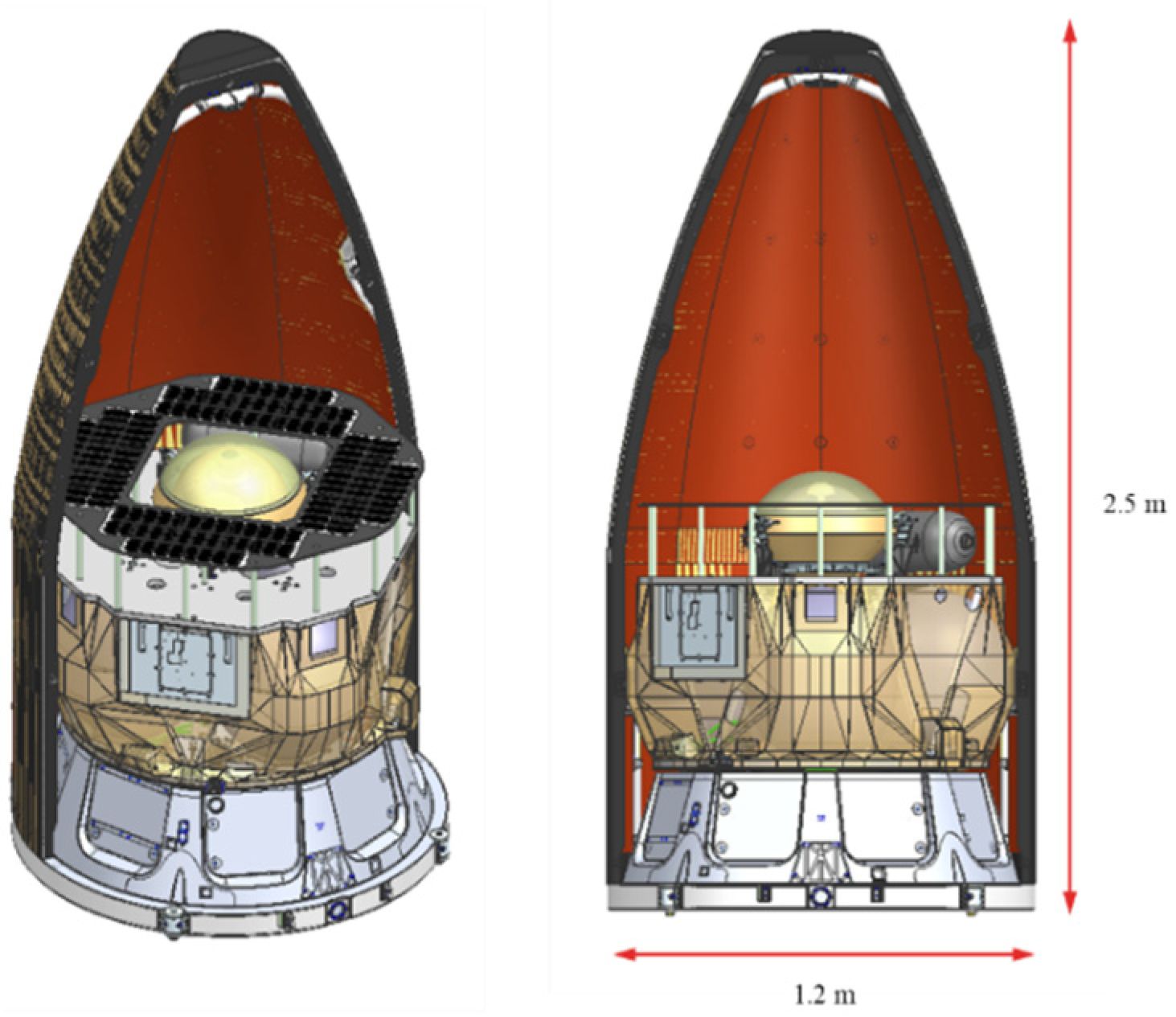
Rocket Lab Photon is a configurable spacecraft platform developed from the Electron launch vehicle's Kick Stage. It provides power, propulsion, communications, attitude control, and other spacecraft functions for payload hosting, orbital delivery, technology demonstrations, and specialized missions.
The first Photon pathfinder was launched on 31 August 2020. The platform was subsequently adapted for missions extending from low Earth orbit to lunar and other deep-space applications, while customized derivatives have supported commercial, civil, and U.S. defense programs.
In August 2026, Rocket Lab announced that a Photon spacecraft would be used for a planned 2027 in-orbit demonstration of interoperability with the U.S. Space Force Space Data Network Backbone.
Development and early flights
Rocket Lab announced Photon development in April 2019 as a satellite bus based on the Electron Kick Stage. The project was intended to provide customers with an integrated spacecraft platform rather than requiring each payload operator to develop a complete satellite bus independently.
The first demonstration spacecraft, known as First Light or Photon Pathfinder, launched aboard Electron on 31 August 2020. After deploying a customer spacecraft, it continued operating as a standalone satellite to demonstrate Photon systems and payload-hosting functions.
A second demonstration spacecraft, Pathstone, launched on 22 March 2021. Its mission included testing power and thermal management, reaction-wheel attitude control, and communications systems in preparation for NASA's CAPSTONE mission.
On 28 June 2022, a high-energy Photon configuration launched with NASA's CAPSTONE spacecraft. Photon performed a sequence of orbit-raising maneuvers followed by trans-lunar injection before releasing CAPSTONE toward the Moon. Rocket Lab later used the spacecraft for a low-altitude lunar flyby.
Expansion into specialized spacecraft
Rocket Lab subsequently developed customized Photon-derived spacecraft for missions with different propulsion, payload, endurance, and orbital requirements. A spacecraft produced for Varda Space Industries was completed in 2023 to provide power, communications, propulsion, and attitude control for a 120 kg re-entry capsule used for in-space pharmaceutical manufacturing.
In February 2024, Rocket Lab formalized its spacecraft lineup under the Photon, Pioneer, Explorer, and Lightning names. The company described Photon as its original integrated launch-plus-spacecraft solution, while the related platforms address high-delta-V, long-duration constellation, and specialized mission requirements.
Space Data Network demonstration
On 18 August 2026, Rocket Lab announced that it had joined the U.S. Space Force Space Data Network Consortium and received two delivery orders with a combined value of $12 million. The work supports the Space Data Network Backbone program and includes development, testing, and demonstration of technologies for communications between satellites and ground systems.
Rocket Lab plans to conduct an in-orbit demonstration in 2027 using a Photon spacecraft equipped with optical communications and networking capabilities. The demonstration is intended to test interoperability with the Space Data Network's core infrastructure, which the supplied source identifies as being built by SpaceX. The 2027 demonstration remains planned and should not be treated as an operational Photon capability until it is completed.
Design
Photon originated as a modified Electron Kick Stage equipped to operate as an independent spacecraft. Rocket Lab describes the platform as providing the power, propulsion, communications, avionics, and control systems required to support payloads in orbit.
Structure and spacecraft systems
Photon spacecraft use Rocket Lab-developed systems including composite structures and tanks, star trackers, reaction wheels, solar panels or arrays, radios, separation systems, avionics, and flight and ground software. Rocket Lab manufactures and integrates the platform at its spacecraft production facilities in Long Beach, California.
Propulsion
Photon configurations can use Rocket Lab propulsion systems derived from the Curie engine family. High-energy configurations have used HyperCurie, an electrically pumped hypergolic propulsion system developed for missions requiring substantially greater velocity change. Customized spacecraft can also use mission-specific propulsion arrangements.
Communications and attitude control
Photon includes spacecraft communications equipment and attitude-control hardware. Published information for the original platform identifies S-band communications, while the planned 2027 Space Data Network demonstration will use a Photon equipped with additional optical communications and networking systems for interoperability testing.
Operational history
The original Photon platform first operated in orbit in 2020. The 2021 Pathstone mission expanded its flight heritage, and the high-energy configuration used for CAPSTONE demonstrated Photon-derived propulsion and spacecraft operations beyond low Earth orbit in 2022.
Photon-derived spacecraft have also been used for specialized commercial missions. Rocket Lab produced spacecraft for Varda Space Industries to support in-space manufacturing and provide propulsion for returning re-entry capsules toward Earth.
Rocket Lab has additionally applied its spacecraft technology to U.S. national-security missions. The planned 2027 Space Data Network demonstration is intended to evaluate secure optical interoperability rather than establish Photon as an operational element of the network.
Variants
- Photon: Original Rocket Lab spacecraft developed from the Electron Kick Stage. It combines launch integration with power, propulsion, communications, and other spacecraft systems for low Earth orbit and responsive missions.
- Explorer: High-delta-V spacecraft with larger propellant capacity, deep-space avionics, and ranging transponders. It is intended for missions to the Moon, Mars, Venus, highly eccentric Earth orbit, geosynchronous orbit, Lagrange points, and near-Earth objects. An Explorer configuration gained flight heritage during NASA's CAPSTONE mission.
- Pioneer: Configurable medium-delta-V spacecraft designed for specialized missions and payloads up to 120 kg, including Varda re-entry missions and dynamic space operations.
- Lightning: Long-duration low Earth orbit spacecraft designed for telecommunications and remote-sensing missions. Rocket Lab states that it is designed for an orbital life exceeding 12 years and provides approximately 3 kW of power.
Operators and users
- Rocket Lab: Operated the First Light and Pathstone demonstration spacecraft to establish Photon flight heritage.
- NASA: Used a high-energy Photon-derived Explorer spacecraft to place the CAPSTONE spacecraft on its trans-lunar trajectory in 2022.
- Varda Space Industries: Uses customized Photon-derived spacecraft to support in-space manufacturing and re-entry capsule missions.
- U.S. Space Force: Plans to use a Rocket Lab Photon spacecraft for a 2027 Space Data Network Backbone interoperability demonstration under contracts awarded to Rocket Lab.
Specifications (Rocket Lab Photon)
General characteristics
- Manufacturer: Rocket Lab
- Type: Configurable orbital spacecraft platform derived from the Electron Kick Stage
- Mass: Rocket Lab describes the current Photon platform as having a mass of approximately 200-300 kg, depending on mission configuration.
- Primary functions: Payload hosting, orbital delivery, spacecraft operations, and technology demonstrations
Spacecraft systems
- Power: Solar-array electrical power system
- Attitude control: Star trackers and reaction wheels
- Communications: S-band communications on the original platform; mission-specific communications equipment can be integrated
- Propulsion: Mission-dependent chemical propulsion, including Curie-family systems
- Structure: Composite spacecraft structures and tanks
- Software: Rocket Lab flight and ground software
Related equipment
- Electron Kick Stage: The stage from which the original Photon spacecraft was developed.
- Rocket Lab Explorer: High-delta-V spacecraft derived from Rocket Lab's Photon development and used for deep-space missions.
- Rocket Lab Pioneer: Specialized medium-delta-V spacecraft platform developed from the company's Photon spacecraft experience.
- Rocket Lab Lightning: Long-duration low Earth orbit spacecraft bus developed as part of Rocket Lab's expanded spacecraft family.
 Argentina
 Armenia
 Australia
 Austria
 Austria-Hungary
 Belgium
 Brazil
 United Kingdom
 Brunei
 Bulgaria
 Canada
 Chile
Chile China
China Colonial America
 Colombia
 Confederate States
 Croatia
 Czech
Czech Denmark
 Egypt
Egypt Finland
 France
 Georgia
 Germany
 German Imperial
 Greece
 Holland
 Hungary
 India
India Indonesia
 Iran
Iran Iraq
Iraq Ireland
 Israel
 Italy
Italy Japan
Japan Japan (1940)
 Jordan
 Kingdom of Italy
 Malaysia
 Mexico
 Myanmar
 Nazi Germany
 Netherlands
 New Zealand
 North Korea
 Norway
 Pakistan
 Peru
Peru Philippines
 Poland
 Portugal
 Prussia
 Romania
 Russia
 Saudi Arabia
 Serbia
 Singapore
 Slovakia
 Slovenia
 South Africa
 South Korea
 Soviet Union
 Spain
Spain Sweden
 Switzerland
 Syria
Syria Taiwan
 Thailand
 Turkey
 UAE
UAE Ukraine
 Vietnam
 Yugoslavia