
History
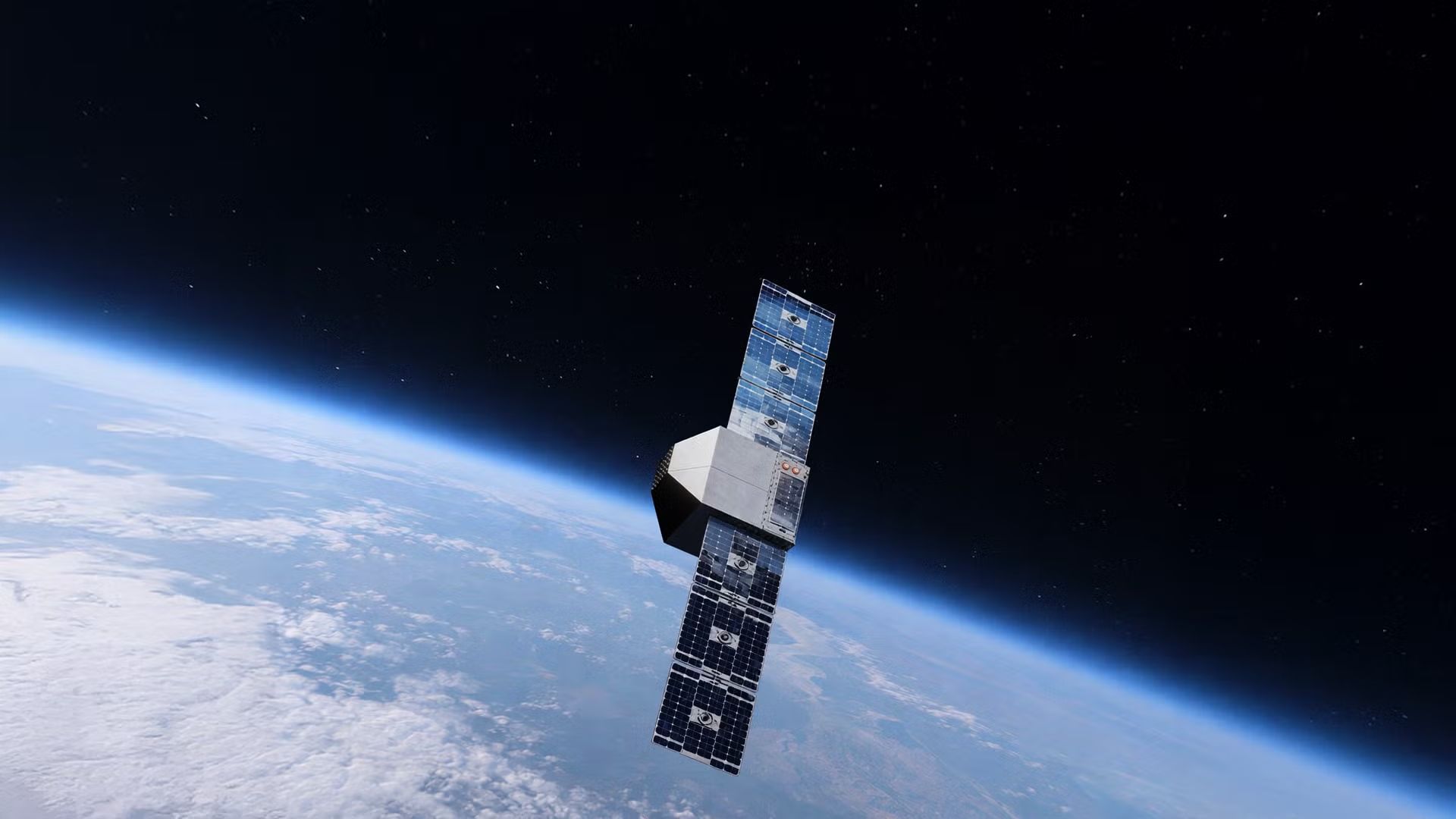
Kreios Space air-breathing electric propulsion, or ABEP, is an experimental spacecraft propulsion system developed in Spain for sustained operation in very low Earth orbit. Instead of carrying all of its propellant from launch, the system is intended to collect the residual atmosphere, ionize the captured gas, and expel it electrically to generate thrust.
Development
Kreios Space developed ABEP to address the atmospheric drag encountered by satellites at altitudes below conventional low Earth orbit. Flying closer to Earth can improve image resolution, measurement accuracy, communications latency, and link performance. The same atmosphere that provides these advantages also slows a spacecraft and can cause rapid orbital decay.
The propulsion concept aims to compensate for that drag without consuming a finite supply of conventional stored propellant. The intake and thruster must work with a very low-density flow whose composition and density change with altitude, solar activity, spacecraft attitude, and local atmospheric conditions.
Demonstration mission
In 2026, Kreios selected Kongsberg NanoAvionics to supply and customize an MP42 microsatellite bus for the first orbital demonstration. The final spacecraft was expected to weigh approximately 200 kg and carry an optical payload for visible and near-infrared imaging. NanoAvionics was assigned platform integration, system testing, launch support, and initial commissioning.
The mission is planned to deploy into an orbit approximately 300–350 km above Earth and gradually descend through the very-low-orbit environment. Kreios intends to fire the ABEP thruster at different altitudes, measure atmospheric conditions, and compare the propulsion response with changing drag. Public planning information placed the demonstration launch in 2028, so orbital performance remains unverified until the mission is completed.
Long-term objective
The demonstration uses an established satellite bus to test the propulsion subsystem sooner than would be possible with a new purpose-built spacecraft. Kreios has described a later goal of producing both propulsion equipment and satellite platforms capable of operating in very low Earth orbit for seven to ten years. This is a development objective rather than a demonstrated service life.
Design
An air-breathing electric propulsion system combines an atmospheric intake, flow-conditioning equipment, an ionization or plasma stage, an electrically powered accelerator, and control electronics. Particles collected from the upper atmosphere become the reaction mass. Electrical energy accelerates them through the thruster to produce a small but continuous force.
Atmospheric intake
The intake must capture enough neutral particles while minimizing aerodynamic drag and losses inside the flow path. Unlike a conventional electric thruster supplied from a pressurized tank, ABEP receives a variable stream determined by the orbital environment. Intake efficiency is therefore central to the balance between generated thrust and the drag created by the spacecraft.
Electric thruster
Captured atmospheric particles are conditioned and ionized before electromagnetic fields accelerate them. The process requires electrical power, normally supplied by the spacecraft's solar arrays. The system is intended to generate enough thrust to counter gradual orbital energy loss rather than the high thrust required for launch or rapid maneuvers.
Spacecraft integration
The demonstration thruster will be installed on a Kongsberg NanoAvionics MP42 microsatellite bus. Integration must coordinate the intake direction with spacecraft attitude, provide electrical power, reject heat, protect sensitive payloads from contamination, and measure thrust and environmental conditions. The satellite's optical payload is intended to demonstrate the observation benefits available from lower altitude.
Program status
As announced in 2026, the Kreios ABEP system was being prepared for its first in-orbit demonstration. The planned flight will test the technology through a range of decreasing orbital altitudes over a mission expected to last roughly six to ten months. No operational fleet or completed orbital qualification had been announced at that stage.
Variants
- Orbital demonstration system — ABEP installation planned for a customized Kongsberg NanoAvionics MP42 microsatellite bus.
- Future operational system — proposed propulsion and satellite architecture for long-duration operations in very low Earth orbit; detailed production specifications have not been published.
Specifications (orbital demonstration system)
General characteristics
- Type: air-breathing electric spacecraft propulsion system
- Reaction mass: particles collected from Earth's residual atmosphere
- Host platform: customized Kongsberg NanoAvionics MP42 microsatellite bus
- Spacecraft mass: approximately 200 kg in the planned final configuration
- Planned operating region: very low Earth orbit
Demonstration profile
- Initial deployment altitude: approximately 300–350 km
- Test method: thruster firings at multiple altitudes during gradual orbital descent
- Planned mission duration: approximately six to ten months
- Planned launch: 2028
Related equipment
- Kongsberg NanoAvionics MP42 — microsatellite bus selected to host the first planned orbital demonstration.
- Conventional electric propulsion — ion and Hall-effect systems that normally carry stored propellant instead of collecting atmospheric particles.
 Argentina
 Armenia
 Australia
 Austria
 Austria-Hungary
 Belgium
 Brazil
 United Kingdom
 United States
 Brunei
 Bulgaria
 Canada
 Chile
Chile China
China Colonial America
 Colombia
 Confederate States
 Croatia
 Czech
Czech Denmark
 Egypt
Egypt Finland
 France
 Georgia
 Germany
 German Imperial
 Greece
 Holland
 Hungary
 India
India Indonesia
 Iran
Iran Iraq
Iraq Ireland
 Israel
 Italy
Italy Japan
Japan Japan (1940)
 Jordan
 Kingdom of Italy
 Malaysia
 Mexico
 Myanmar
 Nazi Germany
 Netherlands
 New Zealand
 North Korea
 Norway
 Pakistan
 Peru
Peru Philippines
 Poland
 Portugal
 Prussia
 Romania
 Russia
 Saudi Arabia
 Serbia
 Singapore
 Slovakia
 Slovenia
 South Africa
 South Korea
 Soviet Union
 Sweden
 Switzerland
 Syria
Syria Taiwan
 Thailand
 Turkey
 UAE
UAE Ukraine
 Vietnam
 Yugoslavia