
History
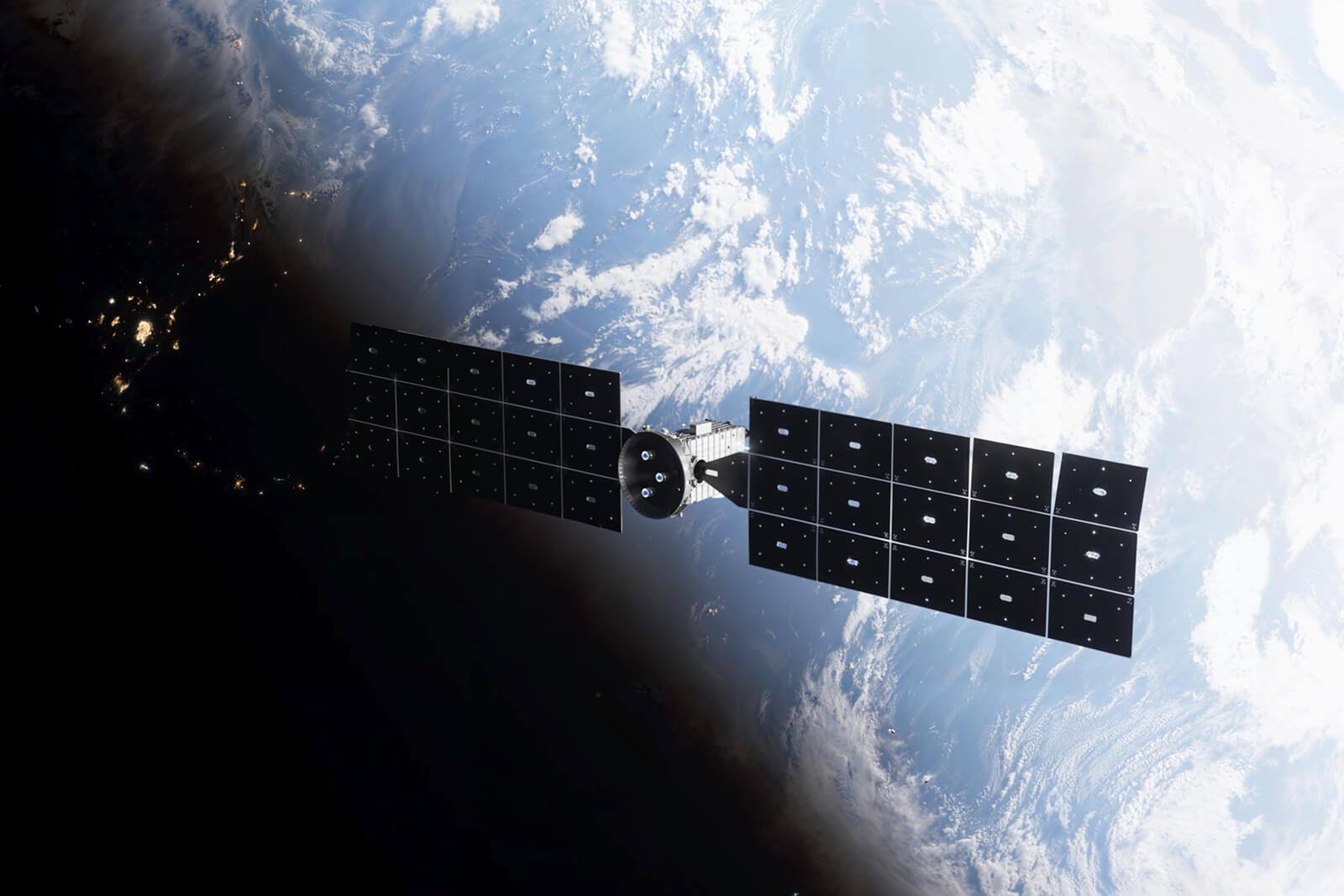
Katalyst Space LINK is a robotic on-orbit servicing spacecraft developed in the United States for NASA's Swift Boost mission. Its primary task is to rendezvous with the Neil Gehrels Swift Observatory, capture the aging telescope, and raise its decaying low Earth orbit.
The mission is unusual because Swift was launched in 2004 without a propulsion system, docking port, or dedicated servicing fixtures. LINK therefore uses robotic arms and precision guidance systems to attach to structural features that were originally intended for ground handling rather than orbital servicing.
LINK was launched on 3 July 2026 aboard a Northrop Grumman Pegasus XL rocket. During commissioning later that month, the spacecraft suffered a serious attitude-control malfunction, but Katalyst and NASA continued recovery work and were still preparing for a possible rendezvous with Swift in August 2026.
Development
Swift's orbit had gradually declined from approximately 600 km after its 2004 launch toward about 400 km as atmospheric drag increased. Higher solar activity expanded Earth's upper atmosphere and accelerated the decay. Because Swift has no propulsion system of its own, NASA investigated an external reboost before the observatory descended to an altitude where rendezvous and capture would become impractical.
NASA awarded Cambrian Works and Katalyst Space Technologies separate Phase III Small Business Innovation Research study contracts in August 2025. In September 2025, NASA selected Katalyst for a $30 million Phase III contract to develop and launch the servicing spacecraft. The accelerated program was driven by the limited time remaining before Swift's orbit was expected to become too low for safe capture.
Katalyst developed LINK on a much shorter schedule than is typical for a spacecraft of comparable complexity. Environmental testing at NASA's Goddard Space Flight Center was completed in May 2026, approximately eight months after the contract award. NASA published additional mission information through its Swift Boost mission page.
Launch preparation
LINK arrived at NASA's Wallops Flight Facility in Virginia in June 2026 for integration with a Pegasus XL rocket. After integration, the Pegasus was mounted beneath Northrop Grumman's Stargazer L-1011 carrier aircraft and ferried to Kwajalein Atoll in the Marshall Islands.
Launch attempts on 30 June and 1 July were postponed because of weather, while a 2 July attempt was scrubbed because of a launch-vehicle technical issue. LINK was successfully launched on 3 July 2026 at 08:36 UTC. The Pegasus XL inserted the spacecraft into a low Earth orbit selected to support rendezvous with Swift.
Commissioning and control failure
After launch, Katalyst began commissioning LINK's power, avionics, propulsion, communications, and attitude-control systems. By 15 July, NASA reported that commissioning was approximately half complete. Early communications and attitude-control problems had been addressed through flight-software patches and revised operating procedures.
On 25 July, LINK lost attitude control and began tumbling. Communications were interrupted and the spacecraft experienced a bus reset. Subsequent analysis found that two of its three reaction wheels were not operational and that the cold-gas thruster system was also degraded. LINK continued to generate sufficient electrical power, allowing recovery attempts to continue.
Katalyst began using the spacecraft's gimballed electric propulsion system to reduce the tumble. The spin rate was lowered from about nine degrees per second to 1.47 degrees per second by 5 August. Less than 100 g of propellant was reported to have been consumed during this stabilization effort.
Katalyst and NASA also developed a replacement attitude controller adapted to the degraded spacecraft configuration. The controller was uploaded on 11 August, after which the team began maneuvers intended to align LINK's orbit with Swift. The servicing attempt had therefore not been abandoned, although the original rendezvous schedule had been delayed.
Design
LINK is a compact uncrewed servicing spacecraft built by Katalyst Space Technologies. NASA described it as an approximately 400 kg class small satellite. The spacecraft combines autonomous and ground-supervised rendezvous systems, robotic capture equipment, electric propulsion, reaction-control thrusters, and attitude-control hardware for operating near another spacecraft.
Robotic capture system
LINK carries three parallel robotic manipulator arms arranged as a split Stewart-platform system. Each arm is equipped with lidar sensing and a three-degree-of-freedom gripper. The mission can theoretically proceed with only one successful attachment, although using all three arms would provide greater control of the combined vehicles.
Swift was never designed for docking or orbital servicing. LINK therefore plans to grip ground-handling flanges on the observatory's spacecraft bus. Before capture, LINK is intended to approach within tens of meters and inspect both primary and backup attachment locations. This inspection is important because more than two decades in orbit may have altered Swift's external insulation and other exposed structures.
The capture procedure was validated before launch using a robotic testbed and a full-scale model of Swift's base. Swift can actively control its own attitude, allowing the observatory and LINK to conduct coordinated maneuvers during inspection and capture. Mission planners described this arrangement as an unprepared but cooperative rendezvous.
Propulsion and attitude control
LINK uses three gimballed Hall-effect electric thrusters with xenon propellant for the planned orbital boost. The thrusters can be pointed to align thrust with the center of mass of the combined LINK-Swift stack. Sixteen reaction-control thrusters supplement the propulsion and attitude-control system.
The spacecraft was launched with three reaction wheels for precision attitude control. Two became unavailable during the July 2026 malfunction. Katalyst subsequently used the electric thrusters and revised flight-control software to regain useful control of the spacecraft.
If LINK captures Swift, the servicing spacecraft is expected to assume attitude control of the combined stack despite being much lighter than the observatory. LINK's reported launch mass is 425 kg, while Swift has a mass of approximately 1,470 kg.
Guidance and rendezvous
The mission requires LINK to close on a moving target whose orbit continues to decay. Cameras, lidar sensors, precision guidance, navigation, and control systems support relative navigation and inspection. The planned capture sequence includes several go or no-go decision points, allowing the operations teams to abort an approach and attempt it again if conditions are unsuitable.
Program status
The original mission plan called for approximately two weeks of post-launch checkout, followed by two to three weeks of rendezvous and inspection and another one to two weeks for close approach and capture. The July attitude-control failure delayed this schedule.
By August 2026, recovery work had substantially reduced LINK's tumble and a new attitude-control solution had been uploaded. Rendezvous was consequently expected no earlier than late August. Katalyst and NASA were to jointly evaluate whether the degraded spacecraft could safely conduct proximity operations and attempt capture.
If capture succeeds, LINK is intended to raise Swift's orbit gradually over roughly three months rather than perform a short high-thrust maneuver. After completing the boost, LINK is planned to release the observatory and move away. Swift would then require approximately a month of recommissioning before returning to normal scientific operations. Remaining LINK propellant could subsequently be used to lower the servicing spacecraft's own orbit and accelerate its reentry.
NASA continues to publish mission progress through its Swift mission updates.
Specifications (LINK)
General characteristics
- Manufacturer: Katalyst Space Technologies
- Mission role: Robotic on-orbit satellite servicing and orbital reboost
- Launch mass: 425 kg (937 lb)
- Dry mass: 365 kg (805 lb)
- Height: 1.5 m (4.9 ft)
- Deployed width: 6 m (20 ft)
- Robotic arms: Three parallel manipulator arms
- Primary target: Neil Gehrels Swift Observatory
Propulsion and control
- Main propulsion: Three gimballed Hall-effect electric thrusters
- Electric-propulsion propellant: Xenon
- Reaction-control system: Sixteen thrusters
- Reaction wheels: Three installed at launch; two became unavailable during commissioning
Launch
- Launch date: 3 July 2026
- Launch vehicle: Northrop Grumman Pegasus XL
- Launch location: Kwajalein Atoll, Marshall Islands
- Initial orbit: Low Earth orbit
 Argentina
 Armenia
 Australia
 Austria
 Austria-Hungary
 Belgium
 Brazil
 United Kingdom
 Brunei
 Bulgaria
 Canada
 Chile
Chile China
China Colonial America
 Colombia
 Confederate States
 Croatia
 Czech
Czech Denmark
 Egypt
Egypt Finland
 France
 Georgia
 Germany
 German Imperial
 Greece
 Holland
 Hungary
 India
India Indonesia
 Iran
Iran Iraq
Iraq Ireland
 Israel
 Italy
Italy Japan
Japan Japan (1940)
 Jordan
 Kingdom of Italy
 Malaysia
 Mexico
 Myanmar
 Nazi Germany
 Netherlands
 New Zealand
 North Korea
 Norway
 Pakistan
 Peru
Peru Philippines
 Poland
 Portugal
 Prussia
 Romania
 Russia
 Saudi Arabia
 Serbia
 Singapore
 Slovakia
 Slovenia
 South Africa
 South Korea
 Soviet Union
 Spain
Spain Sweden
 Switzerland
 Syria
Syria Taiwan
 Thailand
 Turkey
 UAE
UAE Ukraine
 Vietnam
 Yugoslavia