

History
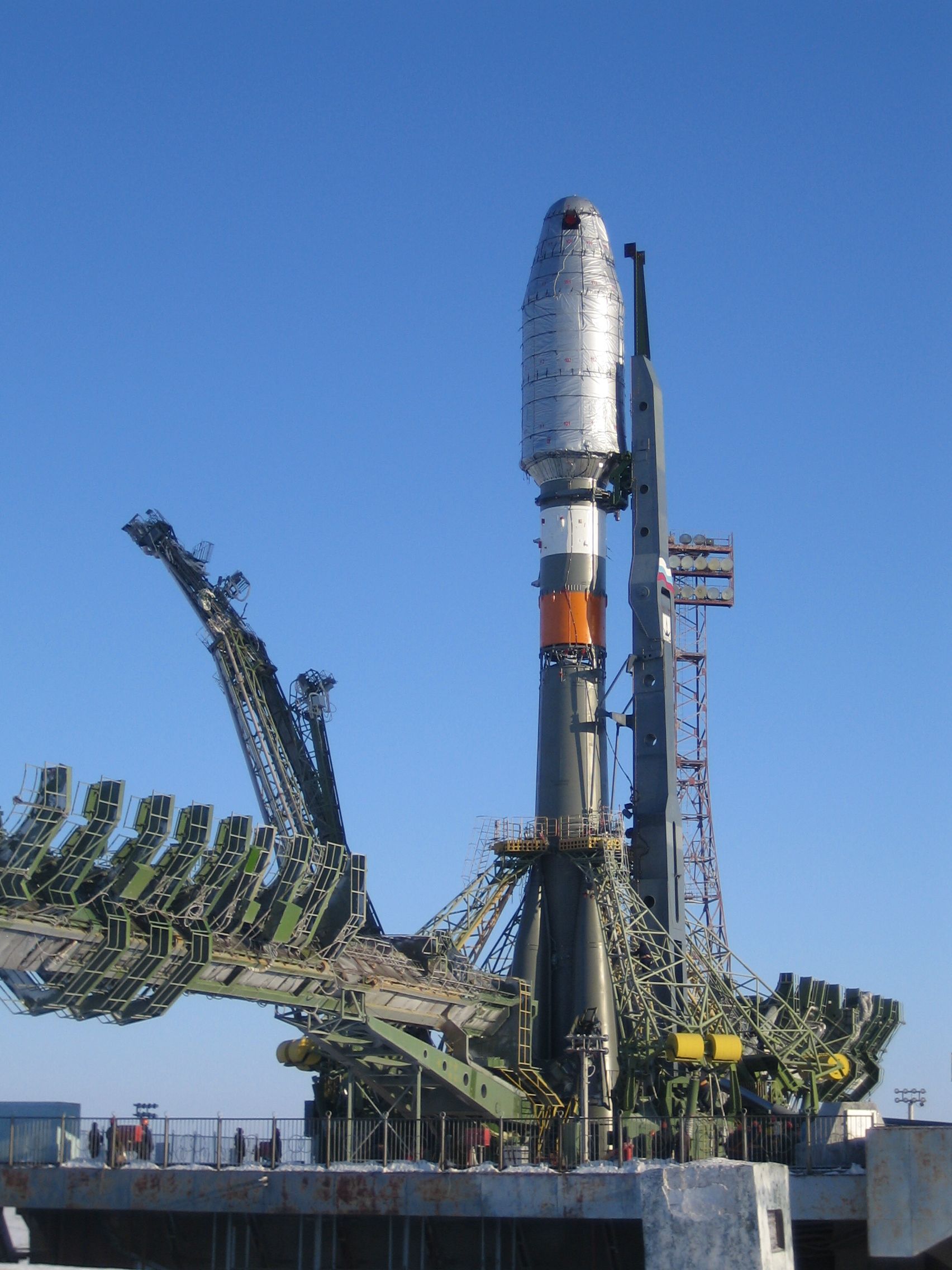
The Progress Soyuz-2.1b is a Russian medium-lift orbital launch vehicle in the Soyuz-2 family. It combines the modernized Soyuz-2 digital flight-control architecture with a more powerful third stage using the RD-0124 engine. The vehicle can operate as a basic three-stage launcher or with an additional upper stage for missions requiring higher-energy trajectories.
Soyuz-2 was developed and produced by the Progress Rocket Space Centre in Samara as a modernization of earlier Soyuz launch vehicles. The program introduced digital flight control, upgraded engines and structural changes intended to increase payload capability and replace older Soyuz-U, Molniya-M and Soyuz-FG launchers.
Soyuz-2.1b has been used for civilian and military missions from Russian launch sites, including Plesetsk Cosmodrome. In 2026, several Soyuz-2.1b launches from Plesetsk carried Russian military payloads, including an officially unidentified Defense Ministry spacecraft launched on 24 August.
Development
Development of Soyuz-2 began in the early 1990s under the Rus modernization program. One objective was to modernize the long-serving Soyuz architecture while consolidating production in Russia and replacing the analog flight-control system used by earlier versions. Work on the new digital control system began in 1993 at NPO Avtomatiki in Yekaterinburg. The supplied Soyuz-2 history describes a triple-redundant computer architecture with dual gyroscopes and a phased introduction of the planned upgrades.
The modernization also introduced improved RD-107A and RD-108A engines for the booster and core stages. Redesigned injection systems improved combustion efficiency and increased specific impulse. Because of financial constraints during the 1990s, the upgrades were introduced in stages. The improved first- and second-stage engines entered service before all other Soyuz-2 changes, while the digital avionics and associated structural modifications appeared with Soyuz-2.1a.
Soyuz-2.1b introduced the RD-0124 third-stage engine. The supplied historical source describes the RD-0124 as using an oxygen-rich staged-combustion cycle and states that the Soyuz-2.1b third stage provides about 15 percent more power than the corresponding stage of Soyuz-2.1a. Together with the other Soyuz-2 improvements, the modernization increased payload capability compared with earlier members of the family.
Introduction
Soyuz-2.1a first flew on a suborbital test mission from Plesetsk on 8 November 2004. The supplied sources place the Soyuz-2.1b variant's debut on 27 December 2006. They are less consistent about the chronology of particular Soyuz-2.1b configurations: another historical passage identifies a 26 July 2008 Plesetsk mission with a classified military payload as the first Soyuz-2.1b launch, while the Soyuz-2.1b/Fregat-M profile uses 26 July 2008 as the service date for that specific configuration. For this article, 2006 is therefore used as the earliest explicitly supported debut year for the Soyuz-2.1b variant itself.
Between 2010 and 2019, the broader Soyuz-2 family progressively replaced the Molniya-M, Soyuz-U and Soyuz-FG launch vehicles. Soyuz-2 variants have continued to operate from Baikonur, Plesetsk and Vostochny. A general Soyuz launch-vehicle profile identifies Soyuz-2.1a, Soyuz-2.1b and Soyuz-2.1v as current members of the modern Soyuz family and describes digital flight control as a major difference from earlier analog-controlled versions.
Design
Launch vehicle architecture
In its basic form, Soyuz-2 is a three-stage launch vehicle. The architecture retains the characteristic Soyuz arrangement of strap-on boosters surrounding a central core, followed by an upper core stage. For missions that require additional energy after the launch vehicle's own stages complete their work, Soyuz-2.1b can be combined with an additional upper stage.
The Fregat family is the most commonly cited additional upper stage in the supplied sources. A smaller Volga upper stage is also available for appropriate missions. The use of an upper stage allows Soyuz-2.1b to deliver payloads beyond the basic low-Earth-orbit capability of the three-stage launch vehicle.
Flight control
A major Soyuz-2 modernization was the replacement of the analog control system used on earlier Soyuz vehicles with digital flight control and telemetry. The digital system allows the rocket to perform the required heading changes after liftoff. This permits launches from a fixed launch platform rather than depending on platform rotation to establish the launch azimuth before flight.
The digital architecture also supported the use of larger payload fairings and contributed to improved mission flexibility. These changes were introduced as part of the broader Soyuz-2 modernization rather than as an isolated modification unique to Soyuz-2.1b.
Propulsion
The strap-on boosters and central core use upgraded RD-107A and RD-108A engines with improved injection systems compared with earlier Soyuz versions. The principal propulsion distinction of Soyuz-2.1b is its RD-0124 third-stage engine. The supplied development history describes the RD-0124 as an oxygen-rich staged-combustion engine and identifies it as the major third-stage improvement separating Soyuz-2.1b from Soyuz-2.1a.
Upper-stage configurations
A Soyuz-2.1b equipped with Fregat-M is effectively a four-stage launch system when the additional upper stage is counted. The supplied Fregat-M configuration data gives a total length of 46.3 m, a maximum diameter of 10.3 m, a fairing diameter of 4.11 m and a launch mass of 313 t. It lists a launch thrust of 4,150 kN and payload capacities of 8,200 kg to low Earth orbit and 3,250 kg to geostationary transfer orbit for this configuration.
A separate Soyuz reference gives an approximate height of 46 m and a low-Earth-orbit payload figure of 8,200 kg for Soyuz-2, broadly corresponding to the Fregat-equipped figures above. These values should not be treated as universal specifications for every Soyuz-2.1b mission because dimensions and payload performance can depend on the selected fairing, upper stage and target orbit.
Operational history
Soyuz-2.1b has been used for both openly identified spacecraft and classified Russian military payloads. Plesetsk Cosmodrome in the Arkhangelsk region is one of its principal Russian launch sites and has supported repeated Defense Ministry missions.
Military launches in 2026
On 5 February 2026, a Soyuz-2.1b launched a military payload from Plesetsk. Open tracking systems subsequently identified nine objects associated with the mission, which received the designations Kosmos-2600 through Kosmos-2608. According to the supplied report, some of their orbits were consistent with sun-synchronous trajectories frequently used by Earth-observation spacecraft. Their exact functions were not officially disclosed in the supplied evidence.
On 16 April 2026, another Soyuz-2.1b mission from Plesetsk used a Volga upper stage and deployed six military satellites. These spacecraft received the designations Kosmos-2609 through Kosmos-2614. Initial independent analysis of their orbital characteristics suggested that radar Earth-observation tasks were possible, but this interpretation was not presented as an official identification.
On 24 August 2026, Russian Space Forces launched another Soyuz-2.1b from Plesetsk. The launch occurred at 05:40 Moscow time, or 02:40 GMT. Russia's Defense Ministry stated only that the rocket carried a spacecraft launched in the interests of the ministry and did not disclose its type or mission. The launch was conducted by a combat crew of the Space Forces of the Russian Aerospace Forces, as reported by Anadolu Agency.
Before the August launch, open schedules had associated the period with a possible Glonass-K1 mission. Following liftoff, the available official information still did not identify the satellite. Independent tracking later showed two cataloged objects in an approximately 19,045 by 19,150 km orbit with an inclination of 64.8 degrees. This orbit was consistent with expectations for a GLONASS navigation mission. Independent analysts therefore assessed that the spacecraft could be a Glonass-K1 satellite and could receive the Kosmos-2619 designation, but Russia had not officially confirmed this identification in the supplied evidence. The distinction between the official statement and the independent assessment is described in the orbital tracking analysis.
Variants
- Soyuz-2.1b: Three-stage Soyuz-2 variant distinguished by the RD-0124-powered third stage and digital Soyuz-2 flight-control architecture.
- Soyuz-2.1b/Fregat-M: Configuration using the Fregat-M upper stage, giving the launch system four stages when Fregat-M is counted. The supplied configuration data lists capability for both low Earth orbit and geostationary transfer orbit missions.
- Soyuz-2.1b/Volga: Configuration using the smaller Volga upper stage. A Soyuz-2.1b with Volga was used for the 16 April 2026 mission that deployed six Russian military satellites.
Specifications (Soyuz-2.1b/Fregat-M)
General characteristics
- Stages: 4, including the Fregat-M upper stage
- Length: 46.3 m
- Maximum diameter: 10.3 m
- Fairing diameter: 4.11 m
- Launch mass: 313 t
- Launch thrust: 4,150 kN
Payload capability
- Low Earth orbit: 8,200 kg
- Geostationary transfer orbit: 3,250 kg
Related equipment
- Soyuz-2.1a: Earlier Soyuz-2 variant that introduced the modernized digital avionics and structural changes before the RD-0124-powered Soyuz-2.1b entered service.
- Soyuz-ST: Soyuz-2 derivative introduced with modifications for launches from the Guiana Space Centre.
 Argentina
 Armenia
 Australia
 Austria
 Austria-Hungary
 Belgium
 Brazil
 United Kingdom
 United States
 Brunei
 Bulgaria
 Canada
 Chile
Chile China
China Colonial America
 Colombia
 Confederate States
 Croatia
 Czech
Czech Denmark
 Egypt
Egypt Finland
 France
 Georgia
 Germany
 German Imperial
 Greece
 Holland
 Hungary
 India
India Indonesia
 Iran
Iran Iraq
Iraq Ireland
 Israel
 Italy
Italy Japan
Japan Japan (1940)
 Jordan
 Kingdom of Italy
 Malaysia
 Mexico
 Myanmar
 Nazi Germany
 Netherlands
 New Zealand
 North Korea
 Norway
 Pakistan
 Peru
Peru Philippines
 Poland
 Portugal
 Prussia
 Romania
 Saudi Arabia
 Serbia
 Singapore
 Slovakia
 Slovenia
 South Africa
 South Korea
 Soviet Union
 Spain
Spain Sweden
 Switzerland
 Syria
Syria Taiwan
 Thailand
 Turkey
 UAE
UAE Ukraine
 Vietnam
 Yugoslavia