
History
Galactic Energy Pallas-1 is a Chinese medium-to-large orbital launch vehicle developed for commercial satellite launches and large-scale low-Earth-orbit constellation deployment. The liquid-propellant rocket uses a reusable first-stage architecture, although its first flight was conducted without a recovery attempt.
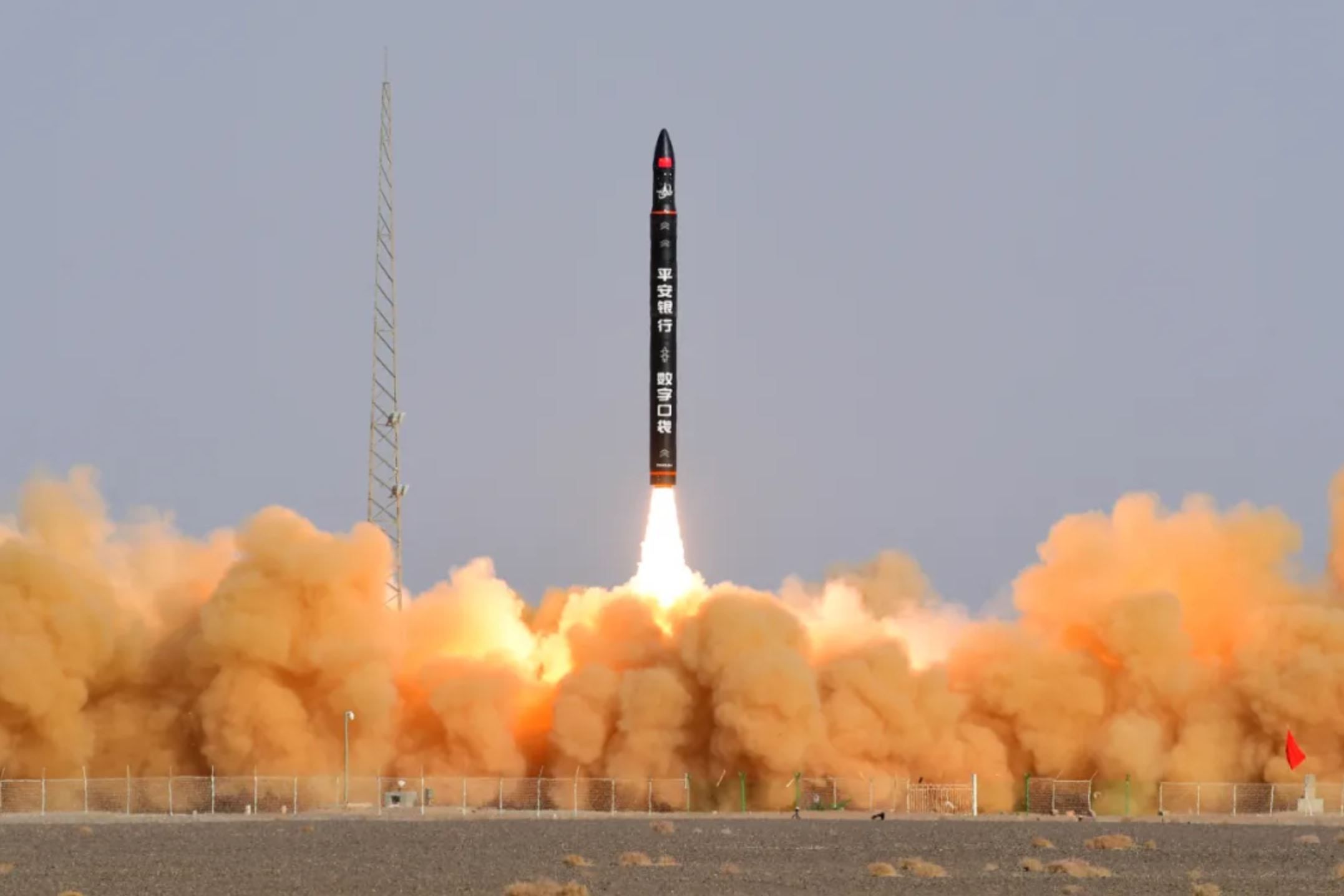
Pallas-1 completed its maiden orbital flight on 1 September 2026 from a dedicated Pallas-series launch pad at the Jiuquan Satellite Launch Center. The rocket reached its designated orbit, giving Galactic Energy its first flight demonstration of the Pallas liquid-propellant launch system.
The vehicle is designed around a seven-engine first stage using Galactic Energy CQ-50 liquid oxygen and kerosene engines. The company is developing grid-fin guidance, landing legs and restartable propulsion for future first-stage recovery and reuse.
Development and ground testing
Pallas-1 was developed as part of Galactic Energy's expansion from its established solid-propellant Ceres launch vehicles into larger reusable liquid-propellant systems. According to Global Times, the company designed Pallas-1 for low-Earth-orbit constellation deployment and launches of relatively large spacecraft.
Important ground tests preceded the maiden mission. According to China in Space, the second stage conducted a static firing in September 2025. The first stage received its seven engines during the same month and completed a static firing in November 2025. The first flight vehicle was reported at Jiuquan by May 2026 for final testing.
The CQ-50 engine was developed with reusable operations in mind. Galactic Energy reported that ground testing demonstrated throttling from 32 percent to 105 percent of rated thrust and multiple-start capability. By the time of the maiden flight, the engine family had accumulated more than 23,000 seconds of ground firing tests.
Maiden flight
Pallas-1 Y1 lifted off at 10:00 China Standard Time on 1 September 2026, corresponding to 02:00 UTC, from the Dongfeng Commercial Space Innovation Pilot Zone at Jiuquan. Seven CQ-50 engines powered the first stage. After staging, the second stage continued to orbit and the vehicle successfully entered its designated orbit.
The first flight was primarily a systems-verification mission. Galactic Energy used it to establish a flight baseline and collect data on propulsion, control and structural performance. No first-stage landing was attempted. China in Space reported that recovery hardware such as grid fins was not installed on the first-stage vehicle used for the debut mission.
Reports differ on whether the maiden vehicle carried any payload. The original post-flight report stated that Galactic Energy did not disclose a payload, while China in Space reported that no customer or company spacecraft was carried. The confirmed result of the mission was successful orbital insertion by the launch vehicle.
Design
Pallas-1 is a two-stage liquid-propellant launch vehicle that can also be configured with an optional upper stage. The main vehicle is approximately 52 m tall, has a core diameter of 3.35 m and a fully fuelled mass of about 283,000 kg. Galactic Energy gives approximately 350 tonnes of thrust at liftoff.
Propulsion
The first stage uses seven CQ-50 engines burning liquid oxygen and rocket-grade kerosene. Galactic Energy selected a seven-engine cluster partly to provide propulsion redundancy. The company states that during certain phases of flight the remaining six engines are intended to retain sufficient capability for the mission if one engine develops a fault.
The second stage uses a single vacuum-optimized CQ-50 engine burning the same liquid oxygen and kerosene propellants. China in Space reports approximately 60 tonnes of thrust for this engine.
Payload capability
Published payload figures are not completely consistent. Galactic Energy information reported by Global Times gives a low-Earth-orbit payload range of approximately 5,000 to 7,000 kg for current constellation deployment requirements, while the original post-flight report gives about 7,000 kg. China in Space reports a maximum of 8,000 kg to low Earth orbit and 5,000 kg to a 700 km Sun-synchronous orbit. Earlier secondary descriptions, including Wikipedia, carried lower preflight figures, while Orbital Roster listed approximately 7,000 kg. The post-flight company-linked figure of about 7,000 kg is used as the principal reference here.
First-stage recovery
The Pallas-1 first stage is being developed for vertical recovery. The planned configuration uses four grid fins to control the stage during atmospheric descent and four deployable landing legs for touchdown. At least one CQ-50 engine is intended to restart for braking and landing.
Galactic Energy has adopted a phased recovery program rather than combining orbital flight and booster recovery on the maiden mission. Planned steps include atmospheric reentry control, operation of the grid fins, braking and deceleration, and targeted recovery at sea or on land before a complete vertical landing is attempted. The source report states that the company is targeting the second half of 2027 for a first landing milestone.
The first stage is designed for no fewer than 25 flights. Galactic Energy intends subsequent development to concentrate on repeatable reuse, simplified inspection and refurbishment, lower recovery costs and shorter turnaround times.
Program status
Pallas-1 achieved its first successful orbital flight on 1 September 2026. The maiden mission verified the basic launch vehicle, but first-stage recovery and repeated reuse remain development objectives rather than demonstrated operational capabilities.
Galactic Energy plans to introduce descent-control and recovery hardware on later flights and then progress toward vertical first-stage landing. The company intends the Pallas family to complement its Ceres solid-propellant launch vehicles and serve commercial satellite and constellation missions.
Variants
- Pallas-1: Two-stage baseline orbital launch vehicle with a reusable first stage under development. An optional upper stage can be fitted for missions requiring additional orbital capability.
- Pallas-1B: Proposed three-core configuration using three Pallas-1 booster cores. Published descriptions give a planned low-Earth-orbit payload capability of approximately 17,500 kg.
Specifications (Pallas-1 Y1)
General characteristics
- Type: Medium-to-large orbital launch vehicle
- Stages: 2
- Height: approximately 52 m
- Core diameter: 3.35 m
- Liftoff mass: approximately 283,000 kg
- Launch site: Jiuquan Satellite Launch Center, dedicated Pallas-series launch complex
Propulsion
- First-stage engines: 7 Galactic Energy CQ-50 engines
- First-stage propellants: liquid oxygen and kerosene
- Liftoff thrust: approximately 350 tonnes of thrust
- Second-stage engine: 1 vacuum-optimized CQ-50 engine
- Second-stage propellants: liquid oxygen and kerosene
Performance
- Low-Earth-orbit payload: approximately 7,000 kg based on post-flight company-linked reporting
Reusable configuration
- First-stage recovery: planned vertical landing using grid fins, engine braking and deployable landing legs
- Designed first-stage reuse: no fewer than 25 flights
- Maiden-flight recovery: no recovery attempt; recovery hardware was not installed on the Y1 first stage
 Argentina
 Armenia
 Australia
 Austria
 Austria-Hungary
 Belgium
 Brazil
 United Kingdom
 United States
 Brunei
 Bulgaria
 Canada
 Chile
Chile Colonial America
 Colombia
 Confederate States
 Croatia
 Czech
Czech Denmark
 Egypt
Egypt Finland
 France
 Georgia
 Germany
 German Imperial
 Greece
 Holland
 Hungary
 India
India Indonesia
 Iran
Iran Iraq
Iraq Ireland
 Israel
 Italy
Italy Japan
Japan Japan (1940)
 Jordan
 Kingdom of Italy
 Malaysia
 Mexico
 Myanmar
 Nazi Germany
 Netherlands
 New Zealand
 North Korea
 Norway
 Pakistan
 Peru
Peru Philippines
 Poland
 Portugal
 Prussia
 Romania
 Russia
 Saudi Arabia
 Serbia
 Singapore
 Slovakia
 Slovenia
 South Africa
 South Korea
 Soviet Union
 Spain
Spain Sweden
 Switzerland
 Syria
Syria Taiwan
 Thailand
 Turkey
 UAE
UAE Ukraine
 Vietnam
 Yugoslavia