
History
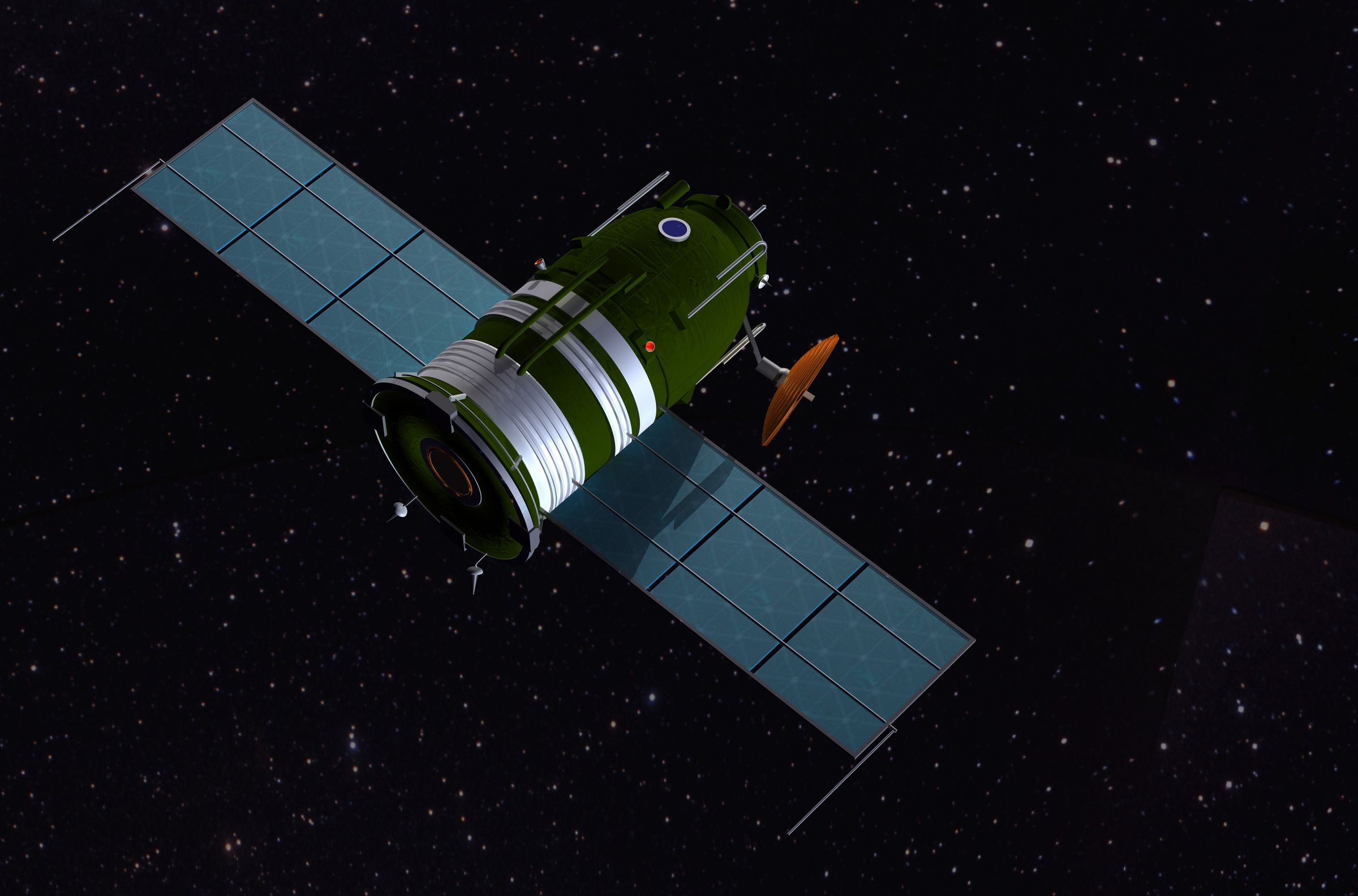
Zond 5 was a Soviet uncrewed circumlunar spacecraft based on the 7K-L1 lunar-flyby design. It was developed as part of the Soviet effort to test the spacecraft and flight profile intended for a crewed journey around the Moon and return to Earth.
Its September 1968 mission carried two Russian tortoises and other biological material around the Moon. These were the first terrestrial organisms to travel beyond low Earth orbit to the vicinity of the Moon and return safely to Earth.
The flight also demonstrated recovery of a spacecraft returning from a lunar trajectory. Navigation and attitude-control problems prevented the planned controlled landing in Soviet territory, so Zond 5 instead made a ballistic reentry and splashed down in the Indian Ocean.
Background and launch
The Zond circumlunar program used the 7K-L1 spacecraft, also identified by the designation 11F91. Zond 5 was vehicle No. 9. The design was derived from the Soyuz family and was intended to support a crewed lunar-flyby mission. Earlier attempts had suffered repeated failures. Zond 4 achieved only partial success in March 1968, a launch attempt in April ended after an erroneous abort command shut down the launch vehicle's second stage, and another vehicle was damaged during a Block D explosion on the launch pad in July.
By September 1968, vehicle No. 9 was prepared for an automated rehearsal of the circumlunar flight profile. Zond 5 lifted off from Site 81 at Tyuratam, the Baikonur launch complex, at 00:42:10.77 Moscow time on 15 September 1968, corresponding to 21:42 GMT on 14 September. The launch vehicle was a Proton-K with a Block D upper stage.
The Proton-K placed the Block D and spacecraft into an initial Earth parking orbit. After a coast period, the Block D stage fired again and inserted Zond 5 onto its trans-lunar trajectory. The spacecraft was then publicly announced under the name Zond 5.
Flight around the Moon
During the outbound flight, the spacecraft developed a serious navigation problem. The 100K star tracker failed because its optical surfaces had become contaminated. The contamination was attributed to vapors associated with a newly introduced blind intended to protect the tracker from sunlight. The failure delayed the planned trajectory correction and prevented use of the normal celestial-navigation method.
Controllers eventually performed the required correction using the positions of the Earth and Sun to establish the spacecraft's orientation. Although this method was less accurate than the nominal star-tracker system, it was sufficient to keep Zond 5 on a trajectory around the Moon and back toward Earth.
On 18 September, Zond 5 passed behind the Moon at a minimum distance of about 1,960 km before beginning its return to Earth. A later trajectory correction ensured that the spacecraft would encounter the Earth's atmosphere.
The mission also experienced problems with a three-axis stabilization gyroscope and with the pointing of the high-gain antenna. Despite these difficulties, controllers were able to command Zond 5 to photograph the Earth from a distance of about 85,000 km.
On 19 September, radio transmissions apparently containing the voices of cosmonauts were received through the spacecraft, causing concern outside the Soviet Union that Zond 5 might have a crew. No humans were aboard. The voices originated from cosmonauts on the ground and were transmitted through the spacecraft's communications system.
Return and recovery
Because the celestial-navigation system remained unusable, controllers could not conduct the normal maneuver required for a controlled reentry toward the intended Soviet landing area. They instead improvised a method using the remaining optical solar sensor and small attitude-control thrusters. By alternating firings from opposite sides of the spacecraft over an extended period, they gradually adjusted the return trajectory into a survivable atmospheric entry corridor.
Zond 5 entered the atmosphere on 21 September at approximately 11 km/s. The descent followed a ballistic trajectory. At an altitude of about 7 km, while the descent module was still moving at roughly 200 m/s, its parachute system deployed. The capsule splashed down successfully in the Indian Ocean at approximately 32 degrees 38 minutes south latitude and 65 degrees 33 minutes east longitude.
Soviet aircraft located the descending spacecraft and helped direct recovery forces to it. The capsule was lifted aboard a Soviet recovery vessel on 22 September. Its final recovered descent-module mass was reported as 2,046 kg. The spacecraft later reached Bombay aboard the recovery ship Vasily Golovin on 3 October and was transported to Moscow.
Design
Zond 5 was a 7K-L1 spacecraft configured for an uncrewed circumlunar test flight. The 7K-L1 design was a version of the Soyuz spacecraft adapted for lunar-flyby missions. For Zond 5, the spacecraft was launched by the Proton-K carrier rocket together with a Block D upper stage, which provided the propulsion required to depart Earth orbit for the Moon.
Guidance and propulsion
The spacecraft used celestial and solar sensors to determine its attitude. Its normal navigation equipment included the 100K star tracker, while a solar sensor could provide an alternative reference. The mission also used the main KDU propulsion system for trajectory corrections and smaller attitude-control thrusters for orientation and, during the return flight, improvised trajectory adjustment.
A high-gain communications antenna had its own Earth-seeking sensor. During Zond 5, an incorrect relationship between pre-launch settings and the antenna's mechanical calibration contributed to pointing problems. Ground controllers nevertheless maintained sufficient communications to command the spacecraft through its lunar flyby and return.
Descent system
The return capsule was designed to survive atmospheric entry from a lunar-return trajectory. Zond 5 ultimately used a ballistic reentry rather than the planned aerodynamic descent toward Soviet territory. After atmospheric braking, the capsule deployed its parachute system and completed the mission with an ocean splashdown.
Scientific payload
Zond 5 carried a biological experiment intended in part to examine the effects of radiation and deep-space flight on living organisms. The payload included two Russian tortoises, fruit fly eggs, other insects or insect material, plants and seeds, algae, bacteria and other biological specimens. The tortoises weighed about 0.34 to 0.4 kg each before the flight.
A mannequin equipped with radiation sensors occupied the pilot's position. The spacecraft also carried proton detectors and an AFA-BA/40 camera developed by the Kazan Optical and Mechanical Plant for photography during the mission.
The returned tortoises were alive after the mission. They had lost body mass, but subsequent comparisons with control animals indicated that many of the observed changes were associated primarily with prolonged food deprivation rather than with the spaceflight itself. The experiment demonstrated that living terrestrial organisms could survive a flight through the Earth's radiation belts, around the Moon and back to Earth.
Mission significance
Zond 5 became the first spacecraft to complete a circumlunar journey and return safely to Earth from the vicinity of the Moon. It was also the first lunar mission to carry animals and return them alive to Earth. The successful flight showed that the 7K-L1 system could perform most of the major phases required for a crewed circumlunar mission, although its guidance and control failures also demonstrated that important reliability problems remained.
The mission occurred during an intense phase of the Moon race. Its success caused concern in the United States that a Soviet crewed circumlunar mission might follow soon. NASA later noted that Zond 5, together with intelligence showing Soviet lunar-launch preparations, may have contributed to the decision to send Apollo 8 around the Moon in December 1968.
The Zond 5 descent capsule is preserved at the RKK Energiya museum in the Moscow region.
Specifications (Zond 5 / 7K-L1 No. 9)
General characteristics
- Program designation: Zond 5
- Spacecraft designation: 7K-L1 (11F91) No. 9
- Crew: Uncrewed
- Launch vehicle: Proton-K with Block D upper stage
- Launch site: Tyuratam, Site 81
- Launch date: 15 September 1968 Moscow time
- Mission end: 21 September 1968
- Mission duration: 6 days, 18 minutes and 59 seconds
- Recovered descent-module mass: 2,046 kg
Mission profile
- Mission type: Uncrewed circumlunar flight and Earth return
- Closest lunar approach: Approximately 1,960 km
- Atmospheric entry speed: Approximately 11 km/s
- Return mode: Ballistic atmospheric reentry followed by parachute descent
- Landing: Indian Ocean splashdown
- Splashdown coordinates: 32 degrees 38 minutes south, 65 degrees 33 minutes east
Payload and equipment
- Biological payload: Two Russian tortoises and additional animal, plant and microorganism specimens
- Imaging system: AFA-BA/40 camera
- Scientific instruments: Proton detectors and radiation-measurement equipment
Sources and further reading
A detailed technical chronology of the mission is available from RussianSpaceWeb. Additional background and payload details are summarized in the Zond 5 reference article. A NASASpaceflight historical note also records the September 1968 launch and return.
 Argentina
 Armenia
 Australia
 Austria
 Austria-Hungary
 Belgium
 Brazil
 United Kingdom
 United States
 Brunei
 Bulgaria
 Canada
 Chile
Chile China
China Colonial America
 Colombia
 Confederate States
 Croatia
 Czech
Czech Denmark
 Egypt
Egypt Finland
 France
 Georgia
 Germany
 German Imperial
 Greece
 Holland
 Hungary
 India
India Indonesia
 Iran
Iran Iraq
Iraq Ireland
 Israel
 Italy
Italy Japan
Japan Japan (1940)
 Jordan
 Kingdom of Italy
 Malaysia
 Mexico
 Myanmar
 Nazi Germany
 Netherlands
 New Zealand
 North Korea
 Norway
 Pakistan
 Peru
Peru Philippines
 Poland
 Portugal
 Prussia
 Romania
 Russia
 Saudi Arabia
 Serbia
 Singapore
 Slovakia
 Slovenia
 South Africa
 South Korea
 Spain
Spain Sweden
 Switzerland
 Syria
Syria Taiwan
 Thailand
 Turkey
 UAE
UAE Ukraine
 Vietnam
 Yugoslavia