
History
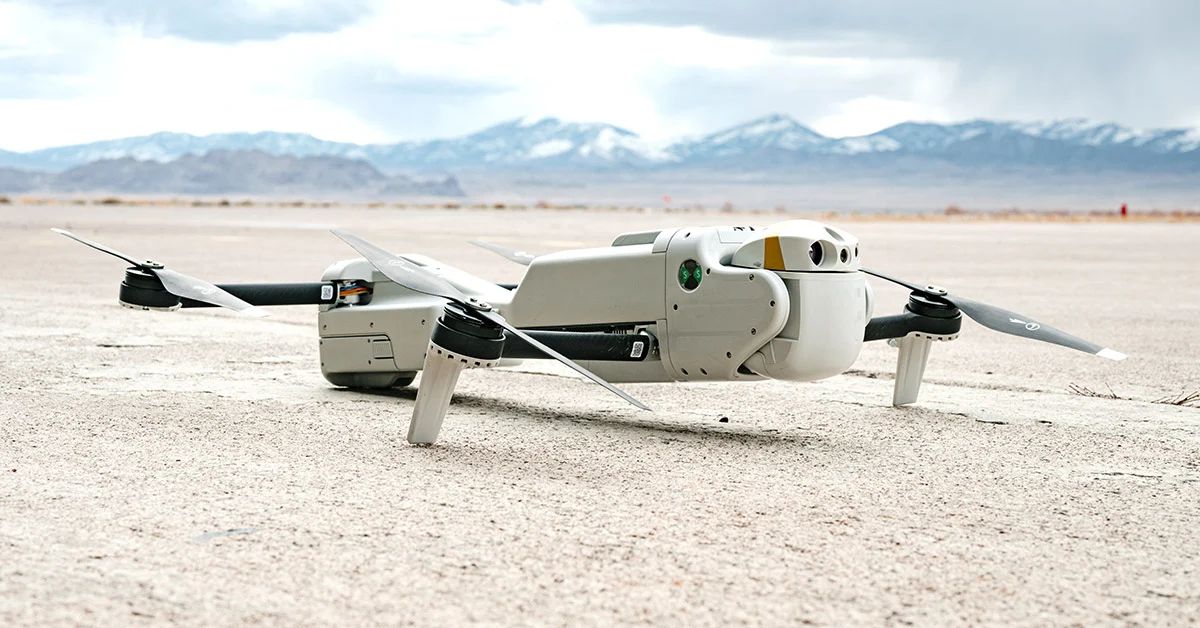
The Teledyne FLIR Defense Rogue 1 is a man-portable vertical takeoff and landing loitering munition designed for reconnaissance, target identification, and precision strike missions. Its distinguishing feature is a mechanical interrupt in the fuzing system that permits an engagement to be aborted so the aircraft can be recovered and reused.
Rogue 1 combines electro-optical and thermal imaging with interchangeable mission payloads. The system is intended for operations beyond direct line of sight and can continue operating in environments where GPS or communications are degraded or denied.
Teledyne FLIR supplied the first Rogue 1 systems to U.S. Special Operations Command in 2022 for evaluation under the Ground Organic Precision Strike Systems program. The company later publicly introduced the system at Special Operations Forces Week in Tampa on 7 May 2024.
Development and early evaluation
Rogue 1 was developed as an optionally lethal small unmanned aircraft that could combine surveillance and precision attack functions in a compact system for small military units. U.S. Special Operations Command began evaluating the system after receiving the first examples in 2022, before the aircraft was publicly unveiled.
Teledyne FLIR formally introduced Rogue 1 in May 2024. The manufacturer described it as a rapidly deployable VTOL system capable of attacking stationary or moving armored targets, soft-skinned vehicles, and dismounted personnel. Its modular payload arrangement was intended to allow operators to select effects appropriate to different target types. Additional details were published by Teledyne FLIR Defense.
U.S. Marine Corps procurement
In April 2024, Teledyne FLIR announced that it had been selected for a U.S. Marine Corps indefinite-delivery, indefinite-quantity contract valued at up to $249 million for the Organic Precision Fires-Light program. Rogue 1 was offered as the company's platform for the requirement, which sought a portable precision-strike capability for Marine squads and platoons. An initial order covered 127 systems.
After the initial evaluation and procurement phase, Teledyne FLIR received a further $42.5 million Marine Corps contract in 2025 for more than 600 Rogue 1 loitering munitions together with ground control stations, training kits, and related support. Reporting on that order placed the approximate procurement value at $70,800 per aircraft when the total contract value was divided by the number of drones, although the contract also covered equipment and services in addition to the aircraft. Details of the procurement were reported by Militarnyi.
U.S. Army testing
U.S. Army soldiers also tested Rogue 1 at Fort Irwin, California. The evaluation included operation of the aircraft in darkness and demonstrated its ability to perform reconnaissance while retaining an optional strike capability when commanders authorized engagement.
Block 2 development
Teledyne FLIR disclosed the Rogue 1 Block 2 configuration in 2026. The upgrade increased the stated operational range from more than 10 km to approximately 20 km and introduced redesigned propellers, improved battery cells, upgraded onboard computing, dual-band radios, and revised navigation software. The company also introduced an Android-based ground control system and a new shaped-charge-jet anti-armor payload.
Block 2 software improvements included track landing, enhanced mapping and visualization, and navigation based on fused thermal and daylight imagery for GPS-denied conditions. The upgraded battery cells were reported to increase endurance by about 20 percent compared with the original configuration. Block 2 was available for orders in 2026, with deliveries scheduled to begin during that year. These changes were described in coverage of the upgraded system by NextGen Defense.
Design
Rogue 1 uses a compact VTOL configuration with folding rotors for transportation. Vertical takeoff and landing eliminates the need for a dedicated launch rail or vehicle-mounted launcher. The aircraft is designed to be operated by a single soldier and can transition rapidly from reconnaissance to an authorized attack.
Sensors and navigation
The original Rogue 1 carries electro-optical imaging equipment and a FLIR Boson 640+ thermal camera for day and night reconnaissance, surveillance, target identification, and tracking. The sensor assembly is coupled to the warhead in a gimballed payload, allowing the observation system and weapon to remain aligned during targeting.
Navigation incorporates conventional GPS together with methods intended to support operation when GPS is unavailable or disrupted. Published descriptions also identify ground-image-matching navigation and hardened communications as features intended to improve resilience in contested electromagnetic environments.
Armament and recovery system
Rogue 1 accepts interchangeable mission payloads. Documented options include an explosively formed penetrator for armored targets, a forward-fragmenting payload for softer targets, and a non-lethal trainer payload. The modular arrangement allows the aircraft to be configured for different missions before launch.
A central feature of Rogue 1 is its mechanical interrupt fuzing system. If an operator disengages from a target or aborts the mission, the system can disable the lethal function so the aircraft can return for recovery rather than being expended. This gives Rogue 1 a reusable capability that differs from loitering munitions designed exclusively for one-way attack.
Control and autonomy
The aircraft incorporates automated functions intended to reduce operator workload. A single operator can launch, observe, retask, disengage, recover, or authorize an attack using the control system. The design is intended to support missions in conditions where communications or satellite navigation are degraded.
Program status
Rogue 1 has progressed from U.S. Special Operations Command evaluation to substantial U.S. Marine Corps procurement and additional U.S. Army testing. More than 600 additional aircraft were contracted for the Marine Corps in 2025 after the initial order for 127 systems.
The original configuration remained the basis of those procurement activities while Teledyne FLIR introduced Block 2 in 2026. Block 2 extends range and introduces changes to propulsion, batteries, communications, computing, navigation, control software, and anti-armor payload options.
Variants
- Rogue 1: Original VTOL loitering munition configuration supplied for U.S. Special Operations Command evaluation from 2022 and later selected for the U.S. Marine Corps Organic Precision Fires-Light program.
- Rogue 1 Block 2: Upgraded configuration unveiled in 2026 with approximately 20 km range, redesigned propellers, improved batteries, upgraded autonomy and communications, revised navigation functions, an Android-based control system, and a new anti-armor payload.
Operators
- U.S. Special Operations Command: Received the first Rogue 1 systems in 2022 for evaluation under the Ground Organic Precision Strike Systems program.
- U.S. Marine Corps: Selected Rogue 1 for the Organic Precision Fires-Light program. An initial order covered 127 systems, followed by a 2025 contract for more than 600 additional loitering munitions and associated equipment.
- U.S. Army: Army soldiers tested Rogue 1 at Fort Irwin, California, including reconnaissance and optional strike functions.
Specifications (Rogue 1 original configuration)
General characteristics
- Type: VTOL loitering munition small unmanned aerial system
- Weight: Approximately 4.5 kg (10 lb)
- Propulsion: Electric motors
- Operator: Single operator
- Sensors: Electro-optical camera and FLIR Boson 640+ thermal camera
Performance
- Endurance: 30 minutes
- Maximum burst speed: More than 113 km/h (70 mph)
- Operational range: More than 10 km (6 miles)
Armament
- Explosively formed penetrator: Mission payload for armored targets
- Forward-fragmenting payload: Mission payload intended for softer targets
- Trainer payload: Non-lethal training configuration
 Argentina
 Armenia
 Australia
 Austria
 Austria-Hungary
 Belgium
 Brazil
 United Kingdom
 Brunei
 Bulgaria
 Canada
 Chile
Chile China
China Colonial America
 Colombia
 Confederate States
 Croatia
 Czech
Czech Denmark
 Egypt
Egypt Finland
 France
 Georgia
 Germany
 German Imperial
 Greece
 Holland
 Hungary
 India
India Indonesia
 Iran
Iran Iraq
Iraq Ireland
 Israel
 Italy
Italy Japan
Japan Japan (1940)
 Jordan
 Kingdom of Italy
 Malaysia
 Mexico
 Myanmar
 Nazi Germany
 Netherlands
 New Zealand
 North Korea
 Norway
 Pakistan
 Peru
Peru Philippines
 Poland
 Portugal
 Prussia
 Romania
 Russia
 Saudi Arabia
 Serbia
 Singapore
 Slovakia
 Slovenia
 South Africa
 South Korea
 Soviet Union
 Spain
Spain Sweden
 Switzerland
 Syria
Syria Taiwan
 Thailand
 Turkey
 UAE
UAE Ukraine
 Vietnam
 Yugoslavia