
History
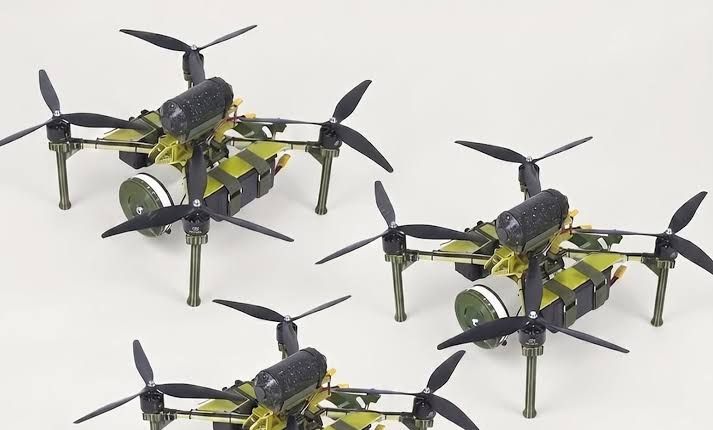
The Ptashka Drones Ptashka 17-O-50 km is a Ukrainian 17-inch FPV strike UAV that uses a fiber-optic control and video link. It was developed for long-range operations in environments where conventional radio-controlled drones are vulnerable to electronic warfare.
The system has a stated operating depth of up to 50 km. The fiber-optic connection carries control commands and video without relying on a conventional radio link, allowing the UAV to operate behind terrain, buildings, tree lines, and other obstacles while remaining resistant to traditional radio-frequency jamming.
Ukraine's Ministry of Defence approved a Ptashka fiber-optic strike quadcopter with an operating depth of almost 50 km for use by the Defence Forces in March 2026. The official announcement described this as a record operating depth among codified Ukrainian UAVs of its type. The approval and deployment were reported by the Ukrainian defence authorities.
Development
Ptashka Drones had demonstrated strikes by fiber-optic FPV drones with a claimed 50 km range by December 2025. Those earlier aircraft used analog cameras, which provided lower image quality than the later digital configuration described in 2026.
By 2026 the company's product range included the PTASHKA 17-O, a 17-inch fiber-optic UAV configured for a 50 km link. The manufacturer describes it as its maximum-range fiber-optic platform and lists it as being in production.
In August 2026, Ptashka Drones reported combat use of the Ptashka 17-O-50 km against targets deep behind Russian lines. According to Militarnyi, released footage showed attacks on camouflaged armored vehicles at storage locations as well as ambushes against vehicles and motorcycles moving along logistics routes.
The UAV was also made available for Ukrainian military procurement through the Army of Drones.Bonus program and the DOT-Chain Defence system.
Design
Airframe and propulsion
The Ptashka 17-O uses a reinforced textolite frame with 17-inch propellers. The manufacturer's published configuration lists A4320 350KV electric motors, an F722 80A flight controller, and a split battery arrangement consisting of two 8S5P battery packs. Ukrainian defence authorities have similarly described the aircraft as having a reinforced composite structure, powerful electric motors, thrust propellers, and a divided battery pack intended to maintain stable operation.
The drone is designed for combat use in varying weather conditions. Ukrainian defence authorities state that it can operate by day or night and in strong, gusting winds.
Fiber-optic control system
The 50 km configuration described in August 2026 carries a spool containing 50 km of Chinese-made G.657.A2 optical fiber with a diameter of 0.26 mm. The cable unwinds from the aircraft during flight and carries both control commands and the video signal between the UAV and its ground station.
Because the control channel does not depend on a conventional radio-frequency connection, traditional electronic-warfare jammers cannot disrupt it in the same manner as a normal FPV radio link. The cable also permits operation at low altitude and behind physical obstacles that would block or degrade direct radio communications. The absence of a normal control radio signal can make detection of the operator's position by radio-electronic reconnaissance more difficult.
The fiber-optic arrangement also imposes limitations. The spool adds mass and volume, reducing available payload and maneuverability, while the cable can break or become caught on obstacles. Long fiber runs also increase system cost.
Imaging and control
The August 2026 Ptashka 17-O-50 km configuration was reported to use digital video transmission from a low-light camera. The manufacturer's broader PTASHKA 17-O listing also identifies Caddx Ratel Pro 1500 TVL day-camera and 640×512 thermal-camera options. The reported 50 km combat configuration does not include a terminal guidance system, so the operator remains responsible for final control of the aircraft.
Operational history
In March 2026, Ukraine announced that the Ptashka fiber-optic strike quadcopter had been approved for Defence Forces use and was already being deployed operationally. Its stated combat payload was considered sufficient for attacks on infantry, firing positions, dugouts, vehicles, and lightly armored equipment.
In August 2026, Ptashka Drones reported that Ptashka 17-O-50 km aircraft had struck Russian armored vehicles at concealed storage sites in rear areas. The same reported series of missions included attacks on cars and motorcycles along logistics routes. These combat results were presented by the manufacturer and through released video footage.
Operators
- Ukraine: Defence Forces of Ukraine. The Ptashka fiber-optic strike UAV was approved for use by the Ministry of Defence in March 2026 and was reported to be deployed on combat operations.
Specifications (Ptashka 17-O-50 km)
General characteristics
- Type: Fiber-optic FPV strike UAV
- Configuration: Quadcopter
- Propeller diameter: 17 inches
- Frame: Reinforced textolite composite structure
- Motors: A4320 350KV electric motors
- Flight controller: F722 80A
- Battery: Two 8S5P battery packs
- Payload: 1.5 kg
- Fiber-optic link: 50 km G.657.A2 fiber, 0.26 mm diameter
Performance
- Stated operating depth: Up to 50 km
- Cruising speed: 85 km/h
- Maximum speed: 110 km/h
- Flight endurance: 35 minutes
Sensors and guidance
- Video: Digital video transmission from a low-light camera in the August 2026 configuration
- Other manufacturer-listed camera options: Caddx Ratel Pro 1500 TVL day camera or 640×512 thermal camera
- Terminal guidance system: None
 Argentina
 Armenia
 Australia
 Austria
 Austria-Hungary
 Belgium
 Brazil
 United Kingdom
 United States
 Brunei
 Bulgaria
 Canada
 Chile
Chile China
China Colonial America
 Colombia
 Confederate States
 Croatia
 Czech
Czech Denmark
 Egypt
Egypt Finland
 France
 Georgia
 Germany
 German Imperial
 Greece
 Holland
 Hungary
 India
India Indonesia
 Iran
Iran Iraq
Iraq Ireland
 Israel
 Italy
Italy Japan
Japan Japan (1940)
 Jordan
 Kingdom of Italy
 Malaysia
 Mexico
 Myanmar
 Nazi Germany
 Netherlands
 New Zealand
 North Korea
 Norway
 Pakistan
 Peru
Peru Philippines
 Poland
 Portugal
 Prussia
 Romania
 Russia
 Saudi Arabia
 Serbia
 Singapore
 Slovakia
 Slovenia
 South Africa
 South Korea
 Soviet Union
 Spain
Spain Sweden
 Switzerland
 Syria
Syria Taiwan
 Thailand
 Turkey
 UAE
UAE Vietnam
 Yugoslavia