
History
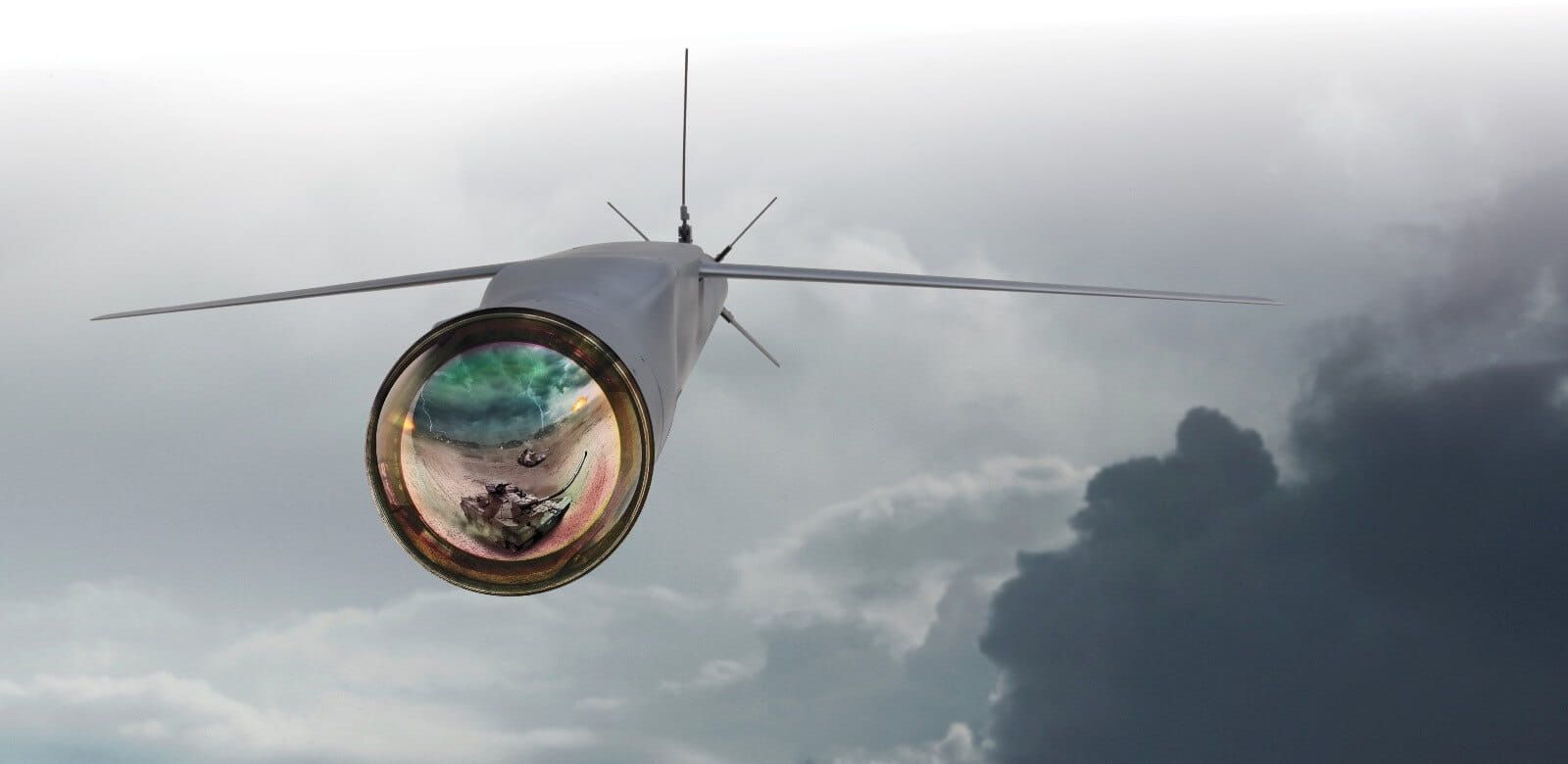
GBU-53/B StormBreaker is an American air-launched precision-guided glide weapon developed by Raytheon to attack stationary and moving targets in poor visibility and adverse weather. Previously known as Small Diameter Bomb II, it combines a tri-mode seeker, GPS-aided inertial navigation, a data link, folding wings, and a multi-effect warhead in a compact 93 kg weapon.
Development began in 2006 after a renewed United States Air Force competition. The first flight was announced in 2009, low-rate production followed in 2015, and Raytheon completed development and F-15E integration in 2018. The Air Force declared the weapon operational on the F-15E in 2020.
The United States Navy integrated StormBreaker with the F/A-18E/F Super Hornet and declared initial operational capability in February 2026 after limited early operational use during 2025. Integration work has also covered the F-35 and F-16 families.
Development
The program sought a compact weapon able to locate and strike mobile targets when darkness, cloud, rain, fog, smoke, or dust prevented reliable use of a single optical sensor. Its small diameter allows an aircraft to carry more weapons per sortie than with larger guided bombs.
An F-15E can carry up to 28 StormBreakers in a maximum-load configuration. Practical carriage depends on fuel, other weapons, sensors, mission requirements, and aircraft limits.
TJ150-powered development
In July 2026, RTX disclosed development of a longer-range powered StormBreaker using a modified Pratt & Whitney TJ150 turbojet. The project moved from concept toward planned flight testing in less than twelve months.
Adding an engine and fuel could make range less dependent on release altitude and aircraft speed, preserve energy for manoeuvre, and allow less direct approach routes. RTX did not disclose the new weapon's range, dimensions, mass, warhead, seeker, launch aircraft, designation, or test schedule.
The powered design should therefore be treated as a developmental variant rather than an operational StormBreaker capability. It is not confirmed that existing aircraft can carry the same number or that every component of GBU-53/B will remain unchanged.
Design
The baseline GBU-53/B has a cylindrical body, folding wings, and tail-control surfaces. After release, the wings deploy and the weapon glides toward the target area. GPS-aided inertial guidance and data-link updates support the mid-course phase.
Tri-mode seeker
The seeker combines millimetre-wave radar, uncooled imaging infrared, and semi-active laser guidance. Millimetre-wave radar can detect and track targets through obscurants and poor weather. Infrared imagery improves discrimination, while the laser mode homes on energy reflected from a target illuminated by an aircraft or ground designator.
Information from the three modes can be combined to classify and prioritise targets. The selected mode depends on target type, visibility, rules of engagement, and availability of a laser designator.
Network guidance
A data link permits target information to be updated after launch. This is important against vehicles and small vessels that may move between weapon release and terminal acquisition. The link does not remove the need for accurate identification and a valid engagement decision.
Warhead
The approximately 48 kg warhead combines shaped-charge, blast, and fragmentation effects. It is intended for armoured vehicles, personnel, small boats, air-defence equipment, and unhardened structures. Fuze modes can adapt the effect to the selected target.
Operational history
StormBreaker entered Air Force service on the F-15E in 2020. The Navy used it from the F/A-18E/F during a limited early operational capability in 2025 before declaring initial operational capability the following year.
Published range figures vary by target. The weapon can glide farther against stationary coordinates than against a moving target that requires terminal search and manoeuvre. Actual distance also depends on release altitude, speed, weather, route, and energy required during the final engagement.
Variants
- GBU-53/B StormBreaker — operational unpowered glide weapon with tri-mode seeker and network updates.
- TJ150-powered StormBreaker — developmental extended-range variant using a modified compact turbojet; detailed configuration had not been released by August 2026.
Operators
- United States — United States Air Force on F-15E and United States Navy on F/A-18E/F; integration with additional aircraft continued.
Specifications (GBU-53/B StormBreaker)
General characteristics
- Type: Air-launched precision-guided glide weapon.
- Weight: Approximately 93 kg (204 lb).
- Length: Approximately 1.76 m (69 in).
- Diameter: Approximately 150–180 mm (6–7 in).
- Warhead: Approximately 48 kg (105 lb) multi-effect shaped-charge, blast, and fragmentation warhead.
- Guidance: GPS-aided inertial navigation, data link, millimetre-wave radar, imaging infrared, and semi-active laser.
Performance
- Range against stationary targets: Up to approximately 111 km (69 mi) under suitable release conditions.
- Range against moving targets: Approximately 74 km (46 mi).
Related equipment
- GBU-39 Small Diameter Bomb — earlier compact glide bomb optimised mainly for fixed targets.
- Pratt & Whitney TJ150 — compact turbojet selected for the developmental powered variant.
- F-15E Strike Eagle — first operational StormBreaker launch aircraft.
 Argentina
 Armenia
 Australia
 Austria
 Austria-Hungary
 Belgium
 Brazil
 United Kingdom
 Brunei
 Bulgaria
 Canada
 Chile
Chile China
China Colonial America
 Colombia
 Confederate States
 Croatia
 Czech
Czech Denmark
 Egypt
Egypt Finland
 France
 Georgia
 Germany
 German Imperial
 Greece
 Holland
 Hungary
 India
India Indonesia
 Iran
Iran Iraq
Iraq Ireland
 Israel
 Italy
Italy Japan
Japan Japan (1940)
 Jordan
 Kingdom of Italy
 Malaysia
 Mexico
 Myanmar
 Nazi Germany
 Netherlands
 New Zealand
 North Korea
 Norway
 Pakistan
 Peru
Peru Philippines
 Poland
 Portugal
 Prussia
 Romania
 Russia
 Saudi Arabia
 Serbia
 Singapore
 Slovakia
 Slovenia
 South Africa
 South Korea
 Soviet Union
 Spain
Spain Sweden
 Switzerland
 Syria
Syria Taiwan
 Thailand
 Turkey
 UAE
UAE Ukraine
 Vietnam
 Yugoslavia