
History
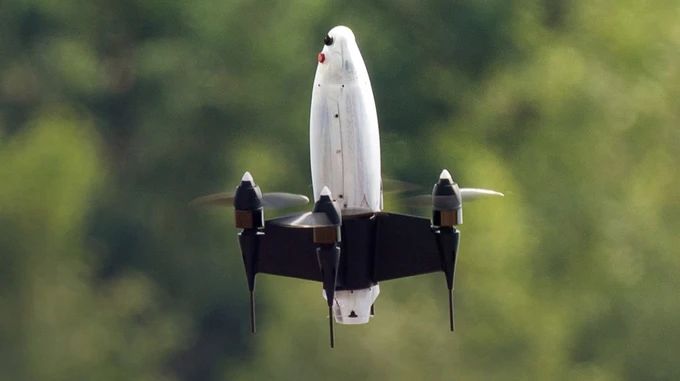
WIY SPYS is a Ukrainian high-speed interceptor unmanned aerial vehicle developed by WIY Drones to engage fast aerial targets, including attack and reconnaissance UAVs. The system is designed for air-defense missions around military positions, mobile units, and critical infrastructure.
The interceptor was publicly presented in July 2026 with a maximum stated flight speed of 600 km/h, a tactical range of up to 12 km, and a five-minute maximum flight time. Its development has focused particularly on countering fast jet-powered versions of the Shahed/Geran family.
SPYS combines high-speed flight with autonomous navigation and assisted terminal guidance. WIY Drones developed dedicated electronic components for the platform and uses Ukrainian-made Motor-G motors produced to its technical requirements.
Development and testing
SPYS was presented during a Tech Force in UA demonstration event in July 2026. WIY Drones identified high-speed Shahed-type targets as a primary design challenge and developed proprietary electronics intended to remain stable under the high loads associated with the interceptor's flight performance.
The SPYS prototype used Ukrainian-made Motor-G propulsion components. The manufacturer planned to transfer an initial batch of 50 interceptors to military units for testing, collect operating statistics, make necessary design changes, and then proceed toward codification.
The initial military drones were planned to use a guidance system capable of supporting interception on an opposing course. WIY Drones had already developed an autonomous pursuit-interception algorithm and was continuing work on the more demanding head-on engagement mode.
In September 2026, Ukrainian defense forces used a SPYS interceptor to destroy a Russian Geran-5 small cruise missile. The target was moving at approximately 200 km/h during the engagement, possibly because of a malfunction in its jet propulsion system.
Design
SPYS is configured as a high-speed air-defense UAV intended to close rapidly with aerial targets. Its stated maximum flight speed is 600 km/h, while normal cruising speed is 200–250 km/h. The interceptor has a maximum climb rate of 50 m/s and an approximately 6,000 m maximum flight altitude.
Guidance and sensors
The platform supports automatic take-off, autonomous navigation toward an interception area, and AI-assisted terminal guidance. It can be equipped with either a daylight camera or a thermal-imaging camera. Integration with WIY software, radar systems, and other target-designation sources is intended to shorten the interval between detection and interception while reducing operator workload.
The system also supports in-flight switching between video channels, allowing the operator to change the active video feed without recovering the aircraft.
Propulsion and electronics
WIY Drones developed dedicated electronic components for SPYS to support stable operation under the loads associated with very high flight speeds. The interceptor uses Ukrainian-made Motor-G motors developed to WIY Drones requirements.
Launch configurations
SPYS can use a conventional ground-launch arrangement. WIY Drones has also described deployment from platforms capable of carrying an interceptor, including helicopters, aircraft, and larger carrier drones.
A portable hand-launch system has additionally been demonstrated as a development concept. The displayed launcher was a mock-up, and both its mechanical launch arrangement and associated electronics remained under development. The concept includes a monitor that shows target acquisition before the operator commands launch.
Warhead
The interceptor carries a 300 g warhead for destroying aerial targets at close range.
Program status
SPYS remained under development during 2026 while WIY Drones prepared military testing and further improvements to guidance and launch equipment. An initial batch of 50 aircraft was planned for operational evaluation before formal codification.
The September 2026 destruction of a Geran-5 provided a confirmed interception involving the SPYS platform while its broader development and evaluation program was continuing.
Specifications (SPYS)
General characteristics
- Role: High-speed interceptor UAV
- Warhead: 300 g
- Camera: Daylight or thermal imaging
Performance
- Maximum flight speed: 600 km/h
- Cruising speed: 200–250 km/h
- Tactical range: Up to 12 km
- Maximum flight distance: Up to 12 km
- Maximum flight time: 5 minutes
- Rate of climb: 50 m/s
- Maximum flight altitude: Approximately 6,000 m
 Argentina
 Armenia
 Australia
 Austria
 Austria-Hungary
 Belgium
 Brazil
 United Kingdom
 United States
 Brunei
 Bulgaria
 Canada
 Chile
Chile China
China Colonial America
 Colombia
 Confederate States
 Croatia
 Czech
Czech Denmark
 Egypt
Egypt Finland
 France
 Georgia
 Germany
 German Imperial
 Greece
 Holland
 Hungary
 India
India Indonesia
 Iran
Iran Iraq
Iraq Ireland
 Israel
 Italy
Italy Japan
Japan Japan (1940)
 Jordan
 Kingdom of Italy
 Malaysia
 Mexico
 Myanmar
 Nazi Germany
 Netherlands
 New Zealand
 North Korea
 Norway
 Pakistan
 Peru
Peru Philippines
 Poland
 Portugal
 Prussia
 Romania
 Russia
 Saudi Arabia
 Serbia
 Singapore
 Slovakia
 Slovenia
 South Africa
 South Korea
 Soviet Union
 Spain
Spain Sweden
 Switzerland
 Syria
Syria Taiwan
 Thailand
 Turkey
 UAE
UAE Vietnam
 Yugoslavia