History
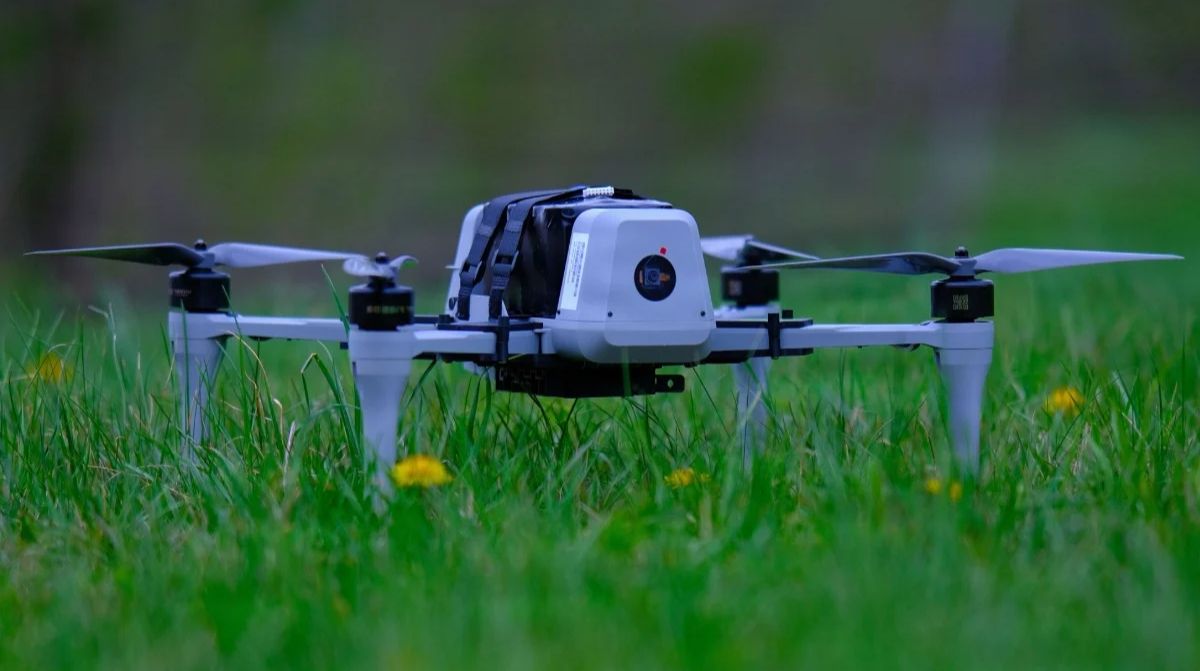
The Perennial Autonomy Bumblebee is a quadcopter counter-unmanned-aircraft-system interceptor developed for air-to-air engagements against small drones. The system combines conventional piloting with increasing levels of automation intended to reduce the skill required during the most demanding terminal phase of an interception.
Bumblebee was developed as a low-cost, attritable counter-drone platform that could be used within layered air-defense arrangements. The first version, Bumblebee V1, was used for reconnaissance, one-way attack, and limited air-to-air interception, while Bumblebee V2 introduced redesigned sensors, automated target recognition, and more autonomous terminal guidance.
U.S. military testing during 2026 examined how Bumblebee could protect forces, installations, and other areas from Group 1 and Group 2 unmanned aircraft. The evaluations included experienced drone operators as well as soldiers with little prior counter-UAS training, reflecting a requirement for a system that could be adopted at small-unit level without extensive specialist instruction.
Development and early testing
Perennial Autonomy received an initial $5.2 million U.S. military award in February 2026 for Bumblebee counter-drone capabilities. Operational assessment of Bumblebee prototypes followed at Fort Bragg, North Carolina, in April 2026. Twenty-five quadrotor aircraft were present during testing involving the first and second versions of the system.
Bumblebee V1 relied heavily on manual control. Soldiers flew the interceptor toward a hostile or target drone and attempted to make physical contact. The V1 configuration had a fixed camera and required substantial pilot input during the final approach.
Bumblebee V2 was developed from lessons gathered during V1 testing and operational use. The revised aircraft received a gimballed sensor arrangement with three cameras, additional onboard sensors, upgraded software, and artificial-intelligence-based automated target recognition. Its landing legs were shortened so that more aircraft could be packed into a storage container.
During the April 2026 assessment, single operators and two-person teams flew Bumblebee aircraft at distances of up to about 900 m. Typical battery endurance was approximately 20 to 25 minutes, depending on flight speed. Scenarios included interception of drones representing bomber and intelligence, surveillance, and reconnaissance threats.
V2 evaluation
Further Bumblebee V2 testing took place at Fort Benning, Georgia, in 2026. The evaluation concentrated on interception of Group 1 and Group 2 unmanned aircraft and examined the performance of the revised sensors, automatic target recognition, and terminal guidance logic.
The V2 retained an operator in the engagement process but automated important parts of the final intercept. After establishing the target, the operator could initiate the terminal attack and allow the aircraft to lock onto the opposing drone and fly the closing phase automatically. Automatic speed control was also introduced to reduce the difficulty of managing velocity during a kinetic intercept.
Testing showed that the automated recognition system was still being refined. The system could lose track of targets, particularly when the target appeared against visually complex terrain such as trees. Target recognition was more reliable when an opposing drone was silhouetted against open sky. Evaluators nevertheless recorded successful interceptions and continued modifying software and hardware from test feedback.
Falcon Peak 26.2
In September 2026, U.S. Northern Command tested Bumblebee interceptors during Falcon Peak 26.2 at Yuma Proving Ground, Arizona. The counter-drone experiment incorporated lessons from Joint Task Force-Southern Border and examined methods for detecting and stopping unauthorized unmanned aircraft. Bumblebee formed part of the experimental counter-UAS equipment evaluated during the event.
Design
Airframe
Bumblebee is a battery-powered quadcopter designed to intercept other unmanned aircraft. The V2 aircraft weighs less than 9.07 kg, while its battery weighs approximately 3.6 to 4.5 kg. Its compact configuration supports transport and small-unit employment, and the shorter landing legs introduced on V2 allow more aircraft to be stored in a given container.
Sensors and autonomy
Bumblebee V2 uses a gimballed sensor assembly containing three cameras, supplemented by additional onboard sensors. Artificial-intelligence-based automatic target recognition assists in identifying and tracking an opposing drone during an interception.
The V2 architecture is intended to reduce reliance on advanced first-person-view piloting skills. Position mode can hold the aircraft in place while the operator attempts to acquire a target. During the terminal phase, automated target recognition and guidance can assume part of the control task after the operator commands the final engagement.
The onboard processor has computing capability comparable to a small mobile phone. The design avoids dependence on a high-end airborne data radio, helping keep the aircraft relatively simple while leaving broader detection and command functions to the supporting system.
Ground equipment
Bumblebee is supplied as part of a wider counter-UAS package rather than as an isolated aircraft. The package includes batteries, autonomy functions, operator controls, a ground station, antennas, and integrated command-and-control software. The ground-control arrangement used during V2 evaluation included a mast, radar, and StarShield satellite communications connectivity.
Intercept method
Bumblebee is primarily a hard-kill interceptor. The V1 required an operator to manually fly the aircraft into the target. V2 adds automated target recognition, speed control, and terminal guidance so that the aircraft can perform more of the final closing maneuver after target acquisition. Successful trials demonstrated physical interception capable of forcing opposing drones to the ground.
Operational history
Bumblebee V1 was used operationally in Ukraine, providing experience that influenced subsequent U.S. development and testing. The first version was also deployed for Operation Epic Fury, where it was used with reconnaissance, one-way attack, and limited air-to-air capabilities.
By 2026 the system was being evaluated by several U.S. Army organizations, including personnel from the 82nd Airborne Division and the 75th Ranger Regiment. The 10th Mountain Division also used Bumblebee V1 aircraft for training. U.S. counter-UAS organizations continued evaluating V2 for wider employment as part of layered defenses against small unmanned aircraft.
Perennial Autonomy later received an indefinite-delivery, indefinite-quantity agreement valued at up to $500 million covering a wider set of artificial-intelligence-enabled counter-UAS capabilities, including Bumblebee. The agreement provided a mechanism for the U.S. military to acquire systems as operational requirements developed.
Variants
- Bumblebee V1: Initial version used for reconnaissance, one-way attack, and limited air-to-air interception. It used a fixed camera and depended heavily on manual piloting during the terminal phase.
- Bumblebee V2: Improved counter-UAS version with a three-camera gimballed sensor package, additional sensors, automatic target recognition, automated speed control, and more autonomous terminal interception. V2 was undergoing operational and engineering evaluation during 2026.
Operators
- United States: Bumblebee V1 and V2 aircraft were used in military training, operational assessment, and counter-UAS experimentation during 2026 by organizations including the 82nd Airborne Division, 75th Ranger Regiment, 10th Mountain Division, Joint Interagency Task Force 401, and U.S. Northern Command.
- Ukraine: Bumblebee V1 was used operationally in Ukraine before and during the U.S. evaluation program, and experience from that employment informed subsequent development.
Specifications (Bumblebee V2)
General characteristics
- Type: Counter-UAS quadcopter interceptor
- Vehicle weight: Less than 9.07 kg
- Battery weight: Approximately 3.6-4.5 kg
- Propulsion: Battery-electric quadrotor
- Sensor arrangement: Gimballed system with three cameras and additional onboard sensors
- Guidance: Operator-controlled flight with artificial-intelligence-assisted automatic target recognition and automated terminal interception
Performance
- Observed operating distance during testing: Up to about 900 m
- Battery endurance: Approximately 20-25 minutes depending on flight speed
Counter-UAS capability
- Primary role: Interception of small unmanned aircraft
- Target classes evaluated: Group 1 and Group 2 UAS
- Engagement method: Hard-kill physical interception
- Terminal control: Automated target tracking, speed control, and terminal guidance after operator initiation
 Argentina
 Armenia
 Australia
 Austria
 Austria-Hungary
 Belgium
 Brazil
 United Kingdom
 United States
 Brunei
 Bulgaria
 Canada
 Chile
Chile China
China Colonial America
 Colombia
 Confederate States
 Croatia
 Czech
Czech Denmark
 Egypt
Egypt Finland
 France
 Georgia
 Germany
 German Imperial
 Greece
 Holland
 Hungary
 India
India Indonesia
 Iran
Iran Iraq
Iraq Ireland
 Israel
 Italy
Italy Japan
Japan Japan (1940)
 Jordan
 Kingdom of Italy
 Malaysia
 Mexico
 Myanmar
 Nazi Germany
 Netherlands
 New Zealand
 North Korea
 Norway
 Pakistan
 Peru
Peru Philippines
 Poland
 Portugal
 Prussia
 Romania
 Russia
 Saudi Arabia
 Serbia
 Singapore
 Slovakia
 Slovenia
 South Africa
 South Korea
 Soviet Union
 Spain
Spain Sweden
 Switzerland
 Syria
Syria Taiwan
 Thailand
 Turkey
 UAE
UAE Ukraine
 Vietnam
 Yugoslavia