
History
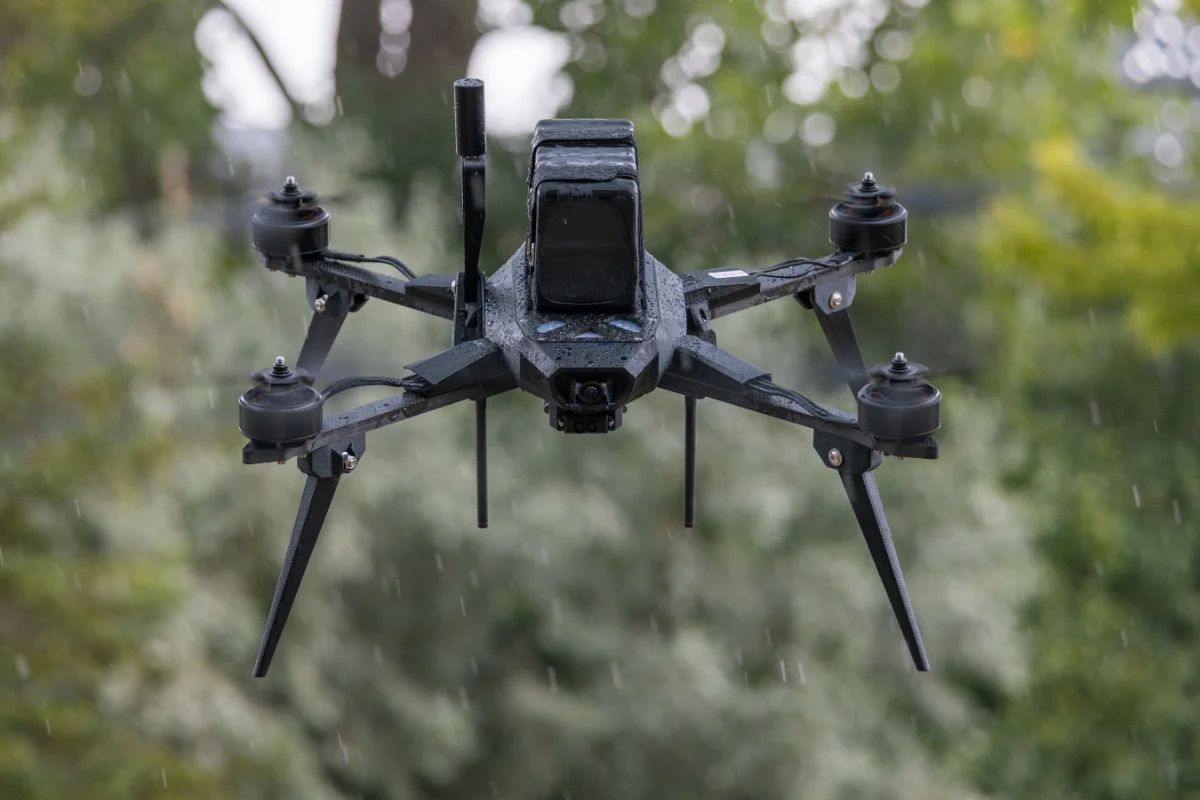
The Swarm Defense Technologies Kiwi is a quadcopter-based one-way attack drone developed in the United States for coordinated employment in large numbers. The aircraft is paired with the company's Strike Deck ground-control software, which is designed to allow a single operator to manage multiple drones simultaneously.
In 2026, Kiwi was evaluated during Gauntlet 2 of the U.S. military's Drone Dominance Program. The program uses military testing to assess small uncrewed aircraft before prototype delivery orders are placed.
On September 22, 2026, Swarm Defense Technologies announced a prototype delivery order for 4,000 Kiwi one-way attack drones. The order, including munitions, has a stated minimum value of $25 million and includes Strike Deck ground-control software.
Development and production
Swarm Defense Technologies developed Kiwi alongside its software for coordinated multi-aircraft operations. The company develops flight controllers, electronic speed controllers, power and battery-management electronics, embedded firmware, ground-control software, and swarm-coordination technology.
The 4,000-aircraft order followed testing during Gauntlet 2 at Fort Carson, Colorado. Kiwi was evaluated in mission scenarios before the prototype delivery award was issued.
Production for the order is planned at Swarm Defense Technologies' 40,000-square-foot manufacturing facility in Auburn Hills, Michigan. The company shares engineering and manufacturing resources with Firefly Drone Shows, which has produced more than 20,000 swarming drones since 2017.
Design
Kiwi is configured as a quadcopter for one-way attack missions. Its design is intended to be combined with software that coordinates multiple aircraft rather than requiring an individual pilot for every drone.
Control system
Strike Deck is designed to allow one operator to coordinate dozens of aircraft. The software automates waypoint navigation and relay-aircraft flight control while managing flight paths to reduce interference between drones operating together.
The system also provides terminal guidance during the final approach to an operator-designated target. Target selection and authorization to engage remain with human operators.
Alternative configurations
The Kiwi platform can be adapted beyond the one-way attack role. Supported configurations include intelligence, surveillance, and reconnaissance missions, airborne communications relay duties, and use as a reusable precision-drop platform.
Swarm Defense Technologies is separately developing a containerized autonomous drone deployment concept under a Phase I prototype agreement with the Defense Innovation Unit. The concept is intended to store drones at a forward location and permit remote launch for reconnaissance or strike missions. The available information does not confirm that Kiwi has been integrated with this containerized system.
Program status
As of September 2026, Kiwi remained associated with a prototype delivery order rather than a confirmed operational service introduction. The U.S. military order covers 4,000 one-way attack aircraft and associated munitions, with coordinated control provided through Strike Deck.
Specifications (Kiwi one-way attack configuration)
General characteristics
- Type: one-way attack unmanned aerial vehicle
- Configuration: quadcopter
- Manufacturer: Swarm Defense Technologies
- Ground-control system: Strike Deck
Control and mission features
- Multi-aircraft control: designed to allow one operator to manage dozens of aircraft
- Navigation: automated waypoint navigation supported by the ground-control software
- Flight coordination: software manages flight paths among multiple aircraft
- Terminal guidance: supported for approach to operator-designated targets
- Engagement authority: target selection and engagement authorization remain with human operators
- Primary mission: one-way attack
- Other supported configurations: intelligence, surveillance, and reconnaissance; airborne communications relay; reusable precision-drop missions
 Argentina
 Armenia
 Australia
 Austria
 Austria-Hungary
 Belgium
 Brazil
 United Kingdom
 Brunei
 Bulgaria
 Canada
 Chile
Chile China
China Colonial America
 Colombia
 Confederate States
 Croatia
 Czech
Czech Denmark
 Egypt
Egypt Finland
 France
 Georgia
 Germany
 German Imperial
 Greece
 Holland
 Hungary
 India
India Indonesia
 Iran
Iran Iraq
Iraq Ireland
 Israel
 Italy
Italy Japan
Japan Japan (1940)
 Jordan
 Kingdom of Italy
 Malaysia
 Mexico
 Myanmar
 Nazi Germany
 Netherlands
 New Zealand
 North Korea
 Norway
 Pakistan
 Peru
Peru Philippines
 Poland
 Portugal
 Prussia
 Romania
 Russia
 Saudi Arabia
 Serbia
 Singapore
 Slovakia
 Slovenia
 South Africa
 South Korea
 Soviet Union
 Spain
Spain Sweden
 Switzerland
 Syria
Syria Taiwan
 Thailand
 Turkey
 UAE
UAE Ukraine
 Vietnam
 Yugoslavia