
History
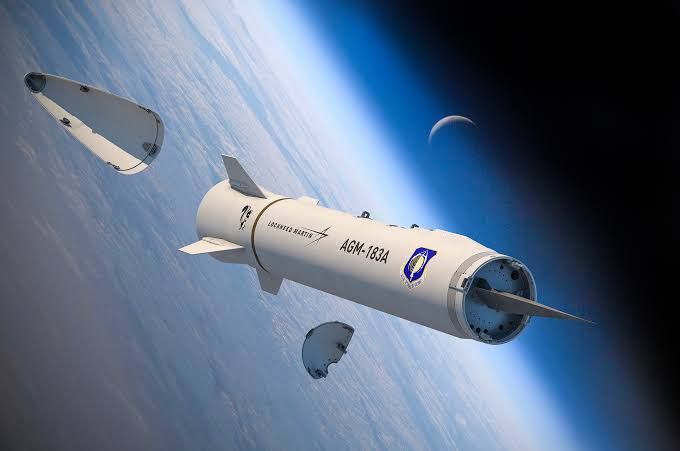
The AGM-183A Air-launched Rapid Response Weapon (ARRW) is a US Air Force hypersonic glide vehicle developed by Lockheed Martin. A solid-fuel rocket booster accelerates the weapon to speeds exceeding Mach 5, after which it separates from the hypersonic glide vehicle, which continues flight to the target. The missile is designed to strike high-value targets requiring rapid response at long range, including in areas with developed air defense systems.
Lockheed Martin began development in 2018. The early test program encountered setbacks, including three failed booster tests in 2021 and a launch failure in December 2021. In March 2022, the Air Force dropped plans to procure ARRW in fiscal year 2023. The first fully assembled all-up-round test in December 2022 was declared a success, although range sensor malfunctions limited data collection during the terminal phase. In March 2023, the Air Force indicated it could end the program without purchasing production missiles and was at that point more committed to the Hypersonic Attack Cruise Missile; a shroud malfunction during that test prevented data collection for the glide and terminal phases, and Air Force Secretary Frank Kendall characterized it as "not a success" before lawmakers. Tests in August and October 2023 achieved nominal conditions including glide vehicle flight and warhead detonation. A final test was conducted on 17 March 2024 from a B-52H Stratofortress departing Andersen Air Force Base, Guam, toward the Reagan Test Site in the Marshall Islands.
The Air Force subsequently resumed the program. In 2025, Air Force leadership informed Congress of its intent to procure ARRW, and $362 million was allocated in the fiscal year 2026 budget for purchases. On 29 September, the Air Force signed a $694 million contract with Lockheed Martin under the Enterprise-Wide Agile Acquisition program to transition the program from prototype and flight testing to serial production and deployment. The missiles are intended for use from B-52H Stratofortress bombers, with testing from the B-1B Lancer also planned. The Air Force has not disclosed the quantity ordered or the delivery schedule, citing operational security requirements.
 Argentina
 Armenia
 Australia
 Austria
 Austria-Hungary
 Belgium
 Brazil
 United Kingdom
 Brunei
 Bulgaria
 Canada
 Chile
 China
 Colonial America
 Colombia
 Confederate States
 Croatia
 Czech
 Denmark
 Egypt
 Finland
 France
 Georgia
 Germany
 German Imperial
 Greece
 Holland
 Hungary
 India
 Indonesia
 Iran
 Iraq
 Ireland
 Israel
 Italy
 Japan
 Japan (1940)
 Jordan
 Kingdom of Italy
 Malaysia
 Mexico
 Myanmar
 Nazi Germany
 Netherlands
 New Zealand
 North Korea
 Norway
 Pakistan
 Peru
 Philippines
 Poland
 Portugal
 Prussia
 Romania

 Russia
 Saudi Arabia
 Serbia
 Singapore
 Slovakia
 Slovenia
 South Africa
 South Korea
 Soviet Union
 Spain
 Sweden
 Switzerland
 Syria
 Taiwan
 Thailand
 Turkey
 UAE
 Ukraine
 Vietnam
 Yugoslavia