
History
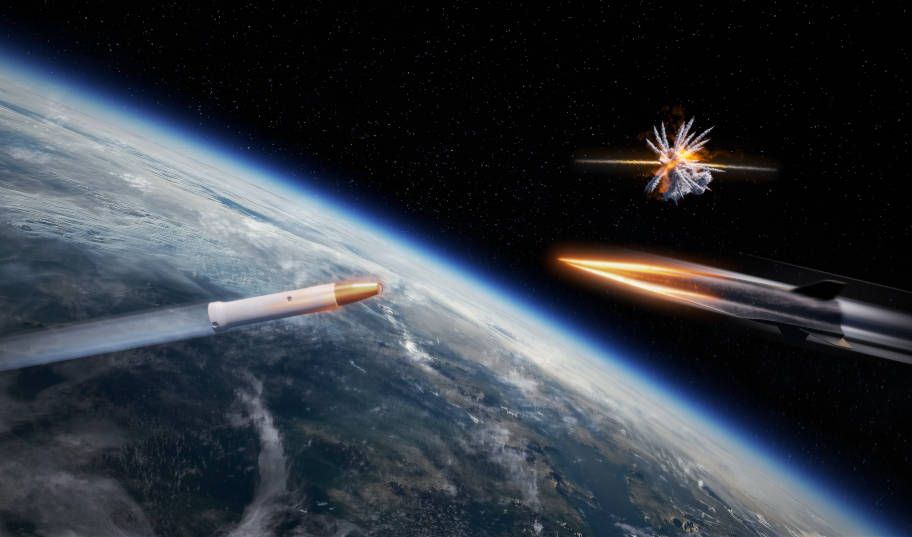
HYDIS, the Hypersonic Defence Interceptor System, is an MBDA-led European program to develop an endo-atmospheric interceptor against advanced missile threats. It is intended to counter hypersonic glide vehicles, hypersonic cruise missiles, and maneuvering ballistic missiles.
The program combines contributions from 19 industrial and research partners and more than 30 subcontractors across 14 European countries. France, Germany, Italy, and the Netherlands are the participating states, while the Organisation for Joint Armament Co-operation manages the program.
HYDIS is part of the wider European TWISTER initiative for detecting, tracking, and intercepting advanced threats through space-based early warning, distributed sensors, and endo-atmospheric interceptors.
Concept phase
In 2022, the competing HYDEF consortium was selected in an earlier European Defence Fund competition. France and MBDA subsequently supported a second European effort based on their existing work in hypersonic and missile-defense technology.
In May 2023, the HYDIS² consortium submitted a proposal for an interceptor concept and technology-maturation study under the European Defence Fund. The European Commission proposed it for funding in July 2023. MBDA presented its related Aquila counter-hypersonic interceptor concept at the Paris Air Show that year. The MBDA project announcement stated that HYDIS² would contribute to the Aquila interceptor effort.
The three-year concept phase began in 2024. Its objectives included selecting an interceptor concept and associated weapon-system architecture, maturing critical technologies, defining threats and operational requirements, and establishing a European industrial network for later development. The European Defence Fund provided €80 million, while the four participating states jointly contributed approximately €60 million.
Final concept selection
In July 2026, the participating states approved one of the two designs retained after the initial concept review. The selected concept uses solid-rocket propulsion. Its evaluation included simulations of the interceptor's flight phases and threat models prepared by CIRA, ONERA, and TNO.
The final concept review concentrated particularly on the terminal interception phase and the kill vehicle. According to the OCCAR HYDIS program page, the remaining concept-phase work is intended to mature critical technologies to at least Technology Readiness Level 3, representing experimental proof of concept.
The concept phase is scheduled to conclude in May 2027. HYDIS documentation identifies 2030 as the intended start of a subsequent development phase. The official OCCAR fact sheet gives 2035 as the planned horizon for entry into service. No operational interceptor or completed prototype has been reported.
Design
HYDIS remains a developing weapon-system concept rather than a finalized production missile. Published information defines its principal technologies and intended architecture but does not provide dimensions, mass, speed, range, or engagement-altitude figures.
Interceptor architecture
The selected design is a multistage, solid-propellant interceptor intended to provide a short response time and high maneuverability at high altitude and velocity. Avio developed the solid-rocket motor architecture. ArianeGroup and Roxel worked on the control mechanism for the final interceptor stage, while MBDA integrated the components into the overall concept.
The interceptor is being studied as part of a complete engagement system rather than as an isolated missile. The planned architecture must connect with distributed sensors, theater-level networks, and space-based warning systems. It is also intended to support both naval and land-based deployment.
Sensors and guidance
Lynred is responsible for the terminal infrared sensor technology. The program is studying long-range and high-accuracy terminal sensing, mid-course guidance, predictive terminal guidance, and algorithms for calculating threat trajectories and planning engagements.
The guidance system is intended to engage highly maneuverable targets while its sensors operate in a hostile environment. Artificial intelligence and other complex algorithms are being studied for threat-path computation, engagement planning, and guidance. The final configuration and degree of onboard automation have not been disclosed.
Launch and sensor integration
Thales Netherlands supplied performance data for possible naval and ground-based sensor suites. GKN Fokker assessed the integration of the interceptor ammunition with the Mk 41 naval vertical launching system. This work does not establish that a production Mk 41 configuration has been completed or approved.
Terminal interception
The terminal stage is intended to operate at very high closing speeds against maneuvering hypersonic and ballistic targets. The final concept review examined the kill vehicle's terminal engagement performance. Public sources do not disclose the interceptor's warhead arrangement, terminal-control method, or detailed lethality mechanism.
Program status
As of July 2026, HYDIS is in the technology-maturation portion of its concept phase. The participating states have selected a single concept, but detailed development, prototype construction, testing, production, and service entry remain future program stages.
HYDIS competes with the Diehl Defence-led HYDEF effort for future European support. The European Defence Fund's 2026 work program provides for €100 million toward an endo-atmospheric interceptor, with one proposal expected to receive funding. A contemporary Defense News report described the competition and the selection of HYDIS's solid-rocket concept.
Specifications (selected HYDIS concept)
General characteristics
- Type: Endo-atmospheric counter-hypersonic and anti-ballistic interceptor concept
- Prime contractor: MBDA France
- Configuration: Multistage interceptor
- Propulsion: Solid-propellant rocket motors
- Deployment concepts: Naval and ground-based weapon systems
- Naval launcher under assessment: Mk 41 vertical launching system
Guidance and sensors
- Terminal sensor: Infrared sensor technology developed by Lynred
- Guidance functions under study: Mid-course guidance and predictive terminal guidance
- Engagement support: Distributed naval, ground, theater-level, and space-based sensor networks
Intended targets
- Threat classes: Hypersonic glide vehicles, hypersonic cruise missiles, and maneuvering ballistic missiles
Related equipment
- MBDA Aquila: A European counter-hypersonic interceptor concept to which the HYDIS² study contributes.
- HYDEF: A competing European hypersonic-defense interceptor program led technically by Diehl Defence and coordinated by Spain's SMS.
- TWISTER: The wider European initiative for space-based warning, tracking, and interception of advanced missile threats.
 Argentina
 Armenia
 Australia
 Austria
 Austria-Hungary
 Belgium
 Brazil
 United Kingdom
 United States
 Brunei
 Bulgaria
 Canada
 Chile
Chile China
China Colonial America
 Colombia
 Confederate States
 Croatia
 Czech
Czech Denmark
 Egypt
Egypt Finland
 Georgia
 Germany
 German Imperial
 Greece
 Holland
 Hungary
 India
India Indonesia
 Iran
Iran Iraq
Iraq Ireland
 Israel
 Italy
Italy Japan
Japan Japan (1940)
 Jordan
 Kingdom of Italy
 Malaysia
 Mexico
 Myanmar
 Nazi Germany
 Netherlands
 New Zealand
 North Korea
 Norway
 Pakistan
 Peru
Peru Philippines
 Poland
 Portugal
 Prussia
 Romania
 Russia
 Saudi Arabia
 Serbia
 Singapore
 Slovakia
 Slovenia
 South Africa
 South Korea
 Soviet Union
 Spain
Spain Sweden
 Switzerland
 Syria
Syria Taiwan
 Thailand
 Turkey
 UAE
UAE Ukraine
 Vietnam
 Yugoslavia