
History
Northrop Grumman JCREW, or Joint Counter Radio-Controlled Improvised Explosive Device Electronic Warfare, is a family of software-defined electronic warfare systems developed to protect personnel, vehicles, and fixed facilities against radio-controlled improvised explosive devices. The architecture is also used for counter-small-uncrewed-aircraft missions through the DRAKE capability.
JCREW Increment One Block One, commonly designated I1B1, is produced in mounted, dismounted, and fixed-site configurations. These variants share common hardware and software, allowing capabilities and upgrades to be reused across the family.
The system combines radio-frequency detection and electronic countermeasures with an open architecture intended to support continuing software, firmware, and mission-load updates as radio-frequency threats change.
Development and testing
JCREW I1B1 completed Initial Operational Test and Evaluation in May 2015. Northrop Grumman stated that the system was judged effective and suitable and recommended for fielding. The company later reported that JCREW had been providing operational protection since 2017. An earlier Northrop Grumman JCREW datasheet described Increment 1 Block 1 as a full-rate-production program and explained the common architecture shared by the dismounted, mounted, and fixed-site forms.
The U.S. Navy announced on 27 July 2023 that JCREW I1B1 had achieved full operational capability ahead of schedule. According to the U.S. Navy announcement, inventory requirements had been met, fleet operators had been trained to operate and maintain the system, and a government-operated depot and supply-support structure were in place.
DRAKE counter-UAS development
DRAKE is the counter-small-UAS capability associated with the JCREW family. Northrop Grumman describes JCREW/DRAKE as a spectrally aware electronic-countermeasure system capable of detecting, identifying, alerting, tracking, and applying non-kinetic effects against radio-controlled IED and small-UAS threats. DRAKE originated as a rapid response to an urgent counter-UAS requirement and progressed from a test prototype to a fielded capability within seven weeks, according to Northrop Grumman.
Northrop Grumman's 2024 JCREW/DRAKE datasheet described the family as Technology Readiness Level 9, in full-rate production, and supporting active Foreign Military Sales cases. In April 2024, DRAKE became a separate U.S. Navy program of record under the Program Executive Office Unmanned and Small Combatants, Expeditionary Missions Program Office. Northrop Grumman subsequently announced a JCREW/DRAKE 2.0 production award with increased signal processing, an expanded frequency range, greater instantaneous bandwidth, and a more capable user interface.
2026 production and sustainment award
In August 2026, Northrop Grumman received a $46,089,540 U.S. Navy firm-fixed-price contract modification for additional JCREW I1B1 systems, retrofit kits, spares, and associated support. The award also included $4.2 million in incremental funding for engineering support services and other direct costs. Of the total funding, $15.9 million was associated with Foreign Military Sales for Australia.
The contract continued production and sustainment under contract N00024-24-C-6400. Work was assigned to Beaverton, Oregon, and San Diego, California, with completion expected by December 2028. The contract specifically identified JCREW I1B1 rather than DRAKE or DRAKE 2.0, indicating continued procurement and modernization of the core JCREW architecture. The award was reported by Military & Aerospace Electronics.
Design
JCREW is a software-defined radio-frequency electronic-warfare system designed to establish an electronic protective barrier against hostile radio-controlled devices. Its transceivers scan for signals of interest and can apply electronic countermeasures intended to disrupt those signals while limiting interference with friendly communications.
The architecture supports active, reactive, and protocol-based jamming techniques. Northrop Grumman states that signal processing, filtering, and controlled radio-frequency output are used to reduce unnecessary spectrum emissions while maintaining protection. The system can operate independently or coordinate with external command-and-control systems to provide layered coverage.
Common architecture
The mounted, dismounted, and fixed-site variants use common hardware and software. This system-of-systems approach allows software, hardware, and electronic-warfare techniques to be shared between configurations without developing an entirely separate solution for each form factor.
JCREW I1B1 uses open-architecture hardware, upgradable software and firmware, and a government-owned technical data package. Northrop Grumman also describes the system as following a Modular Open Systems Approach without proprietary interfaces. Mission functions can be changed through software-defined mission configurations rather than by replacing the complete system.
Threat detection and electronic effects
JCREW/DRAKE is designed for omnidirectional radio-frequency coverage. The system can independently detect and jam threats or operate in coordination with other sensors and command-and-control platforms. Northrop Grumman states that it can switch between counter-IED and counter-UAS missions without changing its core software.
DRAKE adds small-UAS detection and non-kinetic defeat functions. A ruggedized tablet can display detected drone information and map reported threat locations. Networked installations can exchange threat locations, and multiple JCREW/DRAKE units can be controlled from a central position.
Integration and maintenance
JCREW/DRAKE can coordinate with command-and-control systems including Northrop Grumman Forward Area Air Defense Command and Control. The system can record events for later analysis and supports mission playback functions.
Northrop Grumman describes the hardware as ruggedized to MIL-STD-810 requirements. Supported equipment includes ruggedized displays or tablets, hot-swappable common 2590-style batteries, built-in fault-isolation functions, and a Go/No-Go readiness indication. The Navy states that I1B1 incorporates an integrated test mechanism that can verify readiness without external test equipment.
Operational history
JCREW I1B1 is employed by the U.S. Navy and U.S. Air Force. Australia and New Zealand also operate the system. The three principal configurations allow the same basic architecture to support personnel, mobile vehicles, and fixed facilities.
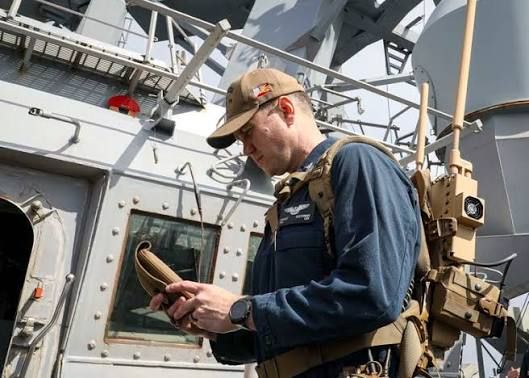
The mounted configuration protects mobile ground vehicles against radio-controlled IED threats. The dismounted configuration, also described as the Manpack system, is carried by personnel. Fixed-site systems protect temporary, semi-permanent, and permanent facilities and infrastructure, including compounds, airfields, buildings, and guard posts.
By July 2023, the U.S. Navy considered JCREW I1B1 fully operational, with trained operators, maintenance support, inventory requirements satisfied, and a repair infrastructure established. Continued production, retrofit activity, engineering support, and Foreign Military Sales funding remained active under later contracts.
Variants
- JCREW I1B1 Mounted: Vehicle-mounted configuration intended to protect mobile ground vehicles against radio-controlled IED threats. The mounted architecture can also support DRAKE counter-small-UAS capabilities.
- JCREW I1B1 Dismounted: Manpack configuration carried by personnel for protection against radio-controlled IEDs. Dismounted systems were also selected for urgent counter-UAS requirements.
- JCREW I1B1 Fixed Site: Configuration for temporary, semi-permanent, and permanent facilities and infrastructure such as compounds, airfields, buildings, and guard posts.
- DRAKE: Counter-small-UAS capability of the JCREW family, adding drone detection and non-kinetic electronic effects while using the common JCREW hardware and software architecture.
- JCREW/DRAKE 2.0: Follow-on configuration announced in 2024 with increased signal-processing capability, expanded frequency coverage, greater instantaneous bandwidth, and an improved user interface.
Operators
- United States: JCREW I1B1 is employed by the U.S. Navy and U.S. Air Force.
- Australia: Operator through the Foreign Military Sales program. The 2026 production contract included $15.9 million in Australian FMS funding.
- New Zealand: Identified by the U.S. Navy and Northrop Grumman as an operator of JCREW I1B1.
Specifications (JCREW I1B1)
General characteristics
- System type: Software-defined radio-frequency electronic-warfare and electronic-countermeasure system.
- Primary missions: Counter-radio-controlled improvised explosive device protection and, through DRAKE capabilities, counter-small-UAS operations.
- Configurations: Mounted, dismounted Manpack, and fixed site.
- Architecture: Common hardware and software across the three principal configurations.
- System architecture: Open architecture with upgradable software and firmware and a government-owned technical data package.
- Electronic-countermeasure techniques: Active, reactive, and protocol-based jamming.
- Coverage concept: Omnidirectional radio-frequency protection with optional directional-antenna support for sector or slew-to-cue operations.
- Operation: Independent operation or coordinated operation with external command-and-control systems.
- Counter-UAS integration: DRAKE provides detection and non-kinetic electronic effects against small uncrewed aircraft.
- Environmental qualification: Ruggedized hardware described by Northrop Grumman as compliant with MIL-STD-810 requirements.
- Power support: Hot-swappable common 2590-style batteries are supported.
- Built-in test: Integrated readiness and fault-isolation functions with Go/No-Go indication.
 Argentina
 Armenia
 Australia
 Austria
 Austria-Hungary
 Belgium
 Brazil
 United Kingdom
 Brunei
 Bulgaria
 Canada
 Chile
Chile China
China Colonial America
 Colombia
 Confederate States
 Croatia
 Czech
Czech Denmark
 Egypt
Egypt Finland
 France
 Georgia
 Germany
 German Imperial
 Greece
 Holland
 Hungary
 India
India Indonesia
 Iran
Iran Iraq
Iraq Ireland
 Israel
 Italy
Italy Japan
Japan Japan (1940)
 Jordan
 Kingdom of Italy
 Malaysia
 Mexico
 Myanmar
 Nazi Germany
 Netherlands
 New Zealand
 North Korea
 Norway
 Pakistan
 Peru
Peru Philippines
 Poland
 Portugal
 Prussia
 Romania
 Russia
 Saudi Arabia
 Serbia
 Singapore
 Slovakia
 Slovenia
 South Africa
 South Korea
 Soviet Union
 Spain
Spain Sweden
 Switzerland
 Syria
Syria Taiwan
 Thailand
 Turkey
 UAE
UAE Ukraine
 Vietnam
 Yugoslavia