
History
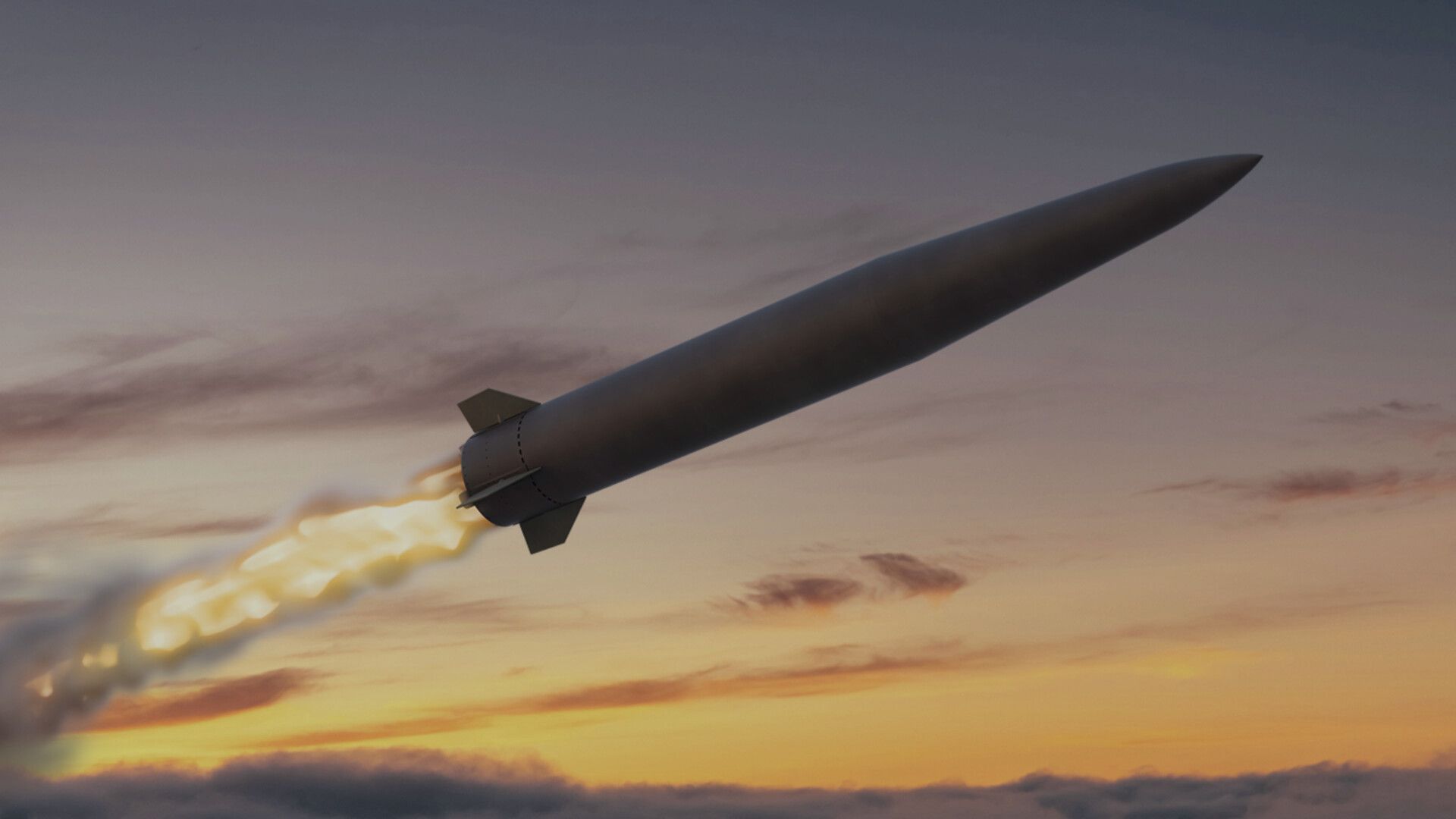
FP-9 is a Ukrainian road-mobile ballistic missile under development by Fire Point for conventional strikes at operational and strategic depth. The company designed it to carry a heavy payload to a stated range of up to 855 km, placing fixed military targets far beyond the reach of battlefield artillery within its planned engagement area.
Fire Point is a Ukrainian defence company founded in 2022. It first became known for the FP-1 and FP-2 strike drones and later disclosed the larger FP-5 Flamingo cruise missile and FP-7 and FP-9 ballistic-missile projects.
The company publicly presented the FP-9 program alongside FP-7 at the MSPO defence exhibition in September 2025. A full-scale or representative mock-up was later displayed in Poland during 2026. Fire Point planned an initial flight during 2026, but engine manufacture and testing still had to be completed.
Development
FP-9 is the larger of Fire Point's two disclosed ballistic missiles. FP-7 uses a smaller airframe and is intended for shorter-range missions, while FP-9 requires a substantially larger propulsion system to carry an 800 kg payload to the company's stated distance.
Photogrammetric estimates based on public mock-up images suggested a length near 9.5 m and maximum body diameter around 1.1 m. These dimensions were not published as certified specifications by Fire Point and may differ from the flight vehicle.
Engine testing
During mid-2026, Fire Point officials said most major development work had been completed but the solid-propellant engine remained the critical outstanding element. The company was casting and preparing the motor for a static test before attempting the first flight.
A successful motor test would validate thrust, combustion stability, structure, insulation, nozzle performance, and manufacturing quality under controlled conditions. It would not by itself verify range, accuracy, re-entry loads, guidance, or complete missile reliability, which require flight trials.
Design
FP-9 is planned as a ground-launched solid-propellant ballistic missile. A mobile launcher would allow the system to leave concealed sites, move among prepared positions, and relocate after firing.
Propulsion
The missile uses a large solid-fuel rocket motor. Solid propellant can be stored in a ready state and supports rapid launch compared with systems that require fuelling immediately before use. Manufacture of a large motor demands tight control of propellant composition, casting, curing, internal defects, insulation, and case strength.
Fire Point states a maximum speed of 2,200 m/s. Speed changes throughout powered ascent and ballistic flight, so this figure should be treated as a design maximum rather than a constant cruise speed.
Guidance
The company publishes a planned accuracy of 20 m but has not disclosed the guidance architecture. A missile in this class would require inertial navigation and may use external updates or terminal corrections, but those features have not been confirmed for FP-9.
Accuracy against an operational target will depend on sensor quality, inertial drift, launch alignment, software, structural behaviour, atmospheric conditions, and resistance to electronic attack. The stated figure had not been demonstrated publicly before the first flight.
Payload
Fire Point states that FP-9 can deliver a payload of up to 800 kg. The company has not published the standard warhead type, explosive content, fuze, or alternative payload configurations.
A heavy conventional payload could be used against large fixed military facilities, but actual effect depends on accuracy and warhead design. The payload figure should not be interpreted as explosive mass because casing, fuze, and other components form part of a complete warhead.
Launcher and support
Fire Point describes a ground-mobile launch system but has not shown a confirmed production launcher. An operational battery would also require command, communications, survey, maintenance, security, transport, and reload vehicles.
Mobility improves survivability only when combined with concealment, dispersal, decoys, short setup time, disciplined communications, and rapid departure from a firing position.
Program status
As of August 2026, FP-9 was approaching its first flight but remained a development program. The engine was being manufactured or tested, and the missile's published performance had not been verified by a complete flight.
Earlier plans mentioned codification and possible battlefield testing in 2026. These were targets rather than confirmed milestones. No production quantity, operational unit, procurement contract, or entry-into-service date had been publicly announced.
Variants
No FP-9 variants had been disclosed. FP-7 is a separate smaller missile rather than an FP-9 subvariant.
Operators
No operational operator had been confirmed by August 2026. The Armed Forces of Ukraine are the intended user if development, codification, procurement, and fielding are completed.
Specifications (FP-9 planned configuration)
General characteristics
- Type: Road-mobile ballistic missile.
- Length: Approximately 9.5 m (31 ft), external estimate based on a displayed mock-up.
- Diameter: Approximately 1.1 m (3 ft 7 in), external estimate.
- Payload: Up to 800 kg (1,764 lb), manufacturer target.
- Powerplant: Solid-propellant rocket motor.
- Launch method: Ground launch from a planned mobile system.
- Guidance: Undisclosed.
Performance
- Maximum speed: Up to 2,200 m/s (7,218 ft/s), stated design target.
- Range: Up to 855 km (531 mi), stated design target.
- Maximum flight altitude: Up to 70 km (43 mi), stated design target.
- Maximum flight time: Up to 520 seconds, stated design target.
- Accuracy: 20 m, manufacturer target not publicly flight-verified as of August 2026.
Related equipment
- Fire Point FP-7 — smaller short-range ballistic missile developed by the same company.
- Fire Point FP-5 Flamingo — separate Ukrainian ground-launched cruise missile.
- Hrim-2 — separate Ukrainian ballistic-missile development of broadly comparable operational role.
 Argentina
 Armenia
 Australia
 Austria
 Austria-Hungary
 Belgium
 Brazil
 United Kingdom
 United States
 Brunei
 Bulgaria
 Canada
 Chile
Chile China
China Colonial America
 Colombia
 Confederate States
 Croatia
 Czech
Czech Denmark
 Egypt
Egypt Finland
 France
 Georgia
 Germany
 German Imperial
 Greece
 Holland
 Hungary
 India
India Indonesia
 Iran
Iran Iraq
Iraq Ireland
 Israel
 Italy
Italy Japan
Japan Japan (1940)
 Jordan
 Kingdom of Italy
 Malaysia
 Mexico
 Myanmar
 Nazi Germany
 Netherlands
 New Zealand
 North Korea
 Norway
 Pakistan
 Peru
Peru Philippines
 Poland
 Portugal
 Prussia
 Romania
 Russia
 Saudi Arabia
 Serbia
 Singapore
 Slovakia
 Slovenia
 South Africa
 South Korea
 Soviet Union
 Spain
Spain Sweden
 Switzerland
 Syria
Syria Taiwan
 Thailand
 Turkey
 UAE
UAE Vietnam
 Yugoslavia