
History
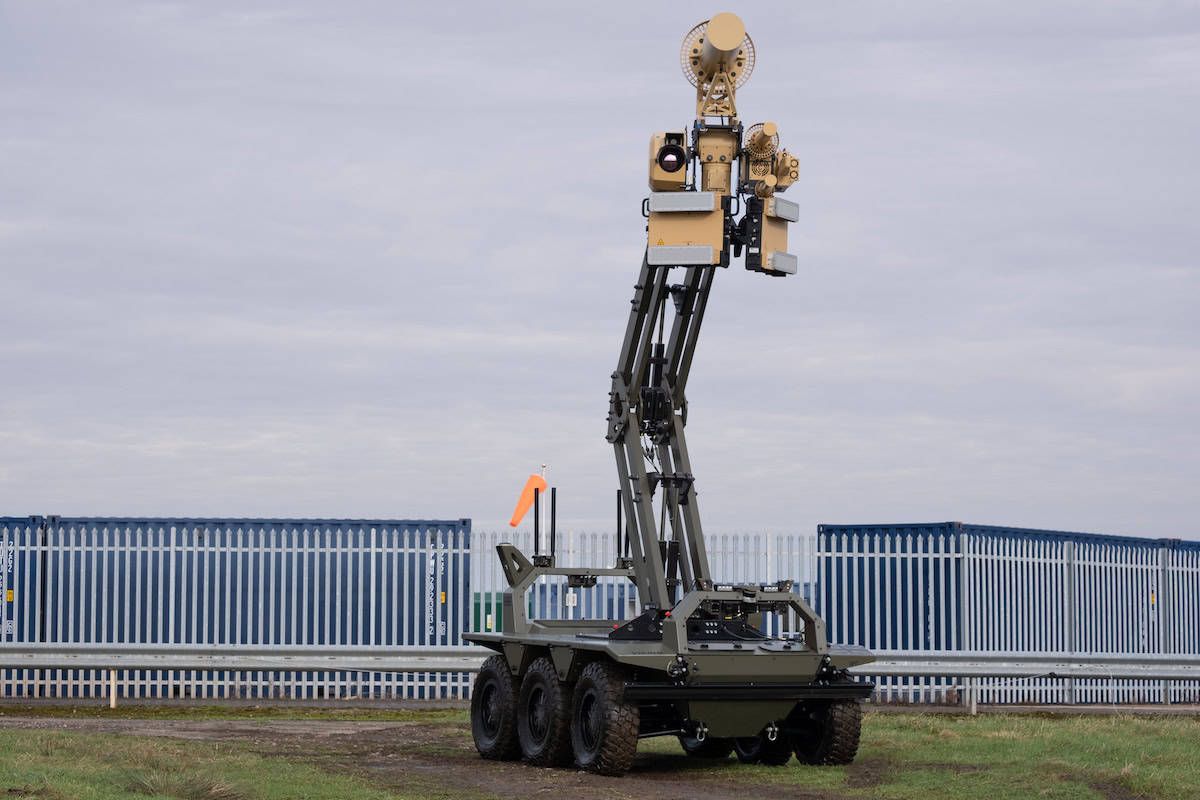
The BlackTalon Ecosystem is a British counter-unmanned aircraft system developed by Enterprise Control Systems (ECS), part of SPX Communication Technologies. It is designed as an open-architecture system that can combine information from different counter-UAS sensors and electronic-attack capabilities.
The system is intended to support drone detection, location, identification, tracking, sensor-data fusion, and coordinated counter-UAS activity. Its open architecture allows different sensor types and capabilities from multiple suppliers to be integrated without redesigning the complete system.
In 2026, the BlackTalon Ecosystem was used by Allied military personnel during NATO counter-UAS experimentation in Latvia. This is the earliest year in the supplied material in which the complete BlackTalon Ecosystem is explicitly documented as a fielded physical system.
Development
Enterprise Control Systems developed BlackTalon Ecosystem as part of the wider BLACKTALON counter-drone product family. The broader family includes systems combining radio-frequency detection, radar, electro-optical sensors, command-and-control functions, and directional RF inhibition. The manufacturer describes BLACKTALON solutions as intended to detect, locate, track, and defeat unmanned-aircraft threats while limiting unintended interference with friendly radio-frequency signals. Additional information on the product family is available from SPX Communication Technologies.
The Ecosystem differs from a fixed single-sensor configuration by emphasizing integration. According to reporting on the 2026 trials, its architecture can incorporate radar, electro-optical and infrared sensors, passive radio-frequency sensors, acoustic sensing, and electronic-attack systems. This allows operators to add or replace capabilities as requirements and drone threats change.
2026 NATO trials
During NATO's Baltic TRUST 26 counter-UAS exercise in Latvia, also referenced as BATT26 in the supplied reporting, Allied operators evaluated BlackTalon Ecosystem under realistic field conditions. The activity formed part of NATO Allied Command Transformation's Layered Counter Unmanned Aircraft Systems Initiative operational experimentation.
The Latvian training area presented a specific detection problem because dense pine forest exceeded 30 m in height in places. Operators elevated the BlackTalon sensor suite to obtain a clearer line of sight above the trees. The system was used to detect and track drones over the forested training area.
During the exercise, BlackTalon was tasked with receiving and fusing sensor-data streams from six participating companies in addition to its own data. The trial therefore tested not only detection but also interoperability, data fusion, and the ability to provide information for a wider counter-UAS mission. A detailed account of the trial was published by Defense Advancement.
Design
BlackTalon Ecosystem uses an open architecture intended to connect different counter-UAS sensors and effects. The available source does not define a single mandatory hardware configuration, indicating that the system is designed as an adaptable ecosystem rather than one fixed sensor package.
Sensors and data fusion
Supported sensor types include radar, electro-optical and infrared equipment, passive radio-frequency sensors, and acoustic sensors. The system can combine information from multiple sources and present fused data for the active counter-UAS mission. During the Latvia exercise it also accepted data from equipment supplied by other participating companies.
Electronic attack
The architecture can integrate electronic-attack capability. Within the wider BLACKTALON family, SPX Communication Technologies also offers directional multi-band RF inhibition intended to interfere with drone navigation, command, control, and telemetry links. The supplied evidence does not establish that every BlackTalon Ecosystem deployment includes the same inhibitor configuration, so these defeat capabilities should be regarded as integration options rather than a fixed specification of every installation.
Command and control
The system's role extends beyond individual sensor operation. Its 2026 NATO trial emphasized interoperability with wider military systems, information sharing, support for command decisions, and coordination of counter-UAS actions. The open architecture is intended to allow new sensors or effects to be incorporated as threats and operational requirements change.
Operational history
BlackTalon Ecosystem was fielded during Baltic TRUST 26 in Latvia in 2026. Allied military operators used the system in a heavily forested training environment, where it received and fused data from multiple participating organizations and supported drone detection and tracking.
After the exercise, the system remained in the Baltic and Eastern European region for further demonstrations and planned army trials. Participation in Baltic TRUST 26 did not constitute NATO endorsement of SPX Communication Technologies, BlackTalon Ecosystem, or its associated technology.
Specifications (BlackTalon Ecosystem)
General characteristics
- Type: Open-architecture counter-unmanned aircraft system.
- Developer: Enterprise Control Systems, part of SPX Communication Technologies.
- Primary roles: Drone detection, location, identification, tracking, multi-sensor data fusion, and integration of counter-UAS effects.
- Architecture: Open and adaptable integration architecture for sensors and effects from multiple providers.
- Supported sensor types: Radar, electro-optical and infrared, passive radio-frequency, and acoustic sensors.
- Electronic-attack integration: Supported as part of the ecosystem architecture.
- Interoperability: Demonstrated during the 2026 Latvia exercise by receiving and fusing data streams from six participating companies alongside its own sensor data.
Deployment
- Documented field use: NATO Baltic TRUST 26 counter-UAS experimentation in Latvia in 2026.
- Environment demonstrated: Forested training terrain with a pine canopy exceeding 30 m in places.
- Post-exercise activity: Further demonstrations and army trials were planned across the Baltic states and Eastern Europe.
 Argentina
 Armenia
 Australia
 Austria
 Austria-Hungary
 Belgium
 Brazil
 United States
 Brunei
 Bulgaria
 Canada
 Chile
Chile China
China Colonial America
 Colombia
 Confederate States
 Croatia
 Czech
Czech Denmark
 Egypt
Egypt Finland
 France
 Georgia
 Germany
 German Imperial
 Greece
 Holland
 Hungary
 India
India Indonesia
 Iran
Iran Iraq
Iraq Ireland
 Israel
 Italy
Italy Japan
Japan Japan (1940)
 Jordan
 Kingdom of Italy
 Malaysia
 Mexico
 Myanmar
 Nazi Germany
 Netherlands
 New Zealand
 North Korea
 Norway
 Pakistan
 Peru
Peru Philippines
 Poland
 Portugal
 Prussia
 Romania
 Russia
 Saudi Arabia
 Serbia
 Singapore
 Slovakia
 Slovenia
 South Africa
 South Korea
 Soviet Union
 Spain
Spain Sweden
 Switzerland
 Syria
Syria Taiwan
 Thailand
 Turkey
 UAE
UAE Ukraine
 Vietnam
 Yugoslavia