
History
The KN-25 is a North Korean 600 mm road-mobile guided rocket artillery system that combines characteristics of a multiple launch rocket system with those of a short-range ballistic missile. North Korean state media describes the weapon as a super-large multiple rocket launcher, while United States military assessments have classified its projectile as a short-range ballistic missile because of its size, trajectory and range.
The system is intended for long-range strikes against military infrastructure, including airfields, command centres, bases and logistics facilities. Its demonstrated range of about 380 km gives it substantially greater reach than conventional rocket artillery. The CSIS Missile Threat profile describes the KN-25 as road-mobile, solid-propellant and operational.
The KN-25 has appeared on both tracked and wheeled launch vehicles. Its combination of multiple launch tubes, guided projectiles and ballistic-missile-like performance has made its classification dependent on the organization describing it.
Development and testing
According to the Open Nuclear Network, the first known firing of the 600 mm system occurred in July 2019. CSIS records a flight test on August 25, 2019, when two projectiles launched from North Korea's east coast flew approximately 380 km and reached an altitude of about 97 km.
A second major test followed on September 10, 2019 from Kaechon. CSIS reports that two projectiles flew approximately 330 km at altitudes of 50 to 60 km, while reporting surrounding the event indicated that not every attempted launch was successful. Further tests on October 31 and November 28, 2019 reached approximately 370 km and 380 km respectively. By the November firing, the reported interval between launches had been reduced to about 30 seconds.
Testing continued in 2020. CSIS records a March 2 firing in which two projectiles travelled approximately 240 km. On March 29, 2020, North Korean reporting described another firing as a verification of tactical and technical characteristics for systems intended for Korean People's Army units. Open Nuclear Network notes that officials also referred to problems associated with delivering the weapon to military units, indicating that production or integration difficulties still existed at that stage.
Production and deliveries
On December 31, 2022, North Korea held a ceremony marking the reported delivery of thirty 600 mm multiple launch rocket systems. Open Nuclear Network assesses that this delivery indicated that at least some earlier production problems had been resolved. The source identified six-tube systems on large tracked chassis and noted that four-tube systems on four-axle truck chassis had also appeared in military parades.
Public sources differ on the precise date at which the KN-25 should be considered operational. Deagel lists an initial operational capability in 2024, while Open Nuclear Network documents the reported delivery of thirty systems in 2022. CSIS has described the system as operational but has also noted uncertainty in earlier reporting about its formal entry into Korean People's Army service. The documented deliveries and subsequent live-fire activity confirm that the weapon progressed beyond the experimental test stage.
By April 2026, NK Pro reported that a March 14 live-fire drill involving twelve 600 mm rockets represented the twenty-fifth launch event associated with the system and estimated that North Korea had fired around 90 KN-25 rockets by that time.
On September 12, 2026, the Korean People's Army fired another salvo from North Korea's eastern coast. South Korean assessments identified 600 mm guided rockets associated with the KN-25, with the projectiles reportedly flying about 250 km toward waters east of the Korean Peninsula. The firing took place one day after the United States, South Korea and Japan completed the five-day Freedom Edge 26 exercise.
Design
Launcher and mobility
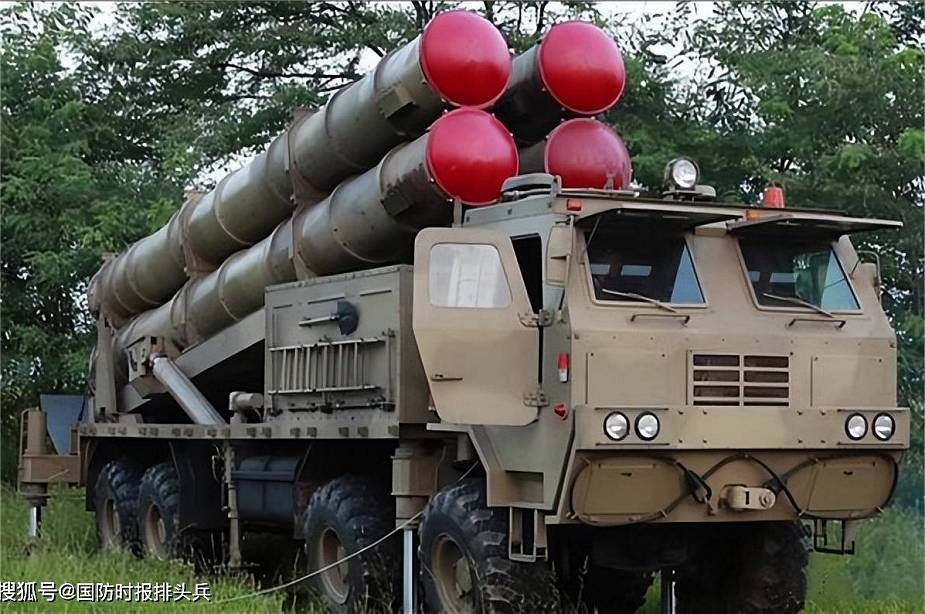
The KN-25 is a road-mobile system designed to launch several large guided rockets in rapid succession. Open Nuclear Network identifies a six-tube launcher mounted on a tracked chassis with ten road wheels on each side. It also documents at least nine four-tube launchers mounted on four-axle truck chassis. Other open-source material, including published reference summaries, records additional wheeled launcher arrangements, reflecting continuing development of the launcher family.
The large tracked launcher is among the biggest tracked missile and rocket artillery vehicles produced by North Korea. Mobility allows launch units to disperse, relocate and fire from different positions rather than relying on fixed launch infrastructure.
Rocket
The KN-25 projectile has a diameter of 600 mm. CSIS estimates its length at approximately 8.6 m and records a demonstrated maximum range of 380 km. Propulsion is provided by a single-stage solid-propellant motor.
Available assessments disagree on some details of the projectile's fin arrangement. CSIS describes rear stabilizing fins together with movable forward control fins. Open Nuclear Network identifies six wraparound tail fins associated with a rotating sleeve around the nozzle and notes that this arrangement could allow the fins to rotate while the main projectile body remains comparatively stable. The same analysis considers this potentially advantageous for the guidance, control and fuze sections.
The exact guidance system has not been publicly disclosed. However, the 600 mm projectiles are repeatedly described in North Korean-related reporting and independent technical analysis as guided rockets, and their control surfaces distinguish them from conventional unguided artillery rockets.
Warhead
Publicly confirmed details of the KN-25 warhead remain limited. CSIS lists the warhead as unknown while assessing a conventional high-explosive type as likely. North Korea has also claimed that the 600 mm system can carry tactical nuclear weapons. Open Nuclear Network treats this as a North Korean claim rather than independently verified evidence of a deployed nuclear configuration.
Operational history
The KN-25 has been used repeatedly in North Korean missile and artillery demonstrations since 2019. Its long range allows launch positions inside North Korea to cover military targets across much of South Korea. Potential target categories identified in reporting include airfields, command centres, bases and logistics infrastructure.
The system can fire several guided rockets from one launcher in a short period. Open Nuclear Network assessed that the combination of multiple launchers and multiple rounds per vehicle could be used for concentrated salvo attacks or in attempts to saturate missile-defence systems. This is an analytical assessment of potential employment rather than confirmation of a specific wartime use.
The September 12, 2026 firing demonstrated continued Korean People's Army use of the system. The approximately 250 km flight distance recorded in that event was below the KN-25's previously demonstrated maximum range and therefore does not represent a new range limit.
Variants
- Tracked six-tube KN-25 launcher: Large tracked transporter-erector-launcher carrying six 600 mm rockets. Thirty 600 mm systems were reported delivered at the end of 2022, with tracked launchers prominently displayed during the ceremony.
- Wheeled four-tube KN-25 launcher: Four-axle road-mobile launcher carrying four 600 mm rockets. At least nine examples had been displayed in North Korean military parades according to Open Nuclear Network.
Operators
- North Korea: The Korean People's Army operates the KN-25 family. North Korea reported delivery of thirty 600 mm multiple launch rocket systems in December 2022 and has continued conducting live-fire launches through 2026.
Specifications (KN-25 600 mm guided rocket)
General characteristics
- Type: Guided rocket artillery projectile / short-range ballistic missile-class weapon
- Diameter: 600 mm
- Length: Approximately 8.6 m according to CSIS
- Propulsion: Single-stage solid propellant
- Basing: Road-mobile
- Launcher configurations: Six-tube tracked launcher and four-tube wheeled launcher are documented
Performance
- Demonstrated maximum range: Approximately 380 km
Warhead and guidance
- Guidance: Exact system undisclosed; projectile uses aerodynamic control surfaces and is described as guided
- Warhead: Exact type undisclosed; conventional high-explosive warhead assessed as likely by CSIS
- Nuclear capability: Claimed by North Korea but not independently confirmed in the supplied evidence
Related equipment
- KN-23: North Korean short-range ballistic missile referenced in comparative assessments of the country's newer road-mobile missile forces.
- KN-24: North Korean short-range ballistic missile that, together with the KN-23 and KN-25, forms part of a broader family of modern tactical strike systems discussed in independent analyses.
 Argentina
 Armenia
 Australia
 Austria
 Austria-Hungary
 Belgium
 Brazil
 United Kingdom
 United States
 Brunei
 Bulgaria
 Canada
 Chile
Chile China
China Colonial America
 Colombia
 Confederate States
 Croatia
 Czech
Czech Denmark
 Egypt
Egypt Finland
 France
 Georgia
 Germany
 German Imperial
 Greece
 Holland
 Hungary
 India
India Indonesia
 Iran
Iran Iraq
Iraq Ireland
 Israel
 Italy
Italy Japan
Japan Japan (1940)
 Jordan
 Kingdom of Italy
 Malaysia
 Mexico
 Myanmar
 Nazi Germany
 Netherlands
 New Zealand
 Norway
 Pakistan
 Peru
Peru Philippines
 Poland
 Portugal
 Prussia
 Romania
 Russia
 Saudi Arabia
 Serbia
 Singapore
 Slovakia
 Slovenia
 South Africa
 South Korea
 Soviet Union
 Spain
Spain Sweden
 Switzerland
 Syria
Syria Taiwan
 Thailand
 Turkey
 UAE
UAE Ukraine
 Vietnam
 Yugoslavia