
History
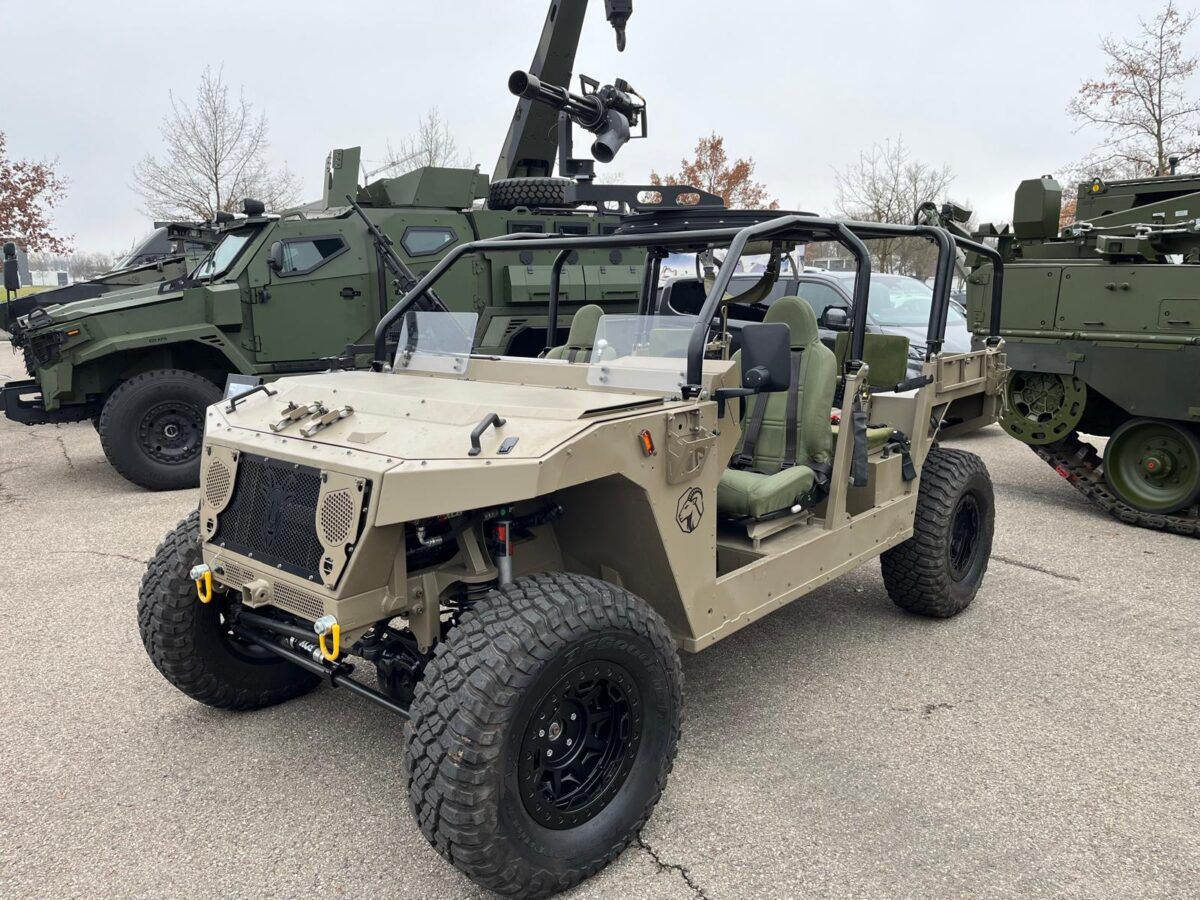
The FTS TAHR is a light airborne tactical vehicle developed for the German Special Forces Command, or KSK. It is produced through Flensburg Technology Systems, a German-Israeli joint venture between FFG Flensburger Fahrzeugbau Gesellschaft and IAI/ELTA Systems.
TAHR is intended to combine high off-road mobility with rapid air deployment. The combat configuration has an open layout, can accept different weapon systems, is air-droppable, and is compact enough for two vehicles to be carried simultaneously inside a CH-47 Chinook.
The program includes a light airborne combat vehicle and a light airborne support vehicle. Both use an existing all-terrain platform that had already entered operational service before being adapted to KSK requirements.
Development
Germany's Federal Office of Bundeswehr Equipment, Information Technology and In-Service Support, BAAINBw, signed a framework agreement with FTS in October 2025 covering delivery of up to 200 vehicle systems. Development proceeded in cooperation with the KSK as the intended end user.
FTS and the KSK presented the first TAHR light airborne combat vehicle on September 15, 2026, during the opening of the 10th KSK Defence Symposium in Altensteig-Wart, Germany. FTS and IAI described the vehicle as the first pre-series example and stated that it had been completed ahead of schedule. Some specialist reporting referred to the same vehicle as the first prototype.
The TAHR was derived from a highly mobile all-terrain platform already described by FTS and IAI as combat proven and in service. European Security & Defence identified the baseline as the Israeli ZD platform developed by IAI ELTA and reported that it had previously been used by Israeli special forces. The German vehicle was then adapted for the mission requirements of the KSK.
Design
Configuration
The TAHR combat vehicle uses an open, integrated architecture intended to give its occupants a clear view of their immediate surroundings. The design also permits the integration of different weapon systems and mission equipment rather than restricting the vehicle to a single fixed armament.
The vehicle belongs to a light approximately 3.2-ton class according to specialist reporting. Its design emphasizes the combination of payload capacity, mobility and compatibility with airborne transport. The support variant uses the same basic platform but is intended primarily for carrying equipment and supplies.
Mobility and air transport
TAHR is based on a highly mobile all-terrain chassis. A major program requirement is the ability to move rapidly from air transport to ground operations. FTS states that two TAHR vehicles can be carried simultaneously inside a CH-47 Chinook and can be made combat ready shortly after leaving the helicopter.
The vehicle is also designed for air dropping. KSK commander Brigadier General Andreas Kühne described this capability as part of the range of transport options required for special forces operations in different terrain and mission conditions.
European Security & Defence reported that the German TAHR differs from the Israeli baseline in several details. The German vehicle uses a diesel engine instead of the gasoline engine fitted to the Israeli version and employs a modified roll cage. These changes were introduced while retaining the underlying platform concept.
Weapons and mission equipment
The combat version is designed to accept different weapon systems and mission-specific equipment. The available evidence does not identify a standard production armament, weapon mount or fixed weapons package, indicating that configuration can vary according to operational requirements.
Program status
As of September 2026, the TAHR program had reached the pre-series vehicle stage. The first example had been publicly presented to the KSK, while the 2025 framework agreement provided for procurement of up to 200 vehicle systems. The available information does not specify a delivery completion date or confirm that series deliveries have begun.
The KSK is the intended Bundeswehr user. The program is structured around the requirements of German special operations forces, particularly rapid deployment, all-terrain mobility, air transportability and the ability to configure vehicles for different missions.
Variants
- TAHR light airborne combat vehicle: Combat-oriented configuration with an open architecture and provisions for different weapon systems and mission equipment.
- TAHR light airborne support vehicle: Support configuration based on the same all-terrain platform, intended primarily for carrying equipment and supplies.
Specifications (TAHR light airborne combat vehicle)
General characteristics
- Type: Light airborne tactical combat vehicle
- Intended user: German Special Forces Command (KSK)
- Platform: Highly mobile all-terrain vehicle derived from an existing operational platform
- Approximate class: About 3.2 tonnes according to specialist reporting
- Powerplant: Diesel engine in the German configuration according to specialist reporting
- Layout: Open integrated vehicle architecture
Transport and deployment
- CH-47 transport capacity: Two TAHR vehicles can be carried simultaneously inside one CH-47 Chinook
- Air delivery: Air-droppable
- Deployment concept: Designed for rapid transition to combat readiness after leaving the transport aircraft
Armament
- Weapons: Configurable for integration of different weapon systems; no single standard production armament has been specified in the available information
 Argentina
 Armenia
 Australia
 Austria
 Austria-Hungary
 Belgium
 Brazil
 United Kingdom
 United States
 Brunei
 Bulgaria
 Canada
 Chile
Chile China
China Colonial America
 Colombia
 Confederate States
 Croatia
 Czech
Czech Denmark
 Egypt
Egypt Finland
 France
 Georgia
 German Imperial
 Greece
 Holland
 Hungary
 India
India Indonesia
 Iran
Iran Iraq
Iraq Ireland
 Israel
 Italy
Italy Japan
Japan Japan (1940)
 Jordan
 Kingdom of Italy
 Malaysia
 Mexico
 Myanmar
 Nazi Germany
 Netherlands
 New Zealand
 North Korea
 Norway
 Pakistan
 Peru
Peru Philippines
 Poland
 Portugal
 Prussia
 Romania
 Russia
 Saudi Arabia
 Serbia
 Singapore
 Slovakia
 Slovenia
 South Africa
 South Korea
 Soviet Union
 Spain
Spain Sweden
 Switzerland
 Syria
Syria Taiwan
 Thailand
 Turkey
 UAE
UAE Ukraine
 Vietnam
 Yugoslavia