
History
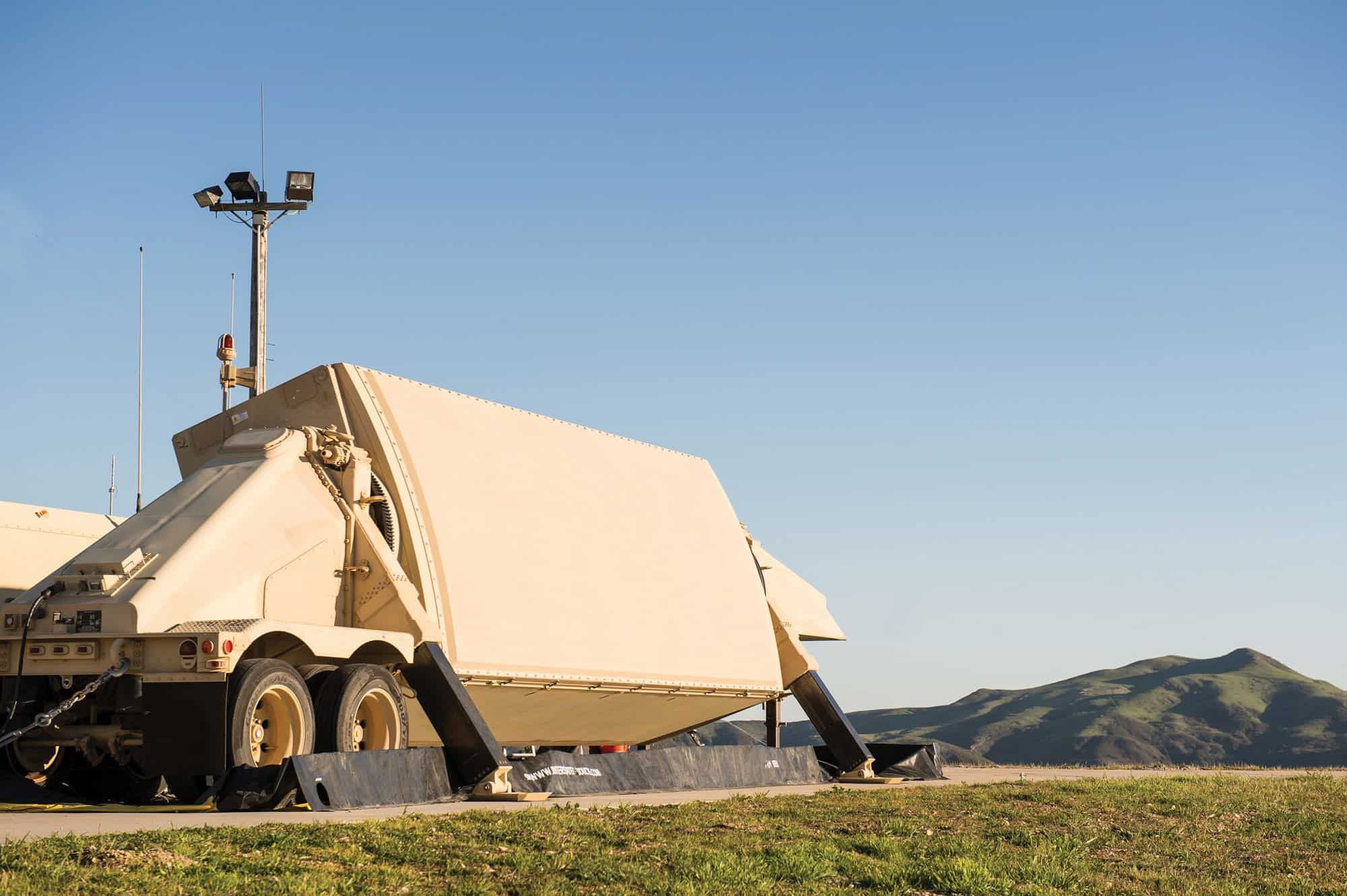
Forward Based Mode Radar Next, also known as FBM Radar Next, is a planned United States mobile land-based radar intended to strengthen forward missile-warning and tracking coverage. The Missile Defense Agency is developing the concept as a rapidly deployable sensor for detecting, tracking, and discriminating ballistic missiles, cruise missiles, and hypersonic weapons.
Mobility is a defining requirement of the planned radar. The system is intended to deploy aboard C-17 transport aircraft, move on tactical ground vehicles, become operational within hours, and be dismantled within minutes so that it can relocate rapidly in contested environments.
FBM Radar Next remains a prototype program rather than an operational or production system. Its planned architecture emphasizes remote operation, a reduced onsite crew, modular construction, integration with the wider United States missile-defense network, and a path toward affordable production if the prototype effort succeeds.
Development
The Missile Defense Agency's Mobile Land-Based Sensors Project Office outlined the Forward Based Mode Radar Next effort in a pre-solicitation notice issued on September 16, 2026. The program is intended to replace or supplement existing forward-deployed missile-tracking capabilities whose static or semi-mobile nature can make rapid repositioning difficult.
The agency plans to conduct the prototype effort through its NOBLE acquisition framework using Other Transaction Authority for prototype projects. The objective is to develop and demonstrate a highly mobile radar capable of advanced early warning, persistent tracking, and target discrimination against fast and maneuverable threats.
The acquisition approach requires prospective competitors to pass an Entry Gate before entering the first prototyping cycle. Candidates must present a documented subarray design and working radar hardware at the array-element level, supported by test data covering areas such as transceiver performance and signal-path continuity. Paper-only concepts and software-only simulations are not intended to qualify.
Prototype process
The planned competition is divided into four prototyping cycles with competitive down-selects. Cycle 1 covers concept development. Cycle 2 concentrates on technology and manufacturing readiness. Cycle 3 requires a subscale prototype supported by modeling and simulation. Cycle 4 is intended to culminate in a full-scale prototype and operational demonstration.
The Missile Defense Agency had not disclosed a specific schedule, program cost, or contract value for these cycles in the available 2026 material. Successful completion of the prototype effort may provide a path to a follow-on production contract or transaction for qualifying participants.
Design
FBM Radar Next is being designed around rapid strategic and tactical mobility. The complete system is expected to fit within C-17 airlift constraints and to be transportable on tactical ground vehicles after arrival in a theater. Rapid setup and teardown requirements are intended to allow the radar to establish coverage at temporary locations and relocate before an opposing force can effectively target the site.
The planned radar may use either a single integrated aperture or multiple distributed arrays. The distributed option is intended to support improved coverage, sensitivity, and survivability while allowing elements of the radar to operate across a wider area.
Remote operation is a stated requirement. The system is also expected to use automated health monitoring and require a reduced onsite operator footprint. These features are intended to limit personnel requirements at exposed forward positions and simplify rapid displacement.
Survivability requirements extend beyond physical mobility. The design is expected to address physical, thermal, and electromagnetic signatures so that a deployed radar is more difficult to locate and target in a contested environment.
The planned architecture is required to use modular open-system principles. The Missile Defense Agency also wants a design that can support comparatively rapid and affordable production, including replacement of radar units that may be lost or damaged during operations in heavily contested areas.
Missile tracking and network integration
The radar is intended to provide early warning, persistent tracking, and discrimination of ballistic, cruise, and hypersonic missile threats. Discrimination allows the missile-defense network to distinguish relevant targets from other detected objects and improves the quality of tracking information supplied to defensive systems.
FBM Radar Next is intended to operate as part of the existing United States missile-defense architecture rather than as an isolated sensor. Planned integration with Command and Control, Battle Management and Communications systems would allow tracking data generated at a forward location to contribute to the broader missile-defense network.
Program status
As of September 2026, Forward Based Mode Radar Next was in the pre-solicitation and prototype-planning stage. No operational radar had been identified, and the program had not yet reached production. The requirements describe the capabilities sought for future prototypes rather than characteristics of a fielded system.
Technical merit is expected to be a major factor in prototype evaluation, together with operational feasibility, C-17 compatibility, tactical mobility, schedule viability, producibility, and affordability. Companies proceeding into Cycle 1 are also expected to obtain the required facility security clearance.
Specifications (planned FBM Radar Next)
General characteristics
- Type: Planned highly mobile land-based missile-defense radar.
- Primary role: Early warning, tracking, and discrimination of ballistic, cruise, and hypersonic missile threats.
- Strategic transport: Designed for deployment aboard C-17 transport aircraft.
- Ground mobility: Intended for movement using tactical ground vehicles.
- Deployment time: Intended to become operational within hours of arrival.
- Teardown time: Intended to be dismantled within minutes for rapid relocation.
- Array configuration: Planned to support either a single integrated aperture or multiple distributed arrays.
- Operation: Remote operation with automated health monitoring and a reduced onsite crew.
- Architecture: Modular open-system architecture.
- Signature management: Planned reduction of physical, thermal, and electromagnetic signatures.
System capabilities
- Target classes: Ballistic missiles, cruise missiles, and hypersonic weapons.
- Tracking functions: Early warning, persistent tracking, and target discrimination.
- Network role: Intended to contribute sensor data to the wider United States missile-defense network through battle-management integration.
 Argentina
 Armenia
 Australia
 Austria
 Austria-Hungary
 Belgium
 Brazil
 United Kingdom
 Brunei
 Bulgaria
 Canada
 Chile
Chile China
China Colonial America
 Colombia
 Confederate States
 Croatia
 Czech
Czech Denmark
 Egypt
Egypt Finland
 France
 Georgia
 Germany
 German Imperial
 Greece
 Holland
 Hungary
 India
India Indonesia
 Iran
Iran Iraq
Iraq Ireland
 Israel
 Italy
Italy Japan
Japan Japan (1940)
 Jordan
 Kingdom of Italy
 Malaysia
 Mexico
 Myanmar
 Nazi Germany
 Netherlands
 New Zealand
 North Korea
 Norway
 Pakistan
 Peru
Peru Philippines
 Poland
 Portugal
 Prussia
 Romania
 Russia
 Saudi Arabia
 Serbia
 Singapore
 Slovakia
 Slovenia
 South Africa
 South Korea
 Soviet Union
 Spain
Spain Sweden
 Switzerland
 Syria
Syria Taiwan
 Thailand
 Turkey
 UAE
UAE Ukraine
 Vietnam
 Yugoslavia