
History
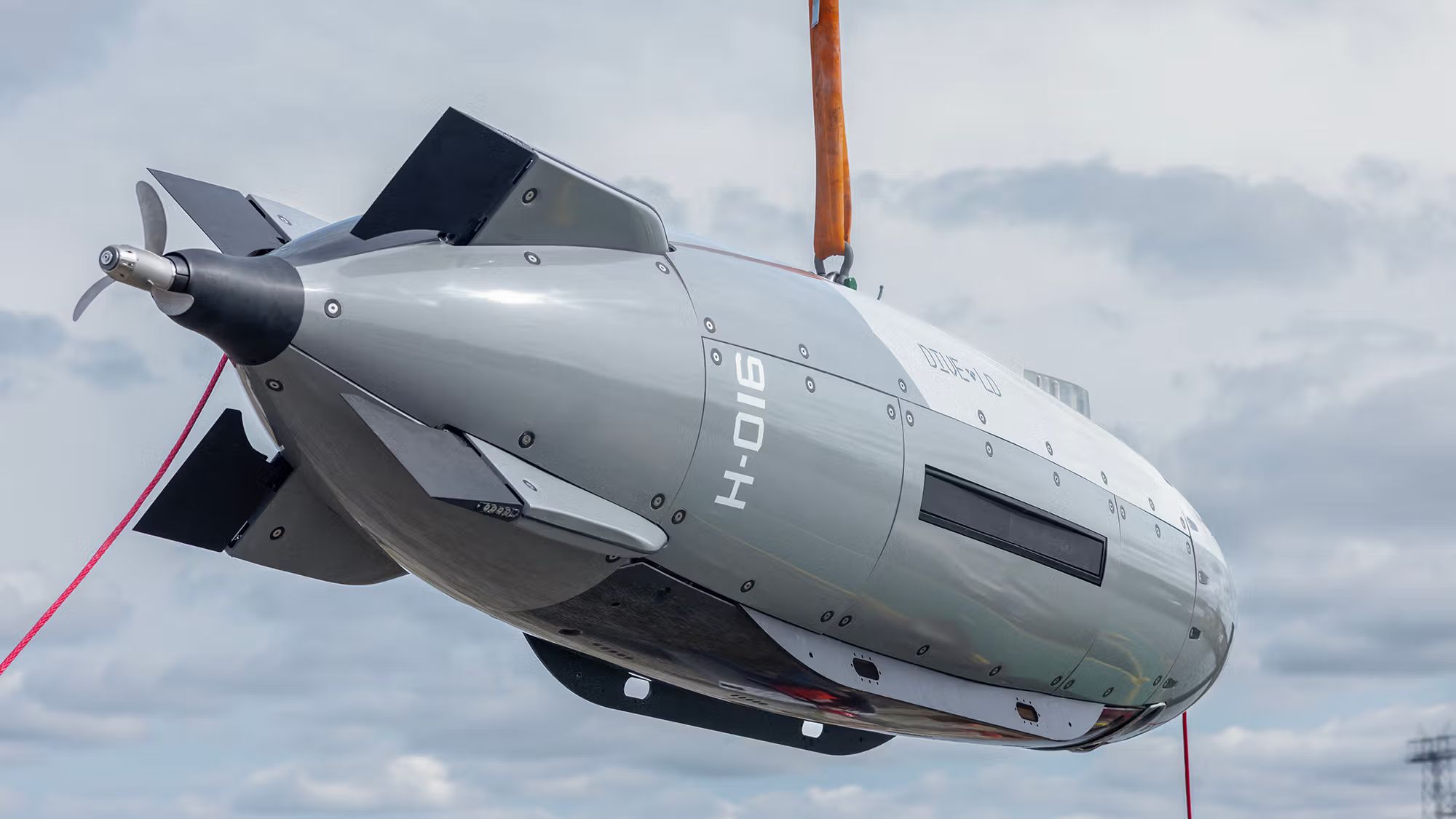
Anduril Dive-LD is a large autonomous underwater vehicle developed for long-duration undersea missions. It supports military tasks including intelligence, surveillance and reconnaissance, mine countermeasures, anti-submarine warfare and seafloor mapping.
The vehicle originated at Dive Technologies, a company founded in Quincy, Massachusetts, in 2018 to develop Dive-LD for defense and commercial customers. Anduril acquired Dive Technologies in 2022 and continued development of the platform for military and civilian applications.
Dive-LD later entered U.S. military testing and deployment. The platform was selected for the second tranche of the U.S. Department of Defense Replicator initiative in 2024, and the first Dive-LD was delivered to the U.S. Navy's Unmanned Undersea Vehicle Squadron 1 in 2025.
Development
Dive Technologies designed Dive-LD as a large autonomous underwater platform capable of carrying complex payloads and multi-sensor suites. According to a 2024 NobleReach interview with company personnel, the original objective was to provide an autonomous platform that could perform offshore and deep-water surveys, inspections and defense missions while reducing dependence on large crewed vessels.
The developers also pursued commercial applications. These included surveys for offshore wind projects and inspections of offshore power cables, oil pipelines and telecommunications cables. The company offered Dive-LD through a service model in which the operator collected and delivered data for customers.
By March 5, 2024, a Dive-LD was being used during the U.S. Navy's Integrated Battle Problem 24.1 exercise in San Diego Bay. In August 2024, Dive-LD was selected for the second tranche of the Pentagon's Replicator initiative, which was intended to accelerate production and fielding of autonomous systems. The selection was reported by DefenseScoop.
U.S. Navy introduction
On December 11, 2024, personnel from U.S. Navy unmanned undersea units conducted hands-on training with Dive-LD at Keyport, Washington. In April 2025, Anduril delivered the first Dive-LD to Unmanned Undersea Vehicle Squadron 1. The delivery and subsequent operational evaluation were reported by Defence Industry Europe.
Reporting in 2025 described an Anduril production facility at Quonset Point, Rhode Island, as scheduled to begin operations in early 2026. The planned facility was expected to have capacity for up to 200 Dive-LD vehicles annually. This production target was described by the World Defense Show.
Design
Dive-LD is a torpedo-shaped autonomous underwater vehicle intended to operate for extended periods without a crew aboard. Its design emphasizes modular payload integration, autonomous operation and the ability to work close to the seafloor.
Structure and manufacturing
The vehicle uses a 3D-printed exterior and internal manufacturing methods intended to simplify customization. The modular architecture allows the platform to be configured with different payloads or multi-sensor suites according to the mission.
Autonomy and payloads
Dive-LD is designed to perform missions without continuous human intervention. Supported roles include undersea intelligence, surveillance and reconnaissance, mine countermeasures, anti-submarine warfare, seabed mapping, communications relay missions and infrastructure inspection.
Anduril has also described precision-placement functions intended to support payload navigation and positioning. The available source material does not identify the specific sensors, navigation equipment or payload types installed on every Dive-LD vehicle.
Depth and endurance
Published information cited by the World Defense Show describes Dive-LD as capable of operating at depths of up to 6,000 m and remaining submerged for up to 10 days. Separate 2024 reporting described the system as intended for multi-week missions. These descriptions indicate long-duration operation, but the available sources do not establish whether the longer figure applies to a different configuration or mission profile.
Operational history
After delivery to UUVRON-1 in 2025, Dive-LD entered U.S. Navy evaluation and operational use. By 2026, U.S. Central Command was also operating Dive-LD vehicles in regional waters.
In September 2026, Iranian state media reported that the Islamic Revolutionary Guard Corps Navy had obtained an Anduril-branded unmanned underwater vehicle near the Strait of Hormuz. U.S. Central Command identified it as an older Dive-LD model and stated that the vehicle had malfunctioned more than a day before it was acquired by Iranian forces. CENTCOM said the vehicle had been surveying regional waters in support of ongoing operations.
CENTCOM also stated that the malfunctioning vehicle had not collected sensitive data and did not carry classified sonar or radar equipment. Anduril described Dive-LD as an attritable autonomous system intended for hazardous missions where loss of a vehicle is an expected possibility. The company said that this vehicle had previously accumulated thousands of operating hours during months-long operations in the CENTCOM area.
Operators
- United States: The U.S. Navy received its first Dive-LD for UUVRON-1 in 2025. U.S. forces under Central Command were also operating Dive-LD vehicles in regional waters by 2026.
Specifications (Dive-LD)
General characteristics
- Type: Large autonomous underwater vehicle.
- Configuration: Torpedo-shaped autonomous undersea platform.
- Construction: 3D-printed exterior with modular internal architecture.
- Payload: Modular payloads and multi-sensor suites.
Performance
- Maximum operating depth: Up to 6,000 m.
- Reported submerged endurance: Up to 10 days in published 2025 information; other reporting described the intended mission endurance as multi-week.
Mission capabilities
- Intelligence and reconnaissance: Undersea battlespace intelligence, surveillance and reconnaissance.
- Mine warfare: Mine countermeasures.
- Anti-submarine warfare: Supported as a mission role.
- Survey: High-resolution seafloor mapping and offshore surveys.
- Infrastructure inspection: Inspection of subsea cables, pipelines and related infrastructure.
- Communications: Communications relay missions.
Source package:
 Argentina
 Armenia
 Australia
 Austria
 Austria-Hungary
 Belgium
 Brazil
 United Kingdom
 Brunei
 Bulgaria
 Canada
 Chile
Chile China
China Colonial America
 Colombia
 Confederate States
 Croatia
 Czech
Czech Denmark
 Egypt
Egypt Finland
 France
 Georgia
 Germany
 German Imperial
 Greece
 Holland
 Hungary
 India
India Indonesia
 Iran
Iran Iraq
Iraq Ireland
 Israel
 Italy
Italy Japan
Japan Japan (1940)
 Jordan
 Kingdom of Italy
 Malaysia
 Mexico
 Myanmar
 Nazi Germany
 Netherlands
 New Zealand
 North Korea
 Norway
 Pakistan
 Peru
Peru Philippines
 Poland
 Portugal
 Prussia
 Romania
 Russia
 Saudi Arabia
 Serbia
 Singapore
 Slovakia
 Slovenia
 South Africa
 South Korea
 Soviet Union
 Spain
Spain Sweden
 Switzerland
 Syria
Syria Taiwan
 Thailand
 Turkey
 UAE
UAE Ukraine
 Vietnam
 Yugoslavia