History
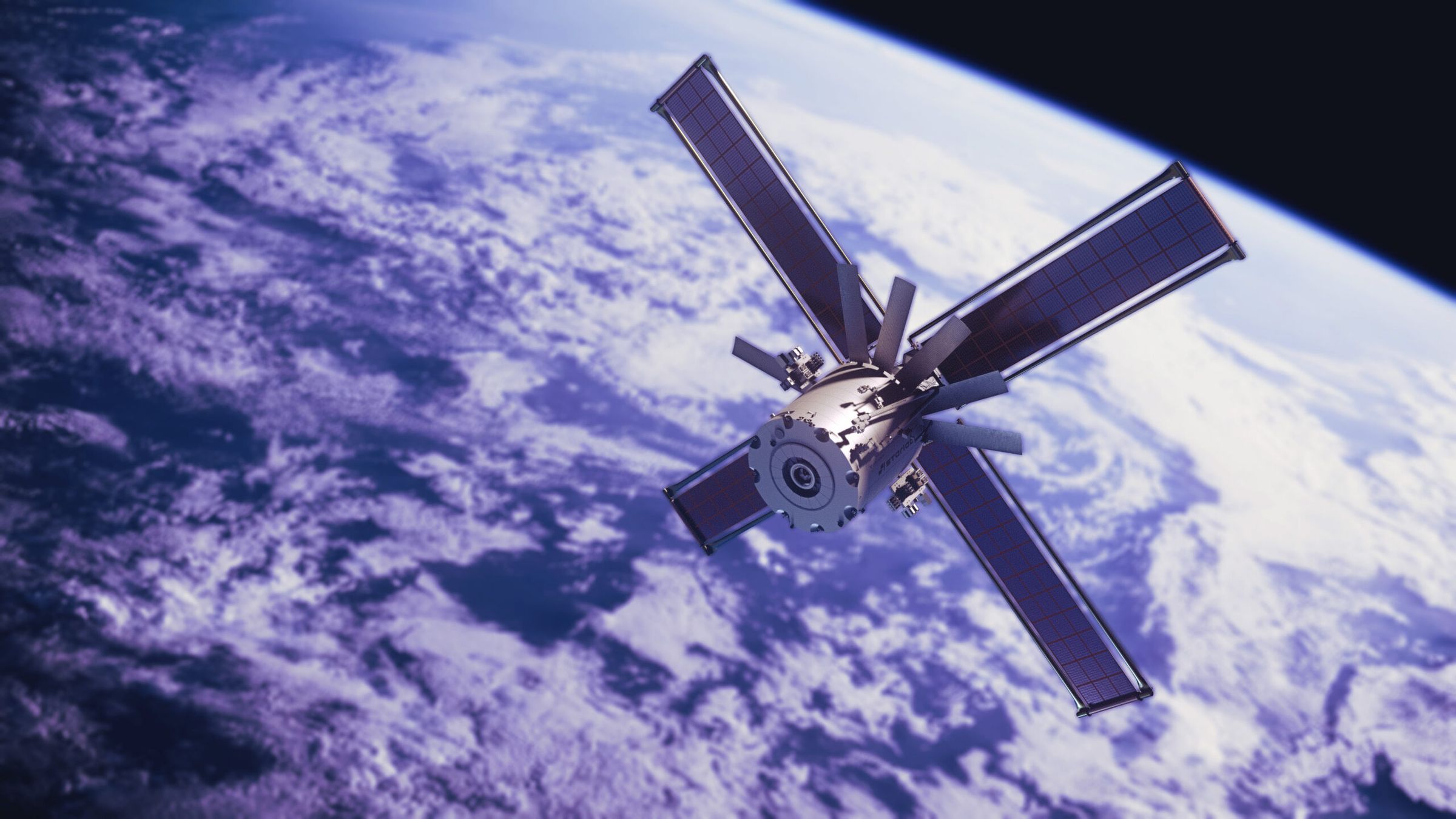
Voyager Technologies Starlab is a planned commercial space station for low Earth orbit. The program is intended to provide a continuously crewed platform for microgravity research, technology development, and industrial activity as the International Space Station approaches retirement.
Starlab is being developed by Starlab Space LLC, a joint venture centered on Voyager Technologies and Airbus and supported by additional international partners. NASA has supported the program through its Commercial Low Earth Orbit Development initiative, while the station is intended to serve government, research, and commercial customers rather than operate as a government-owned facility.
The current plan calls for Starlab to launch as a fully integrated station on one SpaceX Starship flight in 2029. The date remains planned, not an accomplished milestone, and the program was still in manufacturing and systems-integration work in 2026.
Development
The Starlab concept originated in 2021, when Nanoracks, Voyager Space, and Lockheed Martin proposed a commercial station for NASA's Commercial Low Earth Orbit Destinations program. NASA selected the team in December 2021 for a funded Space Act Agreement. The original concept used a docking node, a large inflatable habitat, and a service module.
Airbus joined the program in January 2023. During the subsequent redesign, the inflatable main habitat was replaced by a large rigid metallic module. In June 2023, Starlab passed a Systems Requirements Review with NASA. Voyager and Airbus then announced a formal joint venture in August 2023, and the companies finalized Starlab Space LLC in January 2024. Airbus took the principal role in the main living and working module, while the wider program retained Voyager as a central partner.
Northrop Grumman joined the program in 2023 after ending work on its own commercial station concept. Its planned contribution includes cargo logistics and development work related to an autonomous docking system for the Cygnus cargo spacecraft. In January 2024, Starlab selected SpaceX Starship as the launch vehicle because the station is intended to reach orbit in one integrated launch.
During 2024, NASA reported four further development milestones covering the habitat structural test article preliminary design, systems integration, integrated operations, and a structural test plan. The structural test article is an engineering development unit intended to verify the habitat design through activities including welding verification, proof-pressure testing, and static-load testing. NASA's 2024 Starlab progress report also described continuing work on system architecture, interfaces, and program requirements.
In 2025, Starlab completed five additional NASA-supported milestones. These included preliminary design and safety work, spacecraft mockup planning, procurement planning, system architecture reviews, and review of the Cygnus docking-system design. Construction also began on a full-scale, high-fidelity mockup for the Space Vehicle Mockup Facility at NASA's Johnson Space Center. The mockup is intended for human-in-the-loop evaluations of interior layout, crew procedures, training, hardware access, and responses to in-flight problems. NASA summarized these activities in its 2025 development update.
On 23 February 2026, Starlab Space announced completion of its Commercial Critical Design Review with NASA in attendance. The company said the review supported the 28th milestone under its NASA agreement and allowed the program to move from design validation into fabrication, testing, assembly, and systems integration. The Starlab CCDR announcement also stated that the review covered both technical maturity and the business model for a commercially operated low Earth orbit platform.
By August 2026, Voyager Technologies remained publicly positive about Starlab while seeking adjustments to NASA's planned requirements for the next stage of commercial-space-station support. The available report did not identify the specific requirements Voyager wanted changed. NASA's broader strategy remained to complete the development phase and later procure services from one or more commercial station providers, with NASA acting as one customer among others.
Design
Starlab is designed as a large, rigid, crewed orbital facility that can be completed and outfitted on the ground and launched in one flight. NASA describes the planned station as consisting of a service module and a habitat. Airbus describes the main station element as a metallic module about 8 m (26 ft) in diameter and about 8 m (26 ft) high, complemented by a tapered cone that fits the launch-vehicle fairing and provides additional stowage space.
Habitat and internal arrangement
The principal metallic module is arranged around three decks: a Systems Deck, an Internal Payload Laboratory, and a Crew Habitation Deck, together with a Utility Bay. The decks are connected through a central hatch. The interior is intended to provide dedicated areas for research, crew living, exercise, and free time. Large windows are included in the design. Hilton has supported the design of crew suites and communal areas, while Journey has been named as an interior and experience-design partner.
The station is designed for a permanent crew of four. Airbus states that it can temporarily accommodate as many as eight people during crew handovers or short-duration missions. The current design therefore emphasizes a relatively large internal volume within one principal habitat rather than the gradual orbital assembly of many narrow modules.
Docking and logistics
Several docking ports are planned for visiting spacecraft. Airbus states that the interfaces are intended to follow current docking standards so that crew and cargo transportation can be provided by multiple vehicles. Northrop Grumman's work on Cygnus is specifically intended to support cargo logistics and autonomous docking with Starlab.
Power, propulsion, and station architecture
NASA's public descriptions separate the station into a habitat and a smaller service module responsible for power and propulsion. Earlier public design information described a power-and-propulsion element with solar arrays. The architecture has changed during development, so figures from earlier configurations should not be treated as final unless repeated by the current program.
The station is intended to operate in low Earth orbit at roughly 400 km altitude. The program's single-launch approach is central to the design: laboratories, habitation areas, storage, and much of the internal equipment are to be installed before launch. According to Airbus, the planned station should become operational within a few weeks after reaching orbit, rather than requiring years of assembly like the International Space Station. Airbus provides a current overview on its Starlab program page.
Research capability
Starlab is intended primarily as an orbital science and technology platform. Airbus states that the station is designed to support more than 400 experiments or technical investigations per year and to match the International Space Station's payload capacity. Proposed research areas include life sciences, pharmaceutical research, protein crystal growth, materials science, semiconductor and alloy development, and on-orbit computing. These are planned capabilities and remain dependent on successful completion, launch, and operation of the station.
Program status
As of 2026, Starlab remains under development and is not an operational space station. Completion of the Commercial Critical Design Review moved the program into fabrication, testing, assembly, and systems integration, but the flight station has not yet been launched.
Starlab is currently scheduled for launch in 2029 on a SpaceX Starship. The schedule is intended to place the station in orbit before the end of International Space Station operations and preserve access to low Earth orbit research. Because the launch year is a future program target, it may change as spacecraft manufacturing, launch-vehicle readiness, certification, and NASA procurement plans develop.
The Starlab partnership named in 2026 includes Voyager Technologies, Airbus, Mitsubishi Corporation, MDA Space, Palantir Technologies, and Space Applications Services. NASA, ESA, and JAXA have also participated in technical coordination associated with the program, while NASA remains a development supporter and prospective service customer rather than the station owner.
Specifications (planned Starlab configuration)
General characteristics
- Type: Commercial crewed low Earth orbit space station
- Primary structure: Large rigid metallic habitat with a separate service module and a tapered cone element
- Main module diameter: Approximately 8 m (26 ft)
- Main module height: Approximately 8 m (26 ft)
- Internal arrangement: Three decks, comprising a Systems Deck, Internal Payload Laboratory, and Crew Habitation Deck, plus a Utility Bay
- Permanent crew: 4
- Temporary occupancy: Up to 8 during crew rotations or short missions
- Planned orbit: Low Earth orbit at approximately 400 km altitude
Mission and support
- Research capacity: More than 400 experiments or technical investigations per year
- Docking: Multiple docking ports designed for compatibility with current crew and cargo transport standards
- Launch method: Single integrated launch
- Selected launch vehicle: SpaceX Starship
- Planned launch: 2029
- Post-launch activation: Intended to become operational within a few weeks of reaching orbit
Related equipment
- International Space Station: The existing orbital research station whose low Earth orbit research role Starlab is intended to help continue after ISS retirement.
- SpaceX Starship: The super-heavy launch vehicle selected to place the fully integrated Starlab station into orbit in a single flight.
- Northrop Grumman Cygnus: Cargo spacecraft planned to support Starlab logistics, with development work including an autonomous docking capability.
 Argentina
 Armenia
 Australia
 Austria
 Austria-Hungary
 Belgium
 Brazil
 United Kingdom
 United States
 Brunei
 Bulgaria
 Canada
 Chile
Chile China
China Colonial America
 Colombia
 Confederate States
 Croatia
 Czech
Czech Denmark
 Egypt
Egypt Finland
 France
 Georgia
 Germany
 German Imperial
 Greece
 Holland
 Hungary
 India
India Indonesia
 Iran
Iran Iraq
Iraq Ireland
 Israel
 Italy
Italy Japan
Japan Japan (1940)
 Jordan
 Kingdom of Italy
 Malaysia
 Mexico
 Myanmar
 Nazi Germany
 Netherlands
 New Zealand
 North Korea
 Norway
 Pakistan
 Peru
Peru Philippines
 Poland
 Portugal
 Prussia
 Romania
 Russia
 Saudi Arabia
 Serbia
 Singapore
 Slovakia
 Slovenia
 South Africa
 South Korea
 Soviet Union
 Spain
Spain Sweden
 Switzerland
 Syria
Syria Taiwan
 Thailand
 Turkey
 UAE
UAE Ukraine
 Vietnam
 Yugoslavia