
History
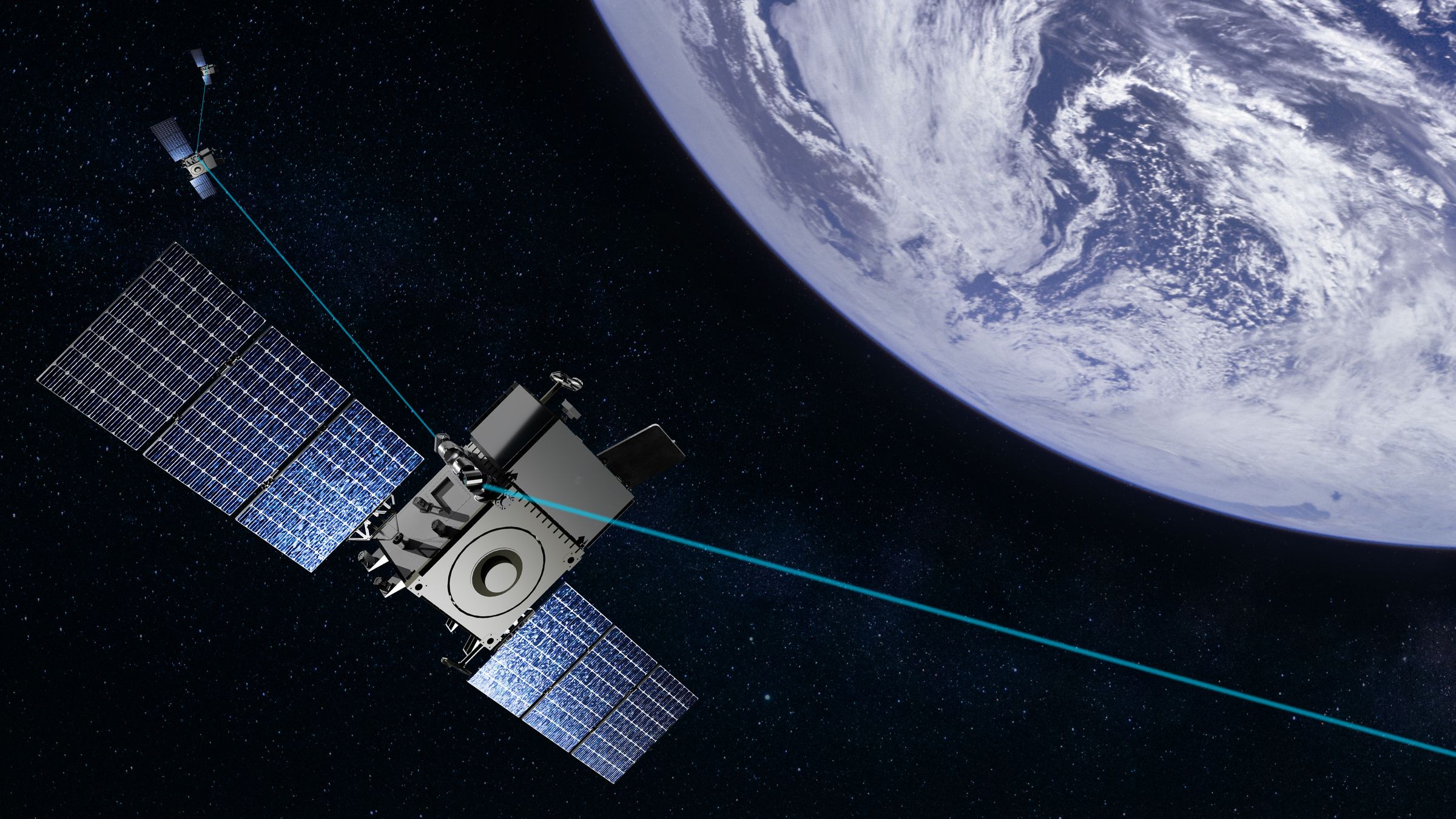
Resilient Missile Warning and Tracking Epoch 2 is a planned United States Space Force constellation of ten satellites in medium Earth orbit. It is intended to provide persistent global detection and tracking of advanced missile threats as part of a more distributed and survivable warning architecture.
BAE Systems Space and Mission Systems is the prime contractor for Epoch 2. Space Systems Command's System Delta 84 manages the program, but System Delta 84 is an acquisition organization rather than the satellite constellation itself.
Epoch 2 follows the twelve-satellite Epoch 1 constellation being developed by Millennium Space Systems. The additional satellites are intended to expand coverage and resilience rather than replace Epoch 1 with an identical design.
Program organization
Space Systems Command established System Delta 84 in July 2025 to consolidate acquisition responsibility for space-based missile warning, missile tracking, and nuclear-detection capabilities. The organization aligns with Space Operations Command's Mission Delta 4, which conducts missile-warning operations.
System Delta 84 is responsible for multiple programs, including Resilient Missile Warning and Tracking, strategic missile warning, and associated ground capabilities. The Epoch 2 medium Earth orbit constellation is one hardware element within that broader portfolio.
The official System Delta activation announcement describes the organizational structure and separates its acquisition mission from the systems it develops.
Contract and preliminary design
Space Systems Command awarded BAE Systems Space and Mission Systems a $1.2 billion firm-fixed-price other transaction agreement for Epoch 2 in May 2025. The contract covers development of the ten-satellite medium Earth orbit constellation.
Epoch 2 completed its preliminary design review in March 2026, approximately nine months after the award. This review established that the preliminary system design was mature enough to proceed into more detailed engineering. A critical design review was planned for the summer of 2026.
Space Systems Command's Epoch 2 milestone announcement identifies the ten-satellite architecture and its relationship to the twelve Epoch 1 spacecraft.
Delivery planning
The first Epoch 2 delivery is planned for fiscal year 2029. This is a future program milestone rather than an achieved launch or service-entry date. The supplied sources do not provide a launch manifest, deployment sequence, completion date, or declared initial operational capability.
Design
Constellation architecture
Epoch 2 is planned as a ten-satellite constellation in medium Earth orbit. Operating multiple spacecraft in a distributed architecture provides repeated viewing opportunities and reduces dependence on a small number of high-value satellites.
The constellation will operate together with the twelve Epoch 1 satellites. Public information does not identify the exact orbital altitude, number of orbital planes, spacing, satellite mass, bus type, power system, service life, or launch vehicle for Epoch 2.
Missile-warning mission
The system is intended to detect and maintain tracks on advanced missiles, including threats whose trajectories and manoeuvres are difficult for older warning architectures to follow. Persistent tracking supports warning, threat characterization, and transfer of track data to defensive and command systems.
Medium Earth orbit offers a different balance of global coverage, revisit geometry, and distance from Earth than low Earth or geosynchronous orbit. The exact sensor performance, spectral bands, detection range, and tracking accuracy remain undisclosed in the supplied program material.
Resilience
Epoch 2 expands a proliferated architecture built around multiple satellites. Distribution can improve resilience by allowing the mission to continue if individual spacecraft are unavailable. It can also increase the number of viewing angles available for tracking complex missile trajectories.
Resilience also depends on communications, ground processing, command and control, cyber protection, and replacement capacity. System Delta 84's broader portfolio includes the Future Operationally Resilient Ground Evolution system, but the supplied sources do not specify the exact Epoch 2 ground-segment configuration.
Program status
As of March 2026, Epoch 2 had completed preliminary design review and was moving toward critical design review. No Epoch 2 satellite had been reported as delivered or launched. First delivery remained planned for fiscal year 2029.
The program's development status must be distinguished from the operational status of existing U.S. missile-warning satellites. Epoch 2 is intended to add a future resilient tracking layer and should not yet be described as an operational constellation.
Related systems
- Resilient Missile Warning and Tracking Epoch 1 — a twelve-satellite medium Earth orbit constellation developed by Millennium Space Systems and intended to precede Epoch 2.
- Future Operationally Resilient Ground Evolution — a ground-system program within System Delta 84's broader missile-warning and tracking portfolio.
- Next-Generation Overhead Persistent Infrared — a separate future missile-warning architecture intended to replace the Space Based Infrared System.
- Space Based Infrared System — the existing strategic missile-warning constellation that provides part of the heritage mission.
Specifications (planned Epoch 2 constellation)
General characteristics
- Type: space-based missile-warning and tracking constellation
- Customer: United States Space Force Space Systems Command
- Program office: System Delta 84
- Prime contractor: BAE Systems Space and Mission Systems
- Number of satellites: ten planned
- Orbit: medium Earth orbit
- First delivery: planned for fiscal year 2029
Mission
- Primary function: persistent detection and tracking of advanced missile threats
- Coverage objective: global warning and tracking support for the United States, deployed forces, allies, and partners
- Architecture relationship: expansion of the twelve-satellite Epoch 1 constellation
 Argentina
 Armenia
 Australia
 Austria
 Austria-Hungary
 Belgium
 Brazil
 United Kingdom
 Brunei
 Bulgaria
 Canada
 Chile
Chile China
China Colonial America
 Colombia
 Confederate States
 Croatia
 Czech
Czech Denmark
 Egypt
Egypt Finland
 France
 Georgia
 Germany
 German Imperial
 Greece
 Holland
 Hungary
 India
India Indonesia
 Iran
Iran Iraq
Iraq Ireland
 Israel
 Italy
Italy Japan
Japan Japan (1940)
 Jordan
 Kingdom of Italy
 Malaysia
 Mexico
 Myanmar
 Nazi Germany
 Netherlands
 New Zealand
 North Korea
 Norway
 Pakistan
 Peru
Peru Philippines
 Poland
 Portugal
 Prussia
 Romania
 Russia
 Saudi Arabia
 Serbia
 Singapore
 Slovakia
 Slovenia
 South Africa
 South Korea
 Soviet Union
 Spain
Spain Sweden
 Switzerland
 Syria
Syria Taiwan
 Thailand
 Turkey
 UAE
UAE Ukraine
 Vietnam
 Yugoslavia