
History
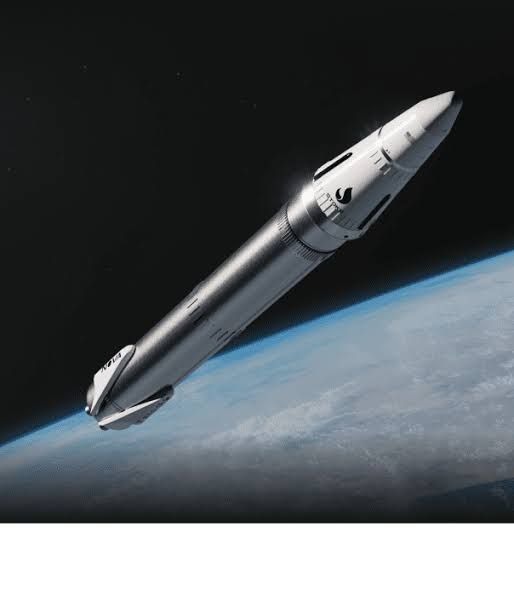
Stoke Space Nova is a family of two-stage orbital launch vehicles under development in the United States. The program is intended to provide full and rapid reuse of both the first and second stages, with Nova Pathfinder serving as the initial flight vehicle and Nova Block 2 as a larger follow-on configuration.
Pathfinder is intended to demonstrate the reusable architecture in orbital flight before the larger Block 2 enters service. Stoke Space is targeting an early 2027 first orbital launch for Pathfinder, while the first Block 2 launch is targeted for 2029.
The program combines liquid-propellant first-stage engines with an actively cooled metallic heat shield and an unusual ring of thrust chambers on the reusable upper stage. The design is intended to allow the upper stage to survive atmospheric reentry and return for later missions.
Development
Stoke Space publicly announced the Nova name in October 2023. In September 2023, before the orbital vehicle had flown, the company completed a hopper flight of a full-scale upper-stage test article. The vehicle rose to about 10 m before landing, demonstrating the propulsion arrangement and controlled descent of the reusable second-stage concept. A shortened first-stage tank also underwent proof testing in December 2023. A broader development chronology is summarized by Wikipedia.
The booster engine program advanced during 2024. A Zenith engine intended for Nova's first stage underwent its first reported test in June 2024. The engine uses a full-flow staged-combustion cycle and is designed for liquid oxygen and liquefied natural gas propellants.
Stoke Space initially planned an earlier orbital debut but subsequently revised the schedule. By September 2026, Pathfinder's inaugural orbital mission was targeted for early 2027. The company planned to fly a customer payload on the first mission and, if development proceeded successfully, conduct additional Pathfinder missions during 2027 and 2028.
In September 2026, Stoke Space also unveiled Nova Block 2 and announced a $1 billion Series E financing round, bringing total reported capital raised to $2.3 billion. The larger rocket is being developed in parallel with Pathfinder and is intended to support heavier commercial and national-security payloads. The financing and Block 2 announcement were also reported by Venture Atlas.
Infrastructure
Nova is planned to operate from Space Launch Complex 14 at Cape Canaveral Space Force Station in Florida. Stoke Space was selected by the U.S. Space Force in 2023 to manage the launch complex and later developed launch and payload-processing infrastructure there.
The company also operates a test site at Moses Lake, Washington. In 2026 it was planning a 192-hectare expansion adjoining its existing 30-hectare site to support propulsion and vehicle testing. Stoke Space is additionally developing an offshore recovery platform as part of the planned reusable launch architecture.
Design
Nova uses a two-stage configuration. Both stages are being designed for recovery and reuse rather than routine disposal after a mission. Pathfinder is the first orbital configuration and is intended to provide flight data for the larger Block 2.
First stage
Nova Pathfinder's first stage is powered by seven Stoke-designed Zenith engines. The engines use liquid oxygen and liquefied natural gas and operate on a full-flow staged-combustion cycle. In this cycle, both propellants pass through preburner systems before entering the main combustion chamber. Stoke selected the architecture partly to reduce deposits and maintenance requirements between flights.
Nova Block 2 increases the first-stage engine count to 14 Zenith engines. It retains the same general propulsion architecture while substantially increasing the vehicle's lifting capability.
Reusable upper stage
Nova's second stage combines propulsion and thermal-protection functions in the aft section. Instead of relying on a conventional central vacuum engine and a separate ceramic-tile heat shield, the design uses a metallic base heat shield that is actively cooled by liquid hydrogen associated with the upper-stage propulsion system.
On Pathfinder, the propulsion system consists of 12 dual-thrust chamber positions arranged around the perimeter of the heat shield, corresponding to 24 thrust chambers. The arrangement allows thrust to be distributed around the base of the stage and supports controlled descent without a conventional large central engine bell. The 2023 hopper test demonstrated low-altitude flight and landing using this general architecture.
Nova Block 2 is planned to use 12 independent upper-stage engines, each incorporating two thrust chambers and its own associated machinery. This differs from the more integrated Pathfinder arrangement and is intended to improve performance and provide greater fault tolerance. Technical reporting on the architecture and active cooling is available from TechTimes.
Block 2 airframe changes
Nova Block 2 replaces Pathfinder's tapered upper-stage form with cylindrical propellant tanks. The larger configuration is intended to carry more propellant and provide increased internal volume for a 5 m diameter payload fairing.
The cylindrical geometry changes the thermal environment during reentry, so Stoke Space plans to use Pathfinder flight data to refine the Block 2 thermal-protection approach. The company has stated that the actively cooled base heat shield and related shielding geometry are intended to protect the stage during atmospheric return.
Program status
As of September 2026, Nova had not completed an orbital flight. Pathfinder's first launch was targeted for early 2027, and the initial mission was planned to carry a customer payload. The first orbital mission will therefore be a major test of the complete launch vehicle and of the upper-stage thermal-protection and recovery architecture.
Stoke Space planned to continue flying Pathfinder after Block 2 becomes available rather than replacing it immediately. The company considers the two configurations suitable for different payload classes.
Nova Block 2's first launch is targeted for 2029. Development and testing are proceeding in parallel with Pathfinder, with the earlier vehicle intended to provide operational and thermal data before the larger configuration reaches flight.
Variants
- Nova Pathfinder: Initial orbital variant and technology demonstrator for the fully reusable Nova architecture. It uses seven Zenith engines on the first stage and is designed for approximately 3,000 kg to low Earth orbit in reusable configuration. Its first orbital launch is targeted for early 2027.
- Nova Block 2: Larger planned variant with 14 Zenith first-stage engines, a 5 m payload fairing and a redesigned cylindrical upper stage. It is intended to place up to 15,000 kg into low Earth orbit and is targeted for a first launch in 2029.
Specifications (Nova Pathfinder)
General characteristics
- Configuration: Two-stage orbital launch vehicle
- Reusability: Both stages designed for recovery and reuse
- Low Earth orbit payload: Approximately 3,000 kg in reusable configuration
- Expendable low Earth orbit payload: Approximately 7,000 kg
Propulsion
- First-stage engines: 7 Zenith engines
- First-stage propellants: Liquid oxygen and liquefied natural gas
- First-stage engine cycle: Full-flow staged combustion
- Upper-stage propulsion: Andromeda system with 12 dual-thrust chamber positions
- Upper-stage fuel: Liquid hydrogen
Specifications (Nova Block 2)
General characteristics
- Configuration: Two-stage fully reusable orbital launch vehicle
- Low Earth orbit payload: Up to 15,000 kg
- Geosynchronous transfer orbit payload: More than 4,000 kg as reported for the planned configuration
- Payload fairing diameter: 5 m
Propulsion
- First-stage engines: 14 Zenith engines
- First-stage propellants: Liquid oxygen and liquefied natural gas
- First-stage engine cycle: Full-flow staged combustion
- Upper-stage engines: 12 independent engines with two thrust chambers each
- Upper-stage specific impulse: More than 440 seconds as reported for the planned configuration
 Argentina
 Armenia
 Australia
 Austria
 Austria-Hungary
 Belgium
 Brazil
 United Kingdom
 Brunei
 Bulgaria
 Canada
 Chile
Chile China
China Colonial America
 Colombia
 Confederate States
 Croatia
 Czech
Czech Denmark
 Egypt
Egypt Finland
 France
 Georgia
 Germany
 German Imperial
 Greece
 Holland
 Hungary
 India
India Indonesia
 Iran
Iran Iraq
Iraq Ireland
 Israel
 Italy
Italy Japan
Japan Japan (1940)
 Jordan
 Kingdom of Italy
 Malaysia
 Mexico
 Myanmar
 Nazi Germany
 Netherlands
 New Zealand
 North Korea
 Norway
 Pakistan
 Peru
Peru Philippines
 Poland
 Portugal
 Prussia
 Romania
 Russia
 Saudi Arabia
 Serbia
 Singapore
 Slovakia
 Slovenia
 South Africa
 South Korea
 Soviet Union
 Spain
Spain Sweden
 Switzerland
 Syria
Syria Taiwan
 Thailand
 Turkey
 UAE
UAE Ukraine
 Vietnam
 Yugoslavia