
History
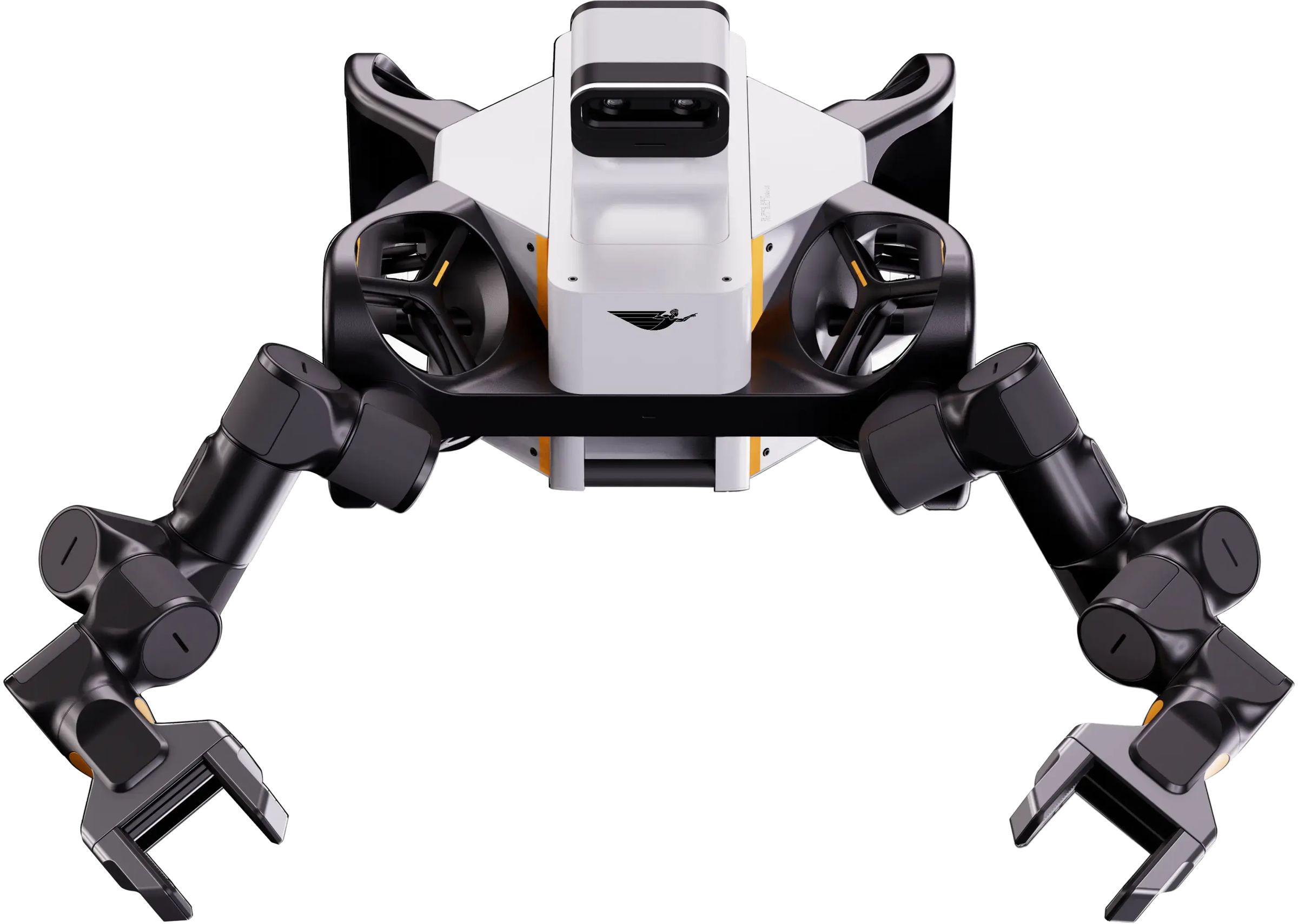
Icarus Robotics Joy is a free-flying robotic platform developed for dexterous mobile work in microgravity. The robot is intended to operate inside crewed space stations, where it can move independently through the cabin and use two robotic arms to handle routine tasks.
Icarus Robotics is developing Joy as an initial step toward robotic systems that can reduce the time astronauts spend on cargo handling, workspace preparation, experiment setup, and other repetitive work. The company plans to begin with ground-based teleoperation and progressively introduce greater autonomy as operational data is collected.
Joy underwent microgravity testing in 2026 and is scheduled for an International Space Station demonstration in 2027. The planned mission, known as JOYRIDE-1, is intended to evaluate the robot in the operational environment for which it was designed.
Development
Icarus Robotics was founded in New York in 2024 by Ethan Barajas and Jamie Palmer. The company developed Joy as a general-purpose robotic platform for space operations, drawing on experience from earlier free-flying space robots including NASA Astrobee, Airbus CIMON, and the Japan Aerospace Exploration Agency Int-Ball.
The development concept centers on a mobile robot that can move through a pressurized microgravity environment while performing manipulation tasks. Initial applications include moving cargo bags, assisting with logistics, preparing work areas, locating and handling tools, and supporting experiment setup.
In March 2026, Icarus announced a mission-management agreement with Voyager Technologies for a planned ISS flight. Voyager's responsibilities for the mission include payload integration, safety certification, launch coordination, on-orbit operations planning, and real-time mission execution support.
In July 2026, KULR Technology Group was selected to supply KULR ONE Space battery systems for Joy. The battery system is intended to power the robot's onboard systems during navigation, maneuvering, and robotic operations. The selected battery architecture incorporates cells subjected to qualification and screening procedures intended for human-spaceflight applications.
Microgravity testing
Before the ISS mission, Icarus conducted a parabolic-flight campaign in Canada. Joy completed four flights that provided a combined 22 minutes of microgravity operations. The campaign tested the robot's flight controller, sensor suite, and manipulation capabilities while also allowing the team to rehearse scheduling, crew coordination, and safety procedures.
The tests formed part of the preparation for the planned 2027 station mission. Icarus also used the campaign to gain experience operating the free-flying platform under short periods of microgravity before attempting sustained operations aboard the ISS.
Planned ISS demonstration
Joy is planned to be handed over for mission processing before transportation to the International Space Station, with flight targeted for early 2027 aboard a SpaceX cargo resupply mission. The exact duration of the robot's stay aboard the station and the start date of its operations have not been fixed.
The initial station demonstration is planned around teleoperation from the ground. This approach is intended to keep human operators directly involved while Icarus validates the hardware and collects expert demonstration data from the real microgravity environment. That data is intended to support development of increasingly autonomous control.
Design
Configuration and mobility
Joy is a free-flying mobile robot designed for operation inside pressurized microgravity environments. It uses fan thrusters to move through the interior of the International Space Station rather than relying on wheels or a fixed mounting point.
The robot has two moving robotic arms that provide manipulation capability. These arms are intended to let Joy interact with cargo, tools, experiment equipment, and other objects while the platform remains mobile in microgravity.
The 2026 parabolic-flight campaign demonstrated operation of Joy's flight controller, sensor suite, and manipulation system under microgravity conditions. Detailed dimensions, mass, thrust values, and payload capacity have not been disclosed in the supplied information.
Control and autonomy
Joy's first ISS operations are planned to use teleoperation, with the robot controlled remotely while working near astronauts. Icarus intends to use operational data from these early missions to improve its autonomous control software.
The company's planned development path progresses from one human operator controlling one robot to partial autonomy in which one person can supervise several robots, followed eventually by substantially autonomous operation. Full autonomous operation remains a development objective rather than a demonstrated operational capability.
Power and charging
Joy is planned to use KULR ONE Space battery systems. The K1S system is based on KULR's REACH battery architecture and incorporates selected cells subjected to Initial Lot Assessment, Lot Acceptance Testing, and NASA WI-37A screening procedures.
For the initial deployment, Joy is planned to be crew-tended for charging. An astronaut will manually connect the robot to power while the program establishes operational experience near the crew. Autonomous docking and charging are planned as later capabilities but are not part of the initial demonstration.
Manipulation and intended tasks
Joy is being developed to assist with repetitive work aboard space stations. Proposed tasks include moving cargo bags, opening and handling cargo, preparing workspaces, finding and positioning tools, and helping set up scientific experiments.
The two-arm configuration is intended to combine mobility with dexterous manipulation. Icarus plans to use this capability as the basis for broader robotic systems that could eventually support maintenance and other infrastructure-related tasks in space.
Program status
As of September 2026, Joy remains a developmental robotic platform. It has completed parabolic-flight microgravity testing but has not yet performed its planned International Space Station mission.
The JOYRIDE-1 demonstration is targeted for early 2027. Mission preparation includes integration, safety certification, launch coordination, operational planning, and procedures for operating the robot around the station crew.
Icarus intends to use the ISS mission to validate Joy's hardware in sustained microgravity and collect operational data for future autonomous systems. Later concepts include robots for work both inside and outside space stations, but those expanded applications remain future development goals.
Specifications (Joy)
General characteristics
- Type: Free-flying mobile robotic platform
- Developer: Icarus Robotics
- Operating environment: Pressurized microgravity environments, including the International Space Station
- Manipulation system: Two moving robotic arms
- Propulsion: Fan thrusters
- Power system: KULR ONE Space battery system
- Initial control method: Ground-based teleoperation
- Initial charging method: Manual crew-tended charging
Development and testing
- Microgravity test campaign: Four parabolic flights in Canada
- Total microgravity test time: 22 minutes
- Tested systems: Flight controller, sensor suite, and manipulation capabilities
- Planned mission: JOYRIDE-1 International Space Station demonstration
- Planned ISS flight: Early 2027
Related equipment
- NASA Astrobee: Free-flying robotic system used aboard the International Space Station and identified as one of the earlier systems that influenced Joy's development.
- Airbus CIMON: Free-flying robotic assistant identified among the prior space-robotics systems considered during Joy's development.
- JAXA Int-Ball: Free-flying camera robot developed for the International Space Station and cited among Joy's technological predecessors.
 Argentina
 Armenia
 Australia
 Austria
 Austria-Hungary
 Belgium
 Brazil
 United Kingdom
 Brunei
 Bulgaria
 Canada
 Chile
Chile China
China Colonial America
 Colombia
 Confederate States
 Croatia
 Czech
Czech Denmark
 Egypt
Egypt Finland
 France
 Georgia
 Germany
 German Imperial
 Greece
 Holland
 Hungary
 India
India Indonesia
 Iran
Iran Iraq
Iraq Ireland
 Israel
 Italy
Italy Japan
Japan Japan (1940)
 Jordan
 Kingdom of Italy
 Malaysia
 Mexico
 Myanmar
 Nazi Germany
 Netherlands
 New Zealand
 North Korea
 Norway
 Pakistan
 Peru
Peru Philippines
 Poland
 Portugal
 Prussia
 Romania
 Russia
 Saudi Arabia
 Serbia
 Singapore
 Slovakia
 Slovenia
 South Africa
 South Korea
 Soviet Union
 Spain
Spain Sweden
 Switzerland
 Syria
Syria Taiwan
 Thailand
 Turkey
 UAE
UAE Ukraine
 Vietnam
 Yugoslavia