
History
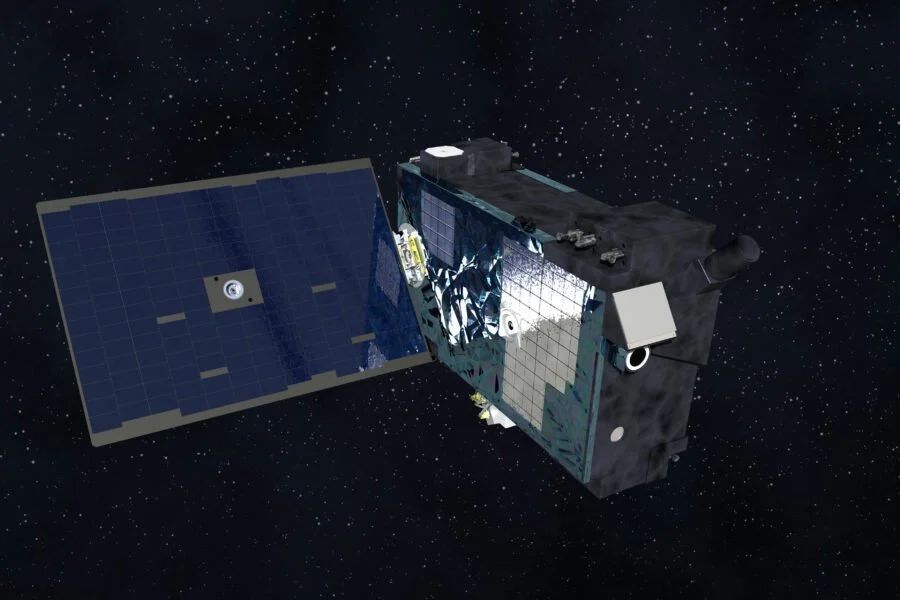
Northrop Grumman GHOST-R is a planned U.S. reconnaissance spacecraft prototype for close-range observation of other spacecraft in geostationary and geosynchronous orbit. It is being developed to demonstrate high-resolution space-to-space electro-optical imaging combined with maneuvering relative to resident space objects.
The spacecraft uses a commercially derived approach based on Northrop Grumman's ESPASat-L platform and an optical payload supplied by TRL-11. The concept is intended to provide more detailed characterization than tracking data alone by allowing the spacecraft to approach objects of interest and obtain imagery of their physical configuration and condition.
GHOST-R supports the U.S. Space Force effort to develop a more proliferated reconnaissance architecture in GEO. The prototype is associated with the RG-XX reconnaissance program and is intended to demonstrate technologies that could transition into a larger operational constellation if testing is successful.
Development
In September 2026, the Defense Innovation Unit and U.S. Space Force Space Systems Command selected Northrop Grumman and True Anomaly to develop separate GHOST-R prototypes. Northrop Grumman received responsibility for a prototype based on its ESPASat-L spacecraft bus, while True Anomaly was selected to develop another prototype using its own spacecraft architecture.
Northrop Grumman plans to assemble, integrate, test, and deliver its prototype on an accelerated 24-month schedule. The spacecraft is scheduled for delivery and direct launch to GEO in 2028. Successful prototypes are intended to provide a transition path into the RG-XX program, with government-owned and operated reconnaissance missions planned from 2029.
The program follows earlier U.S. use of maneuverable spacecraft for observing objects in GEO, including the Geosynchronous Space Situational Awareness Program. GHOST-R differs in its emphasis on commercially derived spacecraft buses, electro-optical payloads, rapid prototyping, and architectures intended to support greater numbers of reconnaissance spacecraft.
Design
Spacecraft platform
The Northrop Grumman GHOST-R prototype is based on the ESPASat-L platform. ESPASat-L is a compact modular spacecraft bus designed for higher-rate production and integration with Northrop Grumman's ESPAStar payload rideshare architecture. The platform is intended to support rapid spacecraft assembly and payload integration.
For GHOST-R, Northrop Grumman will integrate ESPASat-L with a commercially supplied electro-optical payload from TRL-11. Final spacecraft assembly, integration, and testing are planned at Northrop Grumman satellite manufacturing facilities in Dulles, Virginia, and Gilbert, Arizona.
Reconnaissance mission
GHOST-R is designed to maneuver relative to spacecraft in GEO rather than observe them only from a distant or fixed position. Planned proximity operations include recurring approaches that can place the optical payload in positions suitable for detailed observation of selected spacecraft.
The mission concept includes drive-by and inclined-track observations. These maneuvers are intended to provide different viewing geometries while allowing the spacecraft to collect high-resolution electro-optical imagery of resident space objects.
The imagery is intended to support identification and characterization of spacecraft by showing their visible configuration and condition. Planned mission functions include positive identification, combat identification, anomaly characterization, and battle-damage assessment. These functions remain prototype objectives and should not be interpreted as demonstrated operational capabilities.
Program status
As of September 2026, the Northrop Grumman GHOST-R spacecraft remains under development and has not entered operational service. Delivery and launch are planned for 2028.
GHOST-R is intended to reduce technical and acquisition risk for the Space Force's RG-XX reconnaissance architecture. The broader effort seeks a more numerous GEO reconnaissance capability able to detect, track, characterize, and repeatedly observe resident space objects while improving observation frequency and resilience.
The Northrop Grumman and True Anomaly prototypes represent separate approaches to the same demonstration objective. Successful designs are expected to inform later RG-XX spacecraft rather than being treated as an already established operational constellation.
Specifications (Northrop Grumman GHOST-R prototype)
General characteristics
- Type: Geosynchronous-orbit reconnaissance spacecraft prototype
- Manufacturer: Northrop Grumman
- Spacecraft bus: ESPASat-L
- Payload supplier: TRL-11
- Primary payload: Electro-optical imaging sensor
- Planned operating region: Geostationary and geosynchronous orbit
- Planned delivery and launch: 2028
Mission capabilities
- Primary mission: Close-range reconnaissance and characterization of resident space objects
- Imaging: High-resolution space-to-space electro-optical imagery
- Maneuvering: Relative maneuvering and recurring proximity operations around target spacecraft
- Observation profiles: Planned drive-by and inclined-track missions
- Assessment roles: Positive identification, combat identification, anomaly characterization, and battle-damage assessment
Related equipment
- Geosynchronous Space Situational Awareness Program: Existing U.S. space-based system for observing and inspecting objects in GEO, also associated with Northrop Grumman.
- RG-XX: Planned proliferated GEO reconnaissance architecture for which GHOST-R prototypes are intended to reduce risk and demonstrate commercially derived approaches.
- True Anomaly GHOST-R prototype: Separate prototype selected under the same program and based on True Anomaly's spacecraft architecture.
Pasted text
 Argentina
 Armenia
 Australia
 Austria
 Austria-Hungary
 Belgium
 Brazil
 United Kingdom
 Brunei
 Bulgaria
 Canada
 Chile
Chile China
China Colonial America
 Colombia
 Confederate States
 Croatia
 Czech
Czech Denmark
 Egypt
Egypt Finland
 France
 Georgia
 Germany
 German Imperial
 Greece
 Holland
 Hungary
 India
India Indonesia
 Iran
Iran Iraq
Iraq Ireland
 Israel
 Italy
Italy Japan
Japan Japan (1940)
 Jordan
 Kingdom of Italy
 Malaysia
 Mexico
 Myanmar
 Nazi Germany
 Netherlands
 New Zealand
 North Korea
 Norway
 Pakistan
 Peru
Peru Philippines
 Poland
 Portugal
 Prussia
 Romania
 Russia
 Saudi Arabia
 Serbia
 Singapore
 Slovakia
 Slovenia
 South Africa
 South Korea
 Soviet Union
 Spain
Spain Sweden
 Switzerland
 Syria
Syria Taiwan
 Thailand
 Turkey
 UAE
UAE Ukraine
 Vietnam
 Yugoslavia